Biology and Physics meet Computer Science | Learning Intelligence 7
Key Takeaways
The video discusses the intersection of biology, physics, and computer science in artificial intelligence, covering concepts such as simulated annealing, hill climbing algorithm, and genetic algorithms, with tools like Pac-Man, Udacity AI, and Sweater Code.
Full Transcript
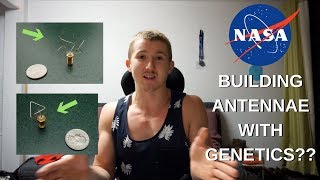
what's up y'all welcome to learning intelligence episode 7 minute all awesome day of learning today a bit more on the theory side today rather than sort of jumping in and doing practical stuff and coding and whatnot I still got to work on that pac-man lab that I was doing last in last last episode episode 6 that will be tomorrow's task today I like Tuesday seems to move my most productive day so I like to reserve the hardest the hardest things of the week for Tuesday and Monday is Theory getting me get me warmed up for the rest of the week what have I been up to today well we've said some cereal brain food snack cereals like a any time of day food read some more of this book I'm about not even one chapter through I'm still in the introduction I'm learning a good good deal of history about where artificial intelligence actually came from whether we're the first computers actually came from all the different fields artificial intelligence sort of takes from and this I think that's why it's so appealing to me I know I mentioned this I think in the last video but artificial intelligence literally takes from all the major fields mathematics psychology philosophy economics computer engineering both hardware and software you need the hardware to run the software otherwise after after I did a little bit of reading I went into the next class in Udacity and the three algorithms I learned about today all three three classes of algorithms I learned all borrowed from either a physical concept or a biological concept in the real world so number one I'll try to remember more top of my head if not bear with me I just learned all these things number one was simulated annealing why am i showing you this diagram well this animation here exemplifies what simulated annealing does so if you imagine this red line starts off it's moving around really randomly trying to find the maximum point of this graph which is right here and it starts off extremely random and then finishes off once it gets closer to the to the maximum the randomness slows down and it only jumps in small little gaps and then eventually it finds the top point so where to simulated annealing come from or you can imagine to anneal is to heat metal or glass and allow it to cool slowly there subsequently changing its form moving towards a solution that you would prefer so with with metal or iron all in the case of a sword maker which was the analogy that was used in the lectures a sword maker starts off with a with a hot sword a hot piece of metal and starts beating it down and that allows it to cool and then repeatedly heats and cools until he he gets the form of the saw that he wants not not hard well hard but not brittle so the ideal solution that's what happens we're simulated annealing the high temperature is a high amount of randomness what you saw on the graph whether the bar was removing really fast and then the cooling was the the random less randomness of the of the solution of the little data point moving slowly down till it gets to a cold state and gets to the solution that you want in the case that we saw was a pinnacle of the graph so at the start high amount of randomness bar moving across the screen really fast and at the end slow amount of randomness while moving slowly and converging on the solution the second algorithm I learned about was the hill climbing algorithm so if you imagine again you wanted to get to the top at this point here but you could only move left and right so you might get stuck at this this local Optima here or you might get stuck at even this tabletop over here so what the hill climbing algorithm does is is finds finds the optimal height after stepping left and right but the third one was probably my favorite was a genetic algorithm so the genetic algorithm models biology it uses evolution to find the optimal solution for your problem that rond evolution to find your solution I could be a no I'm kidding so with a genetic algorithm it starts with a whole bunch of solutions let us imagine them as parents and then it combines them by using genetic algorithm crossover so much like if if two parents in real life you have a mother and a father were were to have a child their child would you would expect to get a crossover of genes half from the mother half from the father and it uses this crossover vector to continually go down through generations until it finds an optimal solution there's a problem here what if the solution didn't lie within the parents what if the parents weren't possible like the combination of of any two parents was never possible no matter how many generations you had to find the right solution in the children and that's where genetic algorithm mutations come in when the two parents combine through genetic algorithm crossover there's a small chance with genetic algorithm mutation that one of the one of the data points in the children will randomly change to something else within a certain range and those random mutations allow for enough enough diversity in the gene pool if you may so that eventually after a certain number of generations an ideal solution will come about I just been teaching pac-man how to play go buddy you can get it get to the goal get there a star winner check it out record win so made some progress in the the pac-man lab in the Udacity search class that algorithm took me a while to implement I dedicated a solid hour and a half of uninterrupted time just to turn this little piece of sweater code is that a exam it's way--do code it's bueno I'm not sure suelo code here the uniform cost search function on a graph so that's what that's something I need to work on is turning suelo code into us to that word I never really said that word out loud I've heard it I haven't really said it sueños suede o / suede suede oh it's a fun word I like it how many times gonna get it into this video but there's something I need to work on is implementing sweater code into an actual algorithm so I can understand sort of or mostly what the code is saying in the textbook when it's in plain English but something I need to work on is going into making it into an actual algorithm so I think that's runnable by a computer because that the code on there unfortunately isn't yes runnable honor on a computer in a in an ide or something like that plenty of learning today from reading chapters in here to going through three major classes in audacity artificial intelligence no degree I even have to write down points that I wanted to talk about in this video clip because today was a productive day I'm not sure what I did differently maybe because in the morning rather than doing fluffing around I just sort of got straight into study which is a note to self I should really do that in the future so I put the pac-man lab on pause at the time being because I realized that project 3 is doing about 11 days and from the previous two projects it's taken me a while to actually understand them it takes me a lot longer to understand the projects then then what the time limit sort of on the audacity suggested class like I think for most of them it's to 2 to 3 hours and for me I've spent a whole day on on one single section of the problem so I've been catching up on the three three classes I had to finish before starting project three and good news on up to project three now so that's my next major goal to do the labs labs at the end of the two classes that are completed all three classes that are completed today I'll push them aside for the time being unless they're closely related to what I'm doing in the project because of course projects and my major focus and I can always come back to the optional optional labs at a later date so the three classes I went through today were constraint satisfaction logic and reasoning and a logic and reasoning it's quite confusing to me because I've never actually I've never gone over most of these topics here I have used technologies that use these use these three methods or methodologies of artificial intelligence but I haven't learnt about them in depth before and so logic and reasoning was like a whole metal language so I've done boolean expressions and whatnot but logic and reasoning takes that one step further well in my opinion and there's different symbols is an upside-down a which means all of and there's sometimes the a doesn't appear and you just have to assume that the a is the upside down a is there there's an upside down e and all this stuff is there's so much so much going on in logic and reasoning but it does make sense so I don't fully understand it but the whole concept of it is starting to make sense to me because once you develop it's it's like once you get better at any skill right you sort of you develop a language in that and once you develop the language of and then reason language and understanding of logic and reasoning you can communicate better the way logic and reasoning is designed is so that it can be easily implemented into computer programs and it can be easily shared among other people that's that's my understanding of it so far and then planning was the the final class that I did today which is a branch off of logic and reasoning these three techniques constraints of its satisfaction logic and reasoning and planning what are some use cases for these these three techniques well if you imagine anything to do that has large-scale planning and requires multiple constraints say for example if you're IBM and you're designing the most efficient computer chip possible and you want to make sure that this wire goes underneath this wire and this transistor is separate to this transistor a human being could could play around with that chip design for endless tower may not find the most efficient way and they may eventually do it but imagine if you could get a computer to design a computer and essentially that's that's what I've gathered is some of the the use cases of this is one is designing computer chips the most efficient layout of a computer chip to make it faster so that you have optimal power consumption optimal power efficiency optimal everything essentially and this this not only happens in computer chips it happens in in planning warehouses planning schedules and now what did I read about it here a cool thing I'm really fascinated about genetic algorithms actually I think the reason why they start peeling is because it's it's like that confirmation bias almost or some sort of cognitive bias I've seen this before I've seen these algorithms before somewhere that's how I evolved that's how we evolved maybe not entirely the algorithms aren't as good as natural selection yet I don't think or as good as evolution yet they've been used for some cool stuff one example NASA used genetic algorithms to evolve the best antenna shape and I'll put a picture here or something of what it looks like but it's not what you would think i if you look at normal antennas they shaped pretty logically in my opinion they've got the major part and the that's the antennas I see like you know the ones you have on the side of your house for TV but NASA this one is is a weird shape and apparently the computer algorithm the the genetic algorithm decided that that or discovered that that was the best shape for a space space station antenna and it's been done more than more than once several times so I think that's enough for for this week's video thank you so much for watching if you have any anything you want to see it all in a future video leave a comment below or hit me up on Twitter or something like that all my links will be in the description otherwise I've gotta go run and it's Bergen out in my place so burgers for the boys get your next week
Original Description
Welcome to the seventh instalment of Learning Intelligence! A VLOG series where I document my journey learning about artificial intelligence.
Instead of going back to university, I've created my own artificial intelligence Master's Degree to learn about the phenomenon of teaching computers to think for themselves.
My Curriculum - https://medium.com/@mrdbourke/my-self-created-ai-masters-degree-ddc7aae92d0e
Please leave a comment if you would like to see anything specific in the future.
Links mentioned in the show:
Udacity AIND - https://www.udacity.com/course/artificial-intelligence-nanodegree--nd889
NASA creating antennae with genetic algorithms - https://www.nasa.gov/centers/ames/research/exploringtheuniverse/borg.html
Artificial Intelligence: A Modern Approach Textbook - http://aima.cs.berkeley.edu/
Say Hi to me anywhere!
Web - https://www.mrdbourke.com
Writing - https://www.mrdbourke.com/blog/
Quora - https://www.quora.com/profile/Daniel-Bourke-2
Instagram - https://www.instagram.com/mrdbourke/
Twitter - https://www.twitter.com/mrdbourke
Email updates: http://bit.ly/mrdbourkenewsletter
If you would like to join in on this journey and offer your support you, please consider becoming a Patron!
https://www.patreon.com/mrdbourke
Watch on YouTube ↗
(saves to browser)
Sign in to unlock AI tutor explanation · ⚡30
Playlist
Uploads from Daniel Bourke · Daniel Bourke · 40 of 60
1
 2
2
 3
3
 4
4
 5
5
 6
6
 7
7
 8
8
 9
9
 10
10
 11
11
 12
12
 13
13
 14
14
 15
15
 16
16
 17
17
 18
18
 19
19
 20
20
 21
21
 22
22
 23
23
 24
24
 25
25
 26
26
 27
27
 28
28
 29
29
 30
30
 31
31
 32
32
 33
33
 34
34
 35
35
 36
36
 37
37
 38
38
 39
39
 ▶
▶
 41
41
 42
42
 43
43
 44
44
 45
45
 46
46
 47
47
 48
48
 49
49
 50
50
 51
51
 52
52
 53
53
 54
54
 55
55
 56
56
 57
57
 58
58
 59
59
 60
60

Xbox One S Unboxing and Xbox One Comparison
Daniel Bourke
Text/Profanity Checker in Python
Daniel Bourke
Drawing Flowers in Python
Daniel Bourke
Finding The Right Medium - TDBS 18 April 2017
Daniel Bourke
What Is Neuralink??! - TDBS 22 April 2017
Daniel Bourke
Disagree and Commit, Words of Wisdom from Jeff Bezos - TDBS 19 April 2017
Daniel Bourke
A Lesson In Movement | Raw Training Australia
Daniel Bourke
FALLING IS FUN | Functional Friday 4
Daniel Bourke
My first HACKATHON! | 100 Days of Code 1
Daniel Bourke
MORE MACHINE LEARNING | 100 Days of Code 2
Daniel Bourke
TensorBoard and learning from Einstein | 100 Days of Code 3
Daniel Bourke
Job Interview Tips and Open Ocean Swim | 100 Days of Code 4
Daniel Bourke
I Want To Help 100,000 People Workout | AI Powered Personal Trainer
Daniel Bourke
MACHINE LEARNING IN 5 MINUTES
Daniel Bourke
COFFEE, YOGA and AWS | 100 Days of Code 5
Daniel Bourke
MY FIRST STARTUP WEEKEND | 100 Days of Code 6
Daniel Bourke
GENERATING TV SCRIPTS WITH DEEP LEARNING | 100 Days of Code 7
Daniel Bourke
Attention, please
Daniel Bourke
TEACHING BOTS TO PLAY GAMES | 100 Days of Code 9
Daniel Bourke
Udacity Deep Learning Nanodegree Language Translation Project Submission | 100 Days of Code 10
Daniel Bourke
Learning about Generative Adversarial Networks on Udacity | 100 Days of Code 11
Daniel Bourke
Completing Andrew Ng's Machine Learning Course on Coursera | 100 Days of Code 12
Daniel Bourke
Finishing the Treehouse Python Track | 100 Days of Code 13
Daniel Bourke
GENERATING FACES WITH GANs | 100 Days of Code 14
Daniel Bourke
Graduating From the Udacity Deep Learning Nanodegree | 100 Days of Code 15
Daniel Bourke
WHAT I'VE LEARNED FROM TALKING TO PEOPLE
Daniel Bourke
3 Life Principles I Learned From Ray Dalio
Daniel Bourke
PYTHON && POETRY | 100 Days of Code 16
Daniel Bourke
Physique Update and 6 Things I Wish I Knew Before Starting Gym
Daniel Bourke
The 100 Days is Over! | 100 Days of Code 17
Daniel Bourke
How to Burn Over 100 Calories in 4 Minutes
Daniel Bourke
Solving Sudoku with AI | Learning Intelligence 1
Daniel Bourke
Upper Body Calisthenics Workout in the Park
Daniel Bourke
What is an Adversarial Search Agent? | Learning Intelligence 2
Daniel Bourke
My Self-Created Artificial Intelligence Master's Degree | Learning Intelligence 0
Daniel Bourke
Try Going Over It Again | Learning Intelligence 3
Daniel Bourke
Python and Pullups | Learning Intelligence 4
Daniel Bourke
AI Meets Blockchain! | Learning Intelligence 5
Daniel Bourke
How to Pass the Turing Test + I FAILED | Learning Intelligence 6
Daniel Bourke
Biology and Physics meet Computer Science | Learning Intelligence 7
Daniel Bourke
Udacity Artificial Intelligence Nanodegree Project 3 Progress | Learning Intelligence 8
Daniel Bourke
Passing Project 3 of Udacity's Artificial Intelligence Nanodegree | Learning Intelligence 9
Daniel Bourke
Bayes Networks, Hidden Markov Models and How I Wake Up | Learning Intelligence 10
Daniel Bourke
Udacity AI Nanodegree Progress and Bayes' Rule Explained | Learning Intelligence 11
Daniel Bourke
Udacity AI Nanodegree Project 4 Planning and Progress | Learning Intelligence 12
Daniel Bourke
Finishing Term 1 of Udacity's Artificial Intelligence Nanodegree | Learning Intelligence 13
Daniel Bourke
deeplearning.ai Progress! | Learning Intelligence 14
Daniel Bourke
Coursera Deep Learning Specialization Progress | Learning Intelligence 15
Daniel Bourke
Computer Vision Basics + More deeplearning.ai Progress! | Learning Intelligence 16
Daniel Bourke
My Experience at CodeCamp, Intro to Keras and Failing Hard | Learning Intelligence 17
Daniel Bourke
In-Depth Udacity Deep Learning Nanodegree Review
Daniel Bourke
Completing the Deeplearning.ai Specialization on Coursera | Learning Intelligence 18
Daniel Bourke
You're Never Too Young to Start Learning AI - Learning Intelligence Talks with Shaik Asad
Daniel Bourke
Starting Term 2 of the Udacity Artificial Intelligence Nanodegree | Learning Intelligence 19
Daniel Bourke
Submitting the Computer Vision Capstone Project | Udacity AI Nanodegree | Learning Intelligence 20
Daniel Bourke
Leg Day at World Gym Northlakes ft. Ben Jones Fitness
Daniel Bourke
deeplearning.ai Sequence Models Course Progress | Learning Intelligence 21
Daniel Bourke
Graduating from the deeplearning.ai Coursera Specialization | Learning Intelligence 22
Daniel Bourke
Udacity Artificial Intelligence Nanodegree NLP Concentration Progress | Learning Intelligence 23
Daniel Bourke
Learning How to Build What's Next at Google Cloud On Board Brisbane
Daniel Bourke
More on: LLM Foundations
View skill →






![Run Any AI LOCALLY for FREE Forever! [100% Beginner Tutorial]](https://i.ytimg.com/vi/8GFPZRgtEn8/mqdefault.jpg)


Related Reads
📰
📰
📰
📰
We Taught Machines to Talk. We Forgot to Teach Ourselves to Listen.
Medium · AI
Is the AI bubble about to burst? A data scientist’s honest take
Medium · AI
Is the AI bubble about to burst? A data scientist’s honest take
Medium · Machine Learning
Is the AI bubble about to burst? A data scientist’s honest take
Medium · Data Science
🎓
Tutor Explanation

 DeepCamp AI