Neuroscience, game theory, monkeys - Colin Camerer
Key Takeaways
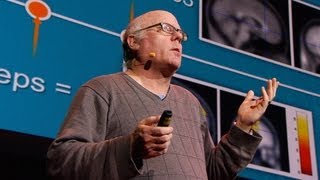
Colin Camerer applies neuroscience and game theory to understand human decision-making
Full Transcript
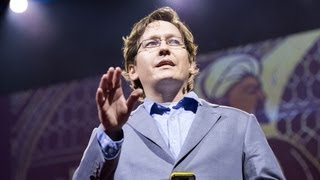
[Applause] I'm going to talk about the strategizing brain we're going to use a unusual combination of tools from Game Theory and Neuroscience to understand how people interact socially when value is on the line so game theory is a a branch of originally Applied Mathematics uh used mostly in economics political science a little bit in biology that gives us a ma mathematical taxonomy of social life and it predicts what people are likely to do and believe others will do in in cases where everyone's actions affect everyone else that's a lot of things competition cooperation bargaining games like hide-and seek and poker here's a simple game to get us started everyone chooses a number from zero to 100 we're going to compute the average of those numbers and whoever's close to 2third of the average wins a fixed prize so you want to be a little bit below the average number but not too far below and everyone else wants to be a little bit below the average number as well think about you what you might pick as you're thinking this is a a toy model of something like selling in the stock market during a rising market right you don't want to sell too early because you miss out on profits but you don't want to sell wait wait too late to when everyone else sells triggering a crash you want to be a little bit ahead of the competition but not too far ahead okay here's two theories about how people might think about this then we'll see some data some of these will sound familiar because you probably are thinking that way I'm using my brain Theory to see okay a lot of people say I really don't know what people are going to pick so I think the average will be 50 they're not being really strategic at all and I'll pick 2ir of 50 that's 33 that's the start other people who are a little more sophisticated using more working memory say I think people will pick 33 because they're going to pick a response to 50 and so I'll pick 22 which is 2third of 33 they're doing one extra step of thinking two steps that's better and of course in principle you could do three four or more but it starts to get very difficult uh just like in language and other domains we know that it's hard for people to parse very complex sentences with a kind of recursive structure this is called the cognitive hierarchy Theory by the way something I've worked on and a few other people and indicates some kind of hierarchy and along with some assumptions about how many people stop at different steps and how the steps of thinking are affected by lots of interesting variables and varant people as we'll see in a minute a very different Theory a much more popular one and an older one uh due largely to John Nash of A Beautiful Mind Fame uh is what's called equilibrium analysis so if you've ever taken a game theory course at any level you will have learned a little bit about this and equilibrium is a mathematical state in which everybody has figured out exactly what everyone else will do and it's a very useful concept but behaviorally it may not exactly explain what people do the first time they play these types of economic games or in situations in the outside world in this case the equilibri makes a very bold prediction which is everyone wants to be below everyone else therefore they'll play Zero let's see what happens this is this experiment's been done many many times some of the earliest ones were done in the '90s by me Ros Marine Nagel and others this is a beautiful data set of 9,000 people who wrote into three newspapers and magazines that had a contest the contest said send in your numbers and whoever is close to two-thirds of the average will win a big prize and as you can see there's so much data here you can see the spikes very visibly there's a spike at 33 those are people doing one step there is another Spike visible at 22 and notice by the way that most people pick numbers right around that they don't necessarily pick exactly 33 and 22 the something a little bit noisy around it but you can see those spikes in the dead there's another group of people who seem to have a firm grip on equilibrium analysis because they're picking zero or one but they lose right because picking a number that that low is actually a bad choice if other people aren't doing the equilibrium analysis as well so they're smart but poor okay where are these things happening in the brain uh one study by Corel Nagle gives a really sharp interesting answer so they had people play this game while they're being scanned in fmri and two conditions in some trials they're told you're playing another person who's playing right now and we're going to match up your behavior at the end and pay you if you win in the other trials they're told you're playing a computer they're just choosing randomly so what you see here is a subtraction of areas in which there's more brain activity when you're playing people compared to playing the computer you see activity in some regions we've seen today medial prefrontal cortex dorsomedial however up here ventromedial prefontal cortex anterior singulate an area that's involved in lots of types of conflict resolution like if you're playing Simon says uh and also the right and left temporal prial Junction which and these are all areas which are fairly reliably known to be part of a what's called a theory of Mind circuit or mentalizing circuit that that is it's a circuit that's used to imagine what other people might do so it's this is one of the first studies to see this tied in to Game Theory what happens with these one and twep types so we classify people by what they picked and then we look at the difference between playing humans versus playing computers which brain areas are different active on the top you see the one-step players there's almost no difference the reason is they're treating other people like a computer and the brain is too the bottom players you see all the activity in dorsal medial PFC so we know that those two-step players are doing something differently now if you were to step back and say what can we do with this information you might be able to look at brain activity and say this person is going to be a good poker player or this person's socially naive and we might also be able to study things like development of adolescent brains once we have an idea of where this circuitry exists okay uh get ready this I'm G to say I'm saving you some brain activity because you don't need to use your hair detector cells you should use those cells to think carefully about this game this is a bargaining game two players who are being scanned using EEG electrodes are going to bargain over1 to6 if they can do it in 10 seconds they're going to actually earn that money if 10 seconds goes by and they haven't made a deal they get nothing that's kind of a mistake together the twist is that one player on the left is informed about how much on each trial there is they play lots of trials with different amounts each time in this case they know there's $4 do the uninformed player doesn't know but they know that the informed player knows so the uninformed player's challenge is to say is this guy really being fair or are they they giving me a very low offer in order to get me to think that there's only one or two dollars available to split in which case they might reject it and not come to a deal so there's some tension here between trying to get the most money but trying to go the other player into giving you more and the way they bargain is to point on a number line that goes from0 to $6 and they're bargaining over how much the uninformed player gets and the informed player is going to get the rest so this is like a management labor negotiation in which um the the workers don't know how much profits the privately held company has right and they they they want to maybe hold out for more money but the company might want to create the impression that there's very little to split I'm giving you the most that I can uh first some Behavior so a bunch of the subject pairs they play face Toof face we have some other data where they play across computers that's an interesting difference as you might imagine but a bunch of the face Toof face pairs agree to divide the money evenly every single time boring it's just not interesting early it's good for them they make a lot of money but we're interested in can we say something about when disagreements occur versus don't occur so this is the other group of subjects who often disagree so they have a chance of they bicker and disagree and end up with less money they might be eligible to be on Real Housewives the TV show okay you see on the left when the amount to divide is one2 or3 they disagree about half the time and when the amount is four five6 they agree quite often this turns out to be something that's predicted by a very complicated type of game theory you should come to graduate school at Caltech and learn about um it's a little too complicated to explain right now but it's the the theory tells you that this shape kind of should occur your intuition might tell you that too now I'm going to show you the results from the EG recording very complicated the right brain schematic is the uninformed person and the left is the informed remember that we we scanned both brains at the same time so we can ask about you know time synced activity in similar or different areas simultaneously just like if you wanted to study a conversation and you were scanning two people talking to each other you'd expect common activity in language regions when they're actually kind of listening and communicating so the arrows connect regions that are active at the same time and the direction of the arrows flows from the region that's active first in time and the Arrow Head is goes to the region that's active uh later so in this case if you look carefully most of the arrows flow from right to left that is it it looks as if the uninformed brain activ is happening kind of first and then it's it's followed by activity in the informed brain and by the way these are these are trials where their deals were made this is from the first two seconds we haven't finished analyzing this data so we're still peing in but the hope is that we should can say something in the first couple of seconds about whether they'll make a deal or not which could be very useful in thinking about avoiding litigation and ugly divorces and things like that those are all cases in which um a lot of value is lost by delay and Strikes here's the case where the disagreements occur you can see it looks different than the one before there's a lot more arrows that means that the brains are kind of synced up more closely in terms of simultaneous activity and the arrows flow clearly from left to right that is the informed brain seems to be kind of deciding we're probably not going to be able to make a deal here and then later there's activity in the uninformed brain next I'm going to introduce to some relatives they're hairy smelly fast and strong you might be thinking back to your last Thanksgiving maybe if you had a chimpanzee with you Charles Darwin and I and you broke off in the family tree from chimpanzees about five million years ago they're still our closest genetic kin we share 98.8% of the genes we share more genes with them than zebras do with horses and they're we're also their closest cousin they have more genetic relation to us than to gorillas so how humans and chimpanzees behave differently might tell us a lot about brain Evolution so this is a um amazing memory test from ngoya Japan Primate Research Institute where they've done a lot of This research this goes back quite a way they're interested in working memory the chimp is going to see watch carefully they're going to see 200 milliseconds exposure that's fast that's eight movie frames of numbers 1 2 3 4 five then they disappear and they're replaced by squares and they have to press the squares that correspond to the numbers from low to high to get an Apple reward let's see how they can do it this is a young champ the young ones are better than the old ones just like humans and they're highly experienced so they've done this thousands and thousands of times obviously there's a big training effect as you can imagine you can see they're very blasé and kind of everless not only can they do it very well they do it you know in sort of lazy way right who thinks who thinks you could beat The Chimps wrong we we could try we'll try maybe we'll try uh okay so um the next part of the study I'm going to Quick go quickly through is based on an idea of tetur Sawa he had a bold idea that what he call the cognitive tra of hypothesis we know chimps are faster and stronger they're also have very obsessed with status his thought was maybe they've preserved brain activities and they practiced them in development that are really really important to them to negotiate status into to win which is something like um strategic thinking during competition so we're going to check that out by having the chimps actually play a game by touching up uh a touch two touch screens The Chimps are actually interacting with each other through the computers they're to press left or right one chimp is called a matcher they win if they press left left like a a Seeker finding someone in hide-and-seek or right right the mismatch wants to mismatch they want to press the opposite screen of the chimp and the rewards are Apple Cube rewards so here's how game theorists look at these data this is a graph of the percentage of times the matcher picked right on the x-axis and the percentage of times they pick right by the mismatch on the y- axis okay so a point here is the behavior by a pair of players one trying to to match one trying to mismatch the ne Square in the middle actually NE CH and Q those are three different theories Nash Librium and others tells you uh what the theory predicts is that they should match 50/50 because if you match if you play left too much for example I can exploit that if I'm the mismatch by then playing right and as you can see the chimps each chimp is one triangle are kind of circled around hovering around that prediction Now we move the payoffs we're actually going to make the the left left payoff for the matcher a little bit higher now they get three apple game theoretically that should actually make the mismatch Behavior shift because what happens is the mismatch will think oh this guy's going to go for the big reward and so I'm going to go to the right make sure he doesn't get it okay and as you can see their behavior moves up in the direction of this change in the Nash equilibrium finally we change the paths one more time now it's four Apple cubes and their behavior again moves toward the natural equilibrium it's sprinkled around but if you average The Chimps out they're really really close within 01 they're actually closer than any species we've observed what about what about humans you think you're smart than new chimpanzee here's two human groups in green and blue they're closer to 50/50 they're not they're not responding to payoffs as closely and also if you study their learning in the game they aren't as sensitive to previous rewards The Chimps are playing better than the humans better in the sense of adhering to Game Theory and these are two different groups of humans from Japan and Africa they replicate quite nicely none of them are close to where the chimps are okay so here's some things we learned today people seem to do a limited amount of strategic thinking using theory of mind with some prary evidence from bargaining that early warning signs in the brain might be used to predict whether there'll be a bad disagreement that costs money and chimps are better competitors than humans as judged by Game Theory thank you [Applause]
Original Description
When two people are trying to make a deal -- whether they're competing or cooperating -- what's really going on inside their brains? Behavioral economist Colin Camerer shows research that reveals just how little we're able to predict what others are thinking. And he presents an unexpected study that shows chimpanzees might just be better at it than we are. (Filmed at TEDxCalTech.)
Talk by Colin Camerer.
Watch on YouTube ↗
(saves to browser)
Sign in to unlock AI tutor explanation · ⚡30
Playlist
Uploads from TED-Ed · TED-Ed · 49 of 60
1
 2
2
 3
3
 4
4
 5
5
 6
6
 7
7
 8
8
 9
9
 10
10
 11
11
 12
12
 13
13
 14
14
 15
15
 16
16
 17
17
 18
18
 19
19
 20
20
 21
21
 22
22
 23
23
 24
24
 25
25
 26
26
 27
27
 28
28
 29
29
 30
30
 31
31
 32
32
 33
33
 34
34
 35
35
 36
36
 37
37
 38
38
 39
39
 40
40
 41
41
 42
42
 43
43
 44
44
 45
45
 46
46
 47
47
 48
48
 ▶
▶
 50
50
 51
51
 52
52
 53
53
 54
54
 55
55
 56
56
 57
57
 58
58
 59
59
 60
60

Weaving narratives in museum galleries - Thomas P. Campbell
TED-Ed
Your brain is more than a bag of chemicals - David Anderson
TED-Ed
Biofuels and bioprospecting for beginners - Craig A. Kohn
TED-Ed
Four sisters in Ancient Rome - Ray Laurence
TED-Ed
The brilliance of bioluminescence - Leslie Kenna
TED-Ed
Animation basics: Homemade special effects - TED-Ed
TED-Ed
Pros and cons of public opinion polls - Jason Robert Jaffe
TED-Ed
Excuse me, may I rent your car? - Robin Chase
TED-Ed
Could tissue engineering mean personalized medicine? - Nina Tandon
TED-Ed
The arts festival revolution - David Binder
TED-Ed
What's an algorithm? - David J. Malan
TED-Ed
Why do fingers become pruney? - Mark Changizi
TED-Ed
What is fat? - George Zaidan
TED-Ed
Reasons for the seasons - Rebecca Kaplan
TED-Ed
Mysteries of vernacular: Inaugurate - Jessica Oreck
TED-Ed
Let's pool our medical data - John Wilbanks
TED-Ed
Science is for everyone, kids included - Beau Lotto and Amy O'Toole
TED-Ed
Making a TED-Ed Lesson: Concept and design
TED-Ed
Making a TED-Ed Lesson: Creative process
TED-Ed
Making a TED-Ed Lesson: Animation
TED-Ed
Is space trying to kill us? - Ron Shaneyfelt
TED-Ed
Put those smartphones away: Great tips for making your job interview count - Anna Post
TED-Ed
What on Earth is spin? - Brian Jones
TED-Ed
Gyotaku: The ancient Japanese art of printing fish - K. Erica Dodge
TED-Ed
Mining literature for deeper meanings - Amy E. Harter
TED-Ed
What doctors don't know about the drugs they prescribe - Ben Goldacre
TED-Ed
Why architects need to use their ears - Julian Treasure
TED-Ed
How do you decide where to go in a zombie apocalypse? - David Hunter
TED-Ed
Tracking grizzly bears from space - David Laskin
TED-Ed
The emergence of drama as a literary art - Mindy Ploeckelmann
TED-Ed
Why democracy matters - Rory Stewart
TED-Ed
Ethical riddles in HIV research - Boghuma Kabisen Titanji
TED-Ed
Mysteries of vernacular: Venom - Jessica Oreck and Rachael Teel
TED-Ed
Mysteries of vernacular: Dynamite - Jessica Oreck and Rachael Teel
TED-Ed
The promise of research with stem cells - Susan Solomon
TED-Ed
What color is Tuesday? Exploring synesthesia - Richard E. Cytowic
TED-Ed
How do we experience time? - Matt Danzico
TED-Ed
The contributions of female explorers - Courtney Stephens
TED-Ed
The security mirage - Bruce Schneier
TED-Ed
Mysteries of vernacular: Window - Jessica Oreck and Rachael Teel
TED-Ed
The punishable perils of plagiarism - Melissa Huseman D'Annunzio
TED-Ed
Dare to disagree - Margaret Heffernan
TED-Ed
What we're learning from online education - Daphne Koller
TED-Ed
The rise of human-computer cooperation - Shyam Sankar
TED-Ed
The happy secret to better work - Shawn Achor
TED-Ed
Dissecting Botticelli's Adoration of the Magi - James Earle
TED-Ed
The game-changing amniotic egg - April Tucker
TED-Ed
Equality, sports, and Title IX - Erin Buzuvis and Kristine Newhall
TED-Ed
Neuroscience, game theory, monkeys - Colin Camerer
TED-Ed
Why global jihad is losing - Bobby Ghosh
TED-Ed
Want to help someone? Shut up and listen! - Ernesto Sirolli
TED-Ed
Fighting with non-violence - Scilla Elworthy
TED-Ed
Mysteries of vernacular: Gorgeous - Jessica Oreck and Rachael Teel
TED-Ed
Building unimaginable shapes - Michael Hansmeyer
TED-Ed
Behind the Great Firewall of China - Michael Anti
TED-Ed
How big is the ocean? - Scott Gass
TED-Ed
Is there a center of the universe? - Marjee Chmiel and Trevor Owens
TED-Ed
Vermicomposting: How worms can reduce our waste - Matthew Ross
TED-Ed
How to set the table - Anna Post
TED-Ed
How to fool a GPS - Todd Humphreys
TED-Ed
Related Reads
📰
📰
📰
📰
A lightweight workflow for keeping up with AI conference papers
Dev.to · Daniel
Why CitedEvidence Believes Great Researchers Read Less Than You Think
Medium · AI
How to Write a Literature Review That Actually Argues Something
Medium · Machine Learning
I Built a Personal Paper Engine to Stop Losing Research Papers
Dev.to · Ethan
🎓
Tutor Explanation

 DeepCamp AI