Mark Zuckerberg at Startup School 2012
Key Takeaways
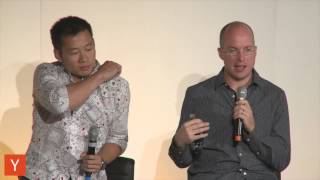
Mark Zuckerberg talks about Facebook's early days and entrepreneurial lessons at Y Combinator's Startup School 2012
Full Transcript
[Applause] welcome everybody um getting bigger yeah yeah I hear you guys are too um okay so um these are the questions that I was curious about um and I think they'll be the questions you guys are curious about too I'm going to ask a lot about the very early days of Facebook um we were just talking about them in the back it's it was fascinating I sort of wish you could have heard it we'll do our best to try and reproduce it um so here's a question that might be a little bit difficult um how long before 2004 could something like Facebook have succeeded like what was the last thing that was needed to fall into place could someone have done it in 1995 or 2000 yeah no it's an interesting question um there were certain elements that we certainly bootstrapped off of and and kind of used to hack early identity right so one of the things that that people don't think about that often today is early on we wanted to establish this culture of real ident on the service and you know there weren't really any other online services or communities where people were openly their their real self before that and one of the ways that we uh kind of determined that someone was really who they said they were and their credentials were real were everyone had school email addresses and I don't know how much before um 2004 I assume you know probably around 2000 all schools started issuing email addresses but that was really this critical thing that that made it so that we could get started it was this counterintuitive thing that um not many other services were we're using so school email addresses were the original source of identity well that's how we knew what school you were in right and that you weren't just a sock puet cuz you can't just get the school to keep creating new email addresses yeah so and it also ad made it that people couldn't sign up for fake accounts right people typically only have one school account so having being able to bootstrap off of that was this really nice early thing that that helped us establish this culture of real identity and then once we got to a few million people or 10 million people where that culture was established it was able to bootstrap into something that was much bigger that kept most of that culture even though now obviously most people in the world don't have emails that are issued by some institution that vouches for their identity now people log in through Facebook now you're the source of identity well you know comes around but you know but but to your question about when would it have been possible you know one of the big trends that we see is that the amount that any individual shares in a given year seems to be growing at this exponentially increasing rate Zuckerberg's law yeah I don't call it that but but other people do you heard it here first but um you know I I mean it is this kind of social networking version of Mo's law and it's interesting and you know what that suggests to me is you know if if we expect that this rate is going to double um every year then you know look out 10 years 2 to the 10th is 1024 right so 10 years from now people will be sharing about a thousand times as many things we have to get better better adhesion next year I feel like everything will be cool anyway I just have a good I have a good feeling about today I don't think that's a bad Omen no that's wonderful um so anyhow so I think the question is not would Facebook have not been possible before 2004 it would have been in some capacity but people would have shared less and if you fast forward 5 years um there's going to be a version of there going to be all these social services that people are using to share way more and I think that anyone here could be can kind of think about you know okay 10 years from now people are going to be sharing a thousand times as much stuff a day if this if this trend continues what's what things are going to have to exist in the world um what kind of services are going to have to exist in order for that to be possible Instagram for toilets um that's the final frontier I mean Instagram is killing it I mean they're they're doing really well so that's a good Frontier all right so when you first launched in the very beginning the features were sort of profile with like a profile photo and your name and who you are and also you included things like what house you lived in um what dorm you lived in um and what courses you were taking do you think it would have worked without that would it have been enough just to have profiles you know it's a really interesting question and we certainly since then have evolved and wanted to make a more general service so we've so we've dropped some of those things but I remember um there's this early debate that Dustin and I had where we had to do some manual work for every school that we that we released Facebook ad and um in order to do that we basically went through and we parsed the course cataloges of the schools to make sure that the data was clean and um and I remember having this debate where Dustin was like we could just expand so much faster um or it would just be easier I mean we we were Bound by server capacity but it would be easier to launch new schools um if we didn't have to have course cataloges for for each school and we just had this really long debate about what quality meant for us and the the community that we wanted to establish and and the culture of it and um you know in retrospect you know maybe it wouldn't have had a huge difference on on how things played out but it definitely kind of set this tone where there's a lot of kind of clean data on Facebook um you can rely on it it feels like a college specific thing um which was valuable early on for setting the culture even though obviously since then we we've grown beyond that and you know I I think you guys in the projects that you work on you're going to have a lot of similar questions right I mean there's the the famous 8020 rule where you know you get 80% of the benefit by doing 20% of the work uh but you can't just 8020 everything right I mean there have to be certain things that you just are the best at right and that you go way further than anyone else at to establish this kind of quality bar and have your product be the best thing that's out there so you know whether we had to do that one or had to do something we had to do I think enough of those things or else we just wouldn't have been the best service out there do you remember when you got rid of courses when did you stop par including course catalog I think probably when we expanded Beyond colleges really so you kept doing courses all through colleges for like hundreds of colleges is um I think we eventually figured out a way that just crowdsourced it and made it a bit easier once we had enough data that we could extrapolate from the colleges that we had in place but we did it for probably way longer than was rational do you do you remember how much your first server cost you said you oh yeah no $85 $85 yeah no I and I remember that because um that was the gating factor for us launching new schools I I mean we had this philosophy from the very beginning that we didn't want to be this project it wasn't even a company at the very beginning but we didn't want to be burning a lot of money right we weren't planning on raising a lot of money we didn't want to be one of these things that raised a bunch of money and you know was losing a bunch of money and then decided that we'd somehow pull it through at the end and um so you know so $85 for the first server put ads on the site and the the ads at the beginning were um we just were running some kind of AD Network and they do you remember what the first ad was um no I don't um I I don't how did you get ads um this was Eduardo's job early on was I mean he was your ad sales yeah he basically like he was responsible for making sure that we had enough money to to keep things running in the beginning and um you know but basically I mean so so server was $85 and you know Dustin and I basically worked on kind of efficiency and making sure that we can fit more schools onto each server um and um and Eduardo worked on selling more ads or making a deal so that we can get an ad Network so that way we can we can make more money but then whenever we had more money we rented another $85 a month server and we kind of went from there and um I don't it's just an interesting way of sing you never spent money you didn't have in the beginning not in the beginning no and then I mean even that was the constraint on your growth rate how many new $85 is you could get yeah and I mean it was actually good because I I mean you know sometimes it's really nice to have the time to get your product to be awesome and deal with scaling problems and one of the things that was interesting was um you know at the time I don't know how how many people remember this but I mean frster was the service that had massive scaling problems and you know was they were they grew quickly and it was really hard for them to scale and um you know the fact that we could kind of go College by college and and kind of optimize the service and make it more efficient and offer new features but make sure that they worked um I think was really key I mean you're talking about people who had never built a company before we never built any large scale software or anything so having that period where we could just bake it um and you know people these days like to talk about how these Services grow super quickly and Facebook did grow quickly but I think it took a year for us to get a million users and we thought that that was incredibly fast but um and and I think it is but it it wasn't as quick as a lot of things grow today and I think actually having that time to bake it was really valuable for us and there were like 2,000 users at Harvard um that's 500x in a year that's pretty fast well there I think around 4,000 or 5,000 undergrads at Harvard I I remember reading you got half of them I mean presumably you no there was 23s or 3/4 or something in the first two weeks so I mean the thing that we found was that basically we'd open it up at a school schol and um and within you know a couple of weeks then the vast majority of the students would would be on the service was there a school ever that you opened it and it didn't work it didn't stick um some schools took longer than others depending on the size of the school so what we basically did was so I launched it at Harvard first because I wanted it right I mean I built it for myself um I I like I really wanted to be able to use the service and you know this is one of the ironies is I I started building Facebook because I wanted to use it in college and then I immediately left college so um didn't really get to do that but um just expand it to everybody else outside college so it worked out uh but you know so then after Harvard all these schools started a lot of students from other schools started writing to us and asking for us to expand and um we weren't looking to start a company right and I I figured that eventually something like this would would exist at Large Scale but um you know one of the one of the interesting jux depositions that was going on um at the time was I remember distinctly I had this one friend um who I I went and got pizza with almost every night we did all our computer science problem sets together at at Harvard and at the time I remember talking to him about how um I was working on this Facebook thing and I I thought it would be cool for Harvard and I I really was excited about it because I wanted to use it but at the same time how I thought that over time someone would definitely go build this version of this for the world but it wasn't going to be us it was going to be you know Microsoft or you know someone who built software for hundreds of millions of people it's like who were we were college students right we're not qualified in any way to build this and you I think a lot of my takeaway from that was that we just kind of cared more than those other companies about making it exist so any but back to your back to your kind of question and off that tangent um the the first set of schools that we launched out after Harvard were schools that had other kind of school specific social networks so I think it was Stanford had something um Columbia had something and I think Yale had something so I think why did you choose ones that had school specific social network because they become competitors well I wanted to go to the schools that I thought would be the hardest for us to succeed at because I knew that if we had a product that was better than everything else that other students were making at other colleges then it would be worth investing in and putting putting time into but I didn't want to just kind of like get into a project where there would end up being this huge Legacy of maintaining it if ultimately there were just going to be different things that were as good as it so and we thought that this was going to be good um and you know we launched it at it was Yale Stanford Columbia and um and yeah I mean pretty quickly I think it just so you felt probably that you could have just gone to some random school and it would have succeeded you chose those because they had nent competitors yeah I mean I think what we saw at those schools was people wanted to use something like this right so we just wanted to make sure that what we had was like way better than anything else that was out there worth you know putting time into do you think I know I read in the Crimson article about when you first launch hundreds of people sign up for new hundreds hundreds sign up for new Facebook website um that is not the onion that is the Crimson sometimes hard to distinguish um Harvard students huh um okay so uh do you think though they said in this article that Harvard the Harvard Computer Services people were working on a university-wide Facebook their problem was to like they couldn't figure out how to restrict information enough right um do you think if that had already existed if you had been a couple years younger and you had come to Harvard and this already existed do you think you would have ever started Facebook I don't know I mean there's this trend that I was talking about before where each year people share more and more right so I think that you can kind of map out at at any given point and I think you can look at the the internet and say okay there's enough sharing to support certain products right so Wikipedia came really before Facebook because there was a smaller amount of sharing could support information about all the public entities in the world right but in order to have enough sharing to support some basic information so you can look up anyone and find some interesting stuff about them then um that that required more sharing so we had to be further along this curve um and you know I mean a couple years earlier someone might have been able to do something that was more basic but a couple years later even a couple years from now someone will be able to build something that is just so much more encompassing and allows people to learn so much more about the people around them than what is even built today so our kind of continual Mission and job is to keep on building that next thing and I mean that's what we live for at Facebook and what excites us so even if Harvard even if the university had built something something there would always you could have built the next thing yeah and it's obviously always hard to to tell exactly how things would have played out but I mean one of the interesting things about Facebook was it wasn't just a picture and some basic info I andan it pretty quickly gave people the ability to share more stuff right and and one of the early stories that I think is is pretty instructive for anyone who's trying to to build a startup is you know we really listen to what our users wanted right and listening means both kind of qualitatively listening to the words that they say and Quant atively looking at the behaviors that they take and you know at the beginning we we um we had one profile picture that you could have on on your on your profile and um what we observed was there was this Behavior where a lot of people would every day upload a new profile picture and you know our takeaway from this was that you know people there's this very strong demand to have a service where people could share more photos and it actually wasn't until we had the server capacity um and the engineering team bandwidth to actually build a full photo sharing service but that that become obviously one one of the key parts of Facebook I think we're over three or 400 million photos shared a day now so I mean it's pretty crazy but um you know obviously no Facebook that that any University would have built would have supported that right and you know even just like that kind of any yeah any incremental I mean they would have just had whatever mug shot you have on your your card right would have been your picture so they would have chosen the picture yeah you couldn't even have chosen the picture yeah I can totally see how it would have been um do you remember when you first showed up in college what you plan to do afterwards did you think you were going to go to graduate school or did you think you were going to get a job were when I first went to college I actually was planning on being a Classics major I I loved Classics in in in high school um Latin and Greek I I just I found it fascinating um and my my sister actually did go on and do that and she's now PhD student in Classics and we talk about this all the time it's still fascinating to me um when I was in college I actually wasn't a computer science major I was a Psychology major um I I didn't really get around to taking that many classes cuz I left pretty quickly and I I actually ended up taking more computer science classes than than psychology classes but I I was never you know I don't know so you had no plan no I mean you're going to be a barista no I I probably would have um I probably would have gotten an engineering job is is my sense and I I you would have gotten sucked into programming uh well I mean I like programming and I I really you know growing up I I always had a lot of respect for for Microsoft and what they built and a lot of people from Harvard go to mic Micosoft and went to Microsoft and I maybe I would have done that I I I don't know it's it's really obviously hard to say um later I I made this bet with my sister Donna the classics um PhD who I was talking about before who um I I bet her when I was starting College before she was that um or she bet me that she would finish college before me and um and I was like all right that's I'll take that bet it's like a twoe head start I I don't know and um and then after after when I dropped out I was talking to my mom and she's like yeah no I always knew you would drop out of college I was like oh thanks Mom so I don't know you know who knows that you would zoom out of the top or fall out of the bottom I I never asked maybe I should do you think your parents knew that you would always like run your own show CU if you ask them I think they'd probably say yes but um like did you want to start startups no and I mean I think that's actually a really interesting part of this for me is and I mean being in a place like this where where obviously a lot of you guys are are thinking about starting these starting companies and you know for me so much of the lesson that that I I I feel like I've learned is I feel like it's really hard to decide to start a company right you know Facebook I didn't start it to start a company I started it because I really wanted this thing personally and I believed that it should exist globally although I wasn't quite sure that that we would be able to play a role in doing that and um it was mostly just through kind of like wanting to build it and having it be this Hobby and getting people around me excited that it eventually kind of evolved into and got the momentum to become a company but I never really understood the psychology of deciding that you want to start a company before you understand what you want to do and and I know that that's not that that's different from your philosophy on this no no believe me I wish we would get more people who who were the company started them rather than vice versa because one of the issues is just once you I this gets back to the question of why did we why did we first open at at colleges that had competitors I I have this big fear I think of getting locked into doing things that aren't actually the most impactful things and to me this is like the trait that entrepreneurs have is they just have this like laser-like ability to go find where they can have the most impact and you know when you take on a new project especially if you hire people or start a company you're doing that project and I mean there there are ways there obviously different ways that it can exit and all that but um I think having the flexibility to explore a lot of different things which you can do when you're in college which is one of the amazing things about being in college is you can work on all these Hobbies um and and and code a lot of stuff and and try a lot of different things it's this amazing flexibility that I think most people take for granted and once you decide okay I'm going to start a company and I'm going to do it with someone else you immediately now need to convince someone else if you want to change your mind on something and I I think people really undervalue the option value and flexibility so Dan College um I I think explore what you want to do before committing is really like the the key thing and keep yourself flexible um and no I think that that's I me I agree yeah but I think and you can definitely do that within the framework of a company but I think you have to be wary about starting a company um too rigidly because you're you're going to change what you do I mean people talk about pivots all the time as if it's like it didn't didn't your thing didn't work so you pivoted Facebook pivoted many times um just that you know we we kind of we were college and then we were not college and then we were just a website and then we were a platform right and um you're going to change what you do right and um you have there's another word for the kind of pivots you were talking about expansions right that's not what people usually mean by pivoting well you know I flexibility yeah um I'm curious when you first started like there's a difference between making something where people sign up and making something where people keep coming back right what was it you were talking about the the way you measured people's behavior what was the feature that kept people coming back to Facebook over and over again once they created their profile I mean I think it really just gets down to what makes humans human right I mean like I this comes back to the my my studying psychology and all that but I mean the human brain is is kind of uniquely wired to process things about people right it's like when I see when I look out I see faces I don't see you know chairs or the room around people it's like we're we're hardwired to think about people I mean there are whole parts of you know the visual cortex that just process the slightest kind of micro movements of your face to process emotion this is like what people are and what fascinates them um and and it's how we um how we process the world I actually I I heard the study recently that I think is interesting which is that most humans if you if you take an MRI when they're dreaming they dream about social interactions and humans are the only animal that does that um so now okay but there was no service online that I mean when when I when I thought about the internet before Facebook um there were all these things I I thought Google and search engines were amazing right you can type in something and get access to any information that you wanted but you couldn't learn about the people around you right and because most of that information isn't public and just out there ready to be indexed by by some search engine so um so there had to be a service that gave people the power to share the things that they wanted and and control it in the way that they wanted um and and Facebook did that and I think that it's you know one one um definition of technology that I think is interesting is it extends some natural human capacity right so glasses um or contacts extend your ability to see right Steve Jobs once famously um compared a computer to being a bicycle for your mind right and um basically extending your your ability to think and I mean the word computer is the Latin think together right so it's like you're you're thinking together the I mean a social network I think extends people's very real social capacity I mean you hear all these um approximations I mean there's this famous dunbar's number humans have the capacity to maintain empathetic relationships with about 150 people communities about 150 people I think Facebook extends that evidence of that within Facebook by the way do you see certain things that stop at 150 um naturally when people sign up the average amount of friends that they get is around 150 but then over time it can expand and you can keep in touch and stay in touch with many more people so I I think it's like so given that um I I actually think one of the lessons from that is like do something that's fundamental right I mean I think a lot of people and a lot of the companies that I see are are operating on on small problems right and um and it's cool if you want to be an entrepreneur and solve a and and what you're primarily trying to do is is build a company and and solve some tangible problem but but I think that the most interesting things operate on these phenoma in the world which are really just fundamental to how humans or the world operate so what you did was something that was fundamental for a small market and then you just expand the market from Beyond Harvard students to everyone but Harvard students are sufficiently like other people it was yeah it was fundamental for me right it's like I like I felt this need really acutely I really wanted this and um so yeah and then I think it just I mean that's one of the things that I think we were lucky about and and and kind of the expansion of the market was that um it turned out that this wasn't something that was just for college students almost everyone in the world has friends and family and want to stay in touch with those people so it ended up being a pretty ubiquitous service in retrospect this is a bit of a controversial question perhaps but in retrospect do you think Myspace had a chance since once you started and you got all the college students I mean the college students are arguably like the center of gravity socially right you own all the college students it feels like you know from the point you start expanding out of Harvard Myspace might might not have known it maybe you didn't even know it but it seems like in retrospect they were doomed you know I don't I don't see it that way actually I they could have won no it's not about winning and losing it's about doing something that's valuable right and there are more than one more than one social network not really there are many there there I I mean my view of the world is that almost every product in in category is going to get transformed and reimagined to be social so there there were things that Myspace did that Facebook has never done um you know Myspace I think was was a much better service early on for meeting new people right Facebook was never primarily about meeting new people it was about staying connected with with the people that you knew and um and kind of mapping out the real relationships that existed now I I think part of the issue is they they saw us growing and they felt threatened by that and tried to copy what we were doing and and that's like you're never going to win that way right I mean it's I think of all these interesting um social services and apps that are getting built today I mean think about all the new apps that you guys install on your phones um there are so many interesting things and you know mean eight out of the top 10 iOS apps um plug into Facebook 50% of the top 400 apps plug into Facebook they're all kind of socially integrated in in these ways um but companies that are getting started now um that are just trying to copy the stuff that um that the other companies are doing just aren't aren't Successful by the way how we doing for time is there anybody in charge of time 12:27 12:27 what time do we start few more minutes all right we'll ask you a few more questions um so you think do you think Myspace could have survived if they had gone off into some marginal territory like I think that there is a real value in the world people have a fundamental need I think to stay connected with the people they know and I think people have many fundamental needs to meet new people and expand their Horizons as well and that's never been the primary problem that Facebook is trying to solve and um and I I think it's something that we can do um it's something that someone else could do using our platform or that someone else could do using building it independently and um you know I never bought the music thing for Myspace so I mean they they they kind of always say that they were a music service I'm not sure that why did they do that I don't know you have to ask them but maybe they C they counted on bands to spam their fans or something like that that's a that's a powerful force in the world um so before we go I want to ask ask you about how you ended up out here um do you what was what was the sort of how did how did you end up in that house in paloalto was it something you decided at the last minute um I don't actually remember um you know I I remember bits of the story but you know so I first I wrote the first version of of Facebook January of 2004 right and released it in February and um the reason why I did it in January was was because at the time Harvard had this intercession thing um it's kind of weird and I think that they they don't have reading period anymore I think they've changed it so now um now I yeah well you know now that because they try to kick out everyone who starts anything interesting there but um but that's that's um but um I think that I think that they're actually trying to change that but um but it is striking um the so now they've made it I think so finals are are before you go away for holidays but they they had this thing before where in January um you basically just have this dead month where you could study for finals I was like all you could study for finals St hypothetically you wanted to could you could study for finals um I wondered when I saw it was started in January it was started in Reading period and it was because you had this time where you weren't too busy with stuff yeah although I actually um I probably should have been studying there's this other story that I think is very funny which is um I was taking this course Rome of Augustus and it was it was one of the Core Curriculum classes that we had and the final was um the there these pieces of art that you study throughout the class and then they give you some um on the funnel they they show you some of the pieces of Art and you have to write about the historical significance of them and you know I hadn't really done much of the reading in the class I mostly just spent my time programming and um building stuff that that I enjoyed and you know I could have used reading period to to study for this but instead I I I spent it reading building Facebook so instead what I did was I I hacked together this website where I I went and downloaded from from the course website the 200 or so images that were going to be potentially on the final and I just built this very simple um page site where it showed one of the images and then you could contribute what you thought was significant about it and then you could see what other people thought was significant about it and then I um and then you could go to next and it would pull up a random one and um and then I emailed it to the class list and I was like hey guys I built this study tool um if if anyone would find this interesting and and everyone just populated um this thing for me and and it was wonderful and um that the professor after that um think mentioned that the grades on the final had never been higher before so um [Music] so so anyhow so yeah so so crowdsourced studying so you work on Facebook you know and you know a lot of interesting social dynamics that you can apply to almost any um category that you choose to build for but yeah so so I built um I I built the first version in January some of the time I was at Harvard supposed to be studying I actually went and visited a couple of friends one who was at Stanford and one who is out at Caltech and um and at the time um I i' never really been out to California before and you went in January in January and what did you think the wether was pretty nice I remember you know coming in to the like I flew into SFO and was driving down 101 and I saw these buildings for all these companies like wow this is a where these Technologies comp these technology companies come from this is amazing and um and you know and then I was just like oh the weather also is awesome and I I remember I'd been at Harvard for a freshman year and then I stayed there for the summer and then sophomore year so by the time that sophomore summer kind of came around my friends and I were just like okay well let's let's go somewhere else right and um let's rent a place um in California so we decided to get a place in in paloalto and the idea at the time wasn't n that we were actually were not thinking about moving to California or dropping out the actually the actual thought that had crossed that that was in our mind was it'll be neat to be around some of these other great companies that are getting built one day maybe we'll find something that we'll build a company out of but surely this isn't it and um so we so we went out to California and um and we just I remember this conversation where one day Dustin pulled me aside and was like you know we we're getting to have a lot of users and um we're we are have an increasing number of servers we have no opsy right so we're the Ops Guy and um and this was before kind of ec2 right so you didn't have to so you had to do more to manage manage your your your own servers at that point and she's like you know this is this is really hard um I don't think that we can do this and take a full course load um so let's so Harvard has this policy where you can take as much time as you want off from school so um why don't we just take one term off and then just try to get it under control and build the rolings that way um we can go back for spring semester and run it more autonomously and and it'll grow and we'll be able to run it more autonomously so we did that um and and of course we raised money from Peter teal but we told him the plan right and and kind of explained what you told him you might go back to school yeah and I think he didn't believe us um but you know smart knew my life is just this this long history of people thinking I was going to drop out well before I did um but um but so then you know spring term came along and you know we hadn't quite built the tooling and automation so you know let's take another term off and then finally at some point we we just figured that we were that we were out there but by then I mean we had you know millions of of of users so you didn't definitely decide not to go back to school until you had millions of users oh yeah yeah wow hey I I think I could still go back Harvard Harvard has this policy where you can go back for as long as you want whatever their policy was I'm sure they would been the rules in your case all right are we are we done are we over is there anybody watching the time keep going well we can't have to go to Mark has a wedding he has to go I do it's actually the guy who I um who I said before I used to go out to pizza with him every almost every night we were doing our CS problem sets with he's he joined Facebook and we were really good friends and he's getting married right after this so I have to go and run off to that um but thank you guys
Original Description
Mark Zuckerberg, founder of Facebook, at Y Combinator Startup School on October 20, 2012. Startup School is YC's free online program for founders. Sign up to access the full curriculum and over $100k in deals! https://www.startupschool.org/
Presented in Stanford Memorial Auditorium by Y Combinator and the Stanford Technology Ventures Program.
Watch on YouTube ↗
(saves to browser)
Sign in to unlock AI tutor explanation · ⚡30
Playlist
Uploads from Y Combinator · Y Combinator · 1 of 60
← Previous
Next →
▶
 2
2
 3
3
 4
4
 5
5
 6
6
 7
7
 8
8
 9
9
 10
10
 11
11
 12
12
 13
13
 14
14
 15
15
 16
16
 17
17
 18
18
 19
19
 20
20
 21
21
 22
22
 23
23
 24
24
 25
25
 26
26
 27
27
 28
28
 29
29
 30
30
 31
31
 32
32
 33
33
 34
34
 35
35
 36
36
 37
37
 38
38
 39
39
 40
40
 41
41
 42
42
 43
43
 44
44
 45
45
 46
46
 47
47
 48
48
 49
49
 50
50
 51
51
 52
52
 53
53
 54
54
 55
55
 56
56
 57
57
 58
58
 59
59
 60
60

Mark Zuckerberg at Startup School 2012
Y Combinator
Jessica Livingston at Startup School 2012
Y Combinator
Ben Silbermann at Startup School 2012
Y Combinator
David Rusenko at Startup School 2012
Y Combinator
Tom Preston Werner at Startup School 2012
Y Combinator
Joel Spolsky at Startup School 2012
Y Combinator
Travis Kalanick at Startup School 2012
Y Combinator
Hiroshi Mikitani at Startup School 2012
Y Combinator
Ron Conway at Startup School 2012
Y Combinator
Balaji Srinivasan at Startup School 2013
Y Combinator
Chris Dixon at Startup School 2013
Y Combinator
Dan Siroker at Startup School 2013
Y Combinator
Diane Greene at Startup School 2013
Y Combinator
Jack Dorsey at Startup School 2013
Y Combinator
Mark Zuckerberg at Startup School 2013
Y Combinator
Nate Blecharczyk at Startup School 2013
Y Combinator
Phil Libin at Startup School 2013
Y Combinator
Ron Conway at Startup School 2013
Y Combinator
Office Hours at Startup School 2013 with Paul Graham and Sam Altman
Y Combinator
Chase Adam at Startup School 2013
Y Combinator
Jessica Livingston at Female Founders Conference 2014
Y Combinator
Julia Hartz at Female Founders Conference 2014
Y Combinator
Elli Sharef at Female Founders Conference 2014
Y Combinator
Kathryn Minshew at Female Founders Conference 2014
Y Combinator
Elizabeth Iorns at Female Founders Conference 2014
Y Combinator
Jessica Mah at Female Founders Conference 2014
Y Combinator
Office Hours at Startup School NY 2014
Y Combinator
Apoorva Mehta at Startup School NY 2014
Y Combinator
David Lee at Startup School NY 2014
Y Combinator
Chase Adam at Startup School NY 2014
Y Combinator
Closing Remarks at Startup School NY 2014
Y Combinator
Introduction at Startup School NY 2014
Y Combinator
Shana Fisher at Startup School NY 2014
Y Combinator
Zach Sims at Startup School NY 2014
Y Combinator
Kathryn Minshew at Startup School NY 2014
Y Combinator
Adora Cheung
Y Combinator
Ian Hogarth
Y Combinator
Hiroki Takeuchi
Y Combinator
Alfred Lin with Justin Kan
Y Combinator
Urska Srsen
Y Combinator
Office Hours with Kevin & Qasar
Y Combinator
Paul Buchheit
Y Combinator
Y Combinator Partners Q&A
Y Combinator
Eric Migicovsky at Startup School SV 2014
Y Combinator
Jim Goetz and Jan Koum at Startup School SV 2014
Y Combinator
Michelle Zatlyn and Matthew Prince at Startup School SV 2014
Y Combinator
Jessica Livingston Introduces Startup School SV 2014
Y Combinator
Danae Ringelmann at Startup School SV 2014
Y Combinator
Hosain Rahman at Startup School SV 2014
Y Combinator
Kevin Systrom at Startup School SV 2014
Y Combinator
Emmett Shear at Startup School SV 2014
Y Combinator
Reid Hoffman at Startup School SV 2014
Y Combinator
Ron Conway at Startup School SV 2014
Y Combinator
Andrew Mason at Startup School SV 2014
Y Combinator
Tracy Young Speaks at Female Founders Conference 2015
Y Combinator
Ruchi Sanghvi Speaks at Female Founders Conference 2015
Y Combinator
Kimberly Bryant Speaks at Female Founders Conference 2015
Y Combinator
Fundraising Panel at Female Founders Conference 2015
Y Combinator
Jessica Livingston Speaks at Female Founders Conference 2015
Y Combinator
Adora Cheung Speaks at Female Founders Conference 2015
Y Combinator
More on: Startup Basics
View skill →







Related Reads
📰
📰
📰
📰
Helping Build a Company From Scratch, and What It Taught Me About Leadership
Medium · Startup
Mobile Skin Cutting Machine: The Complete Guide for Entrepreneurs and Mobile Accessory Businesses (2026)
Dev.to AI
‘Listing is a must’: China’s LimX raises $200m as the humanoid IPO race heats up
The Next Web AI
Business Models In The AI Era: It’s Time To Get Specific
Forbes Innovation
🎓
Tutor Explanation
 DeepCamp AI