5 Ways SQL Is Used in the Data Industry #shorts #data #sql #datascientist #dataanalyst
Key Takeaways
The video discusses five ways SQL is utilized in the data industry, including ad hoc analysis, report generation, EDA machine learning, BI tools, and ETL/data migration, using tools such as relational databases, SQL store procedures, Jupyter notebooks, PowerBI, and Tableau.
Full Transcript
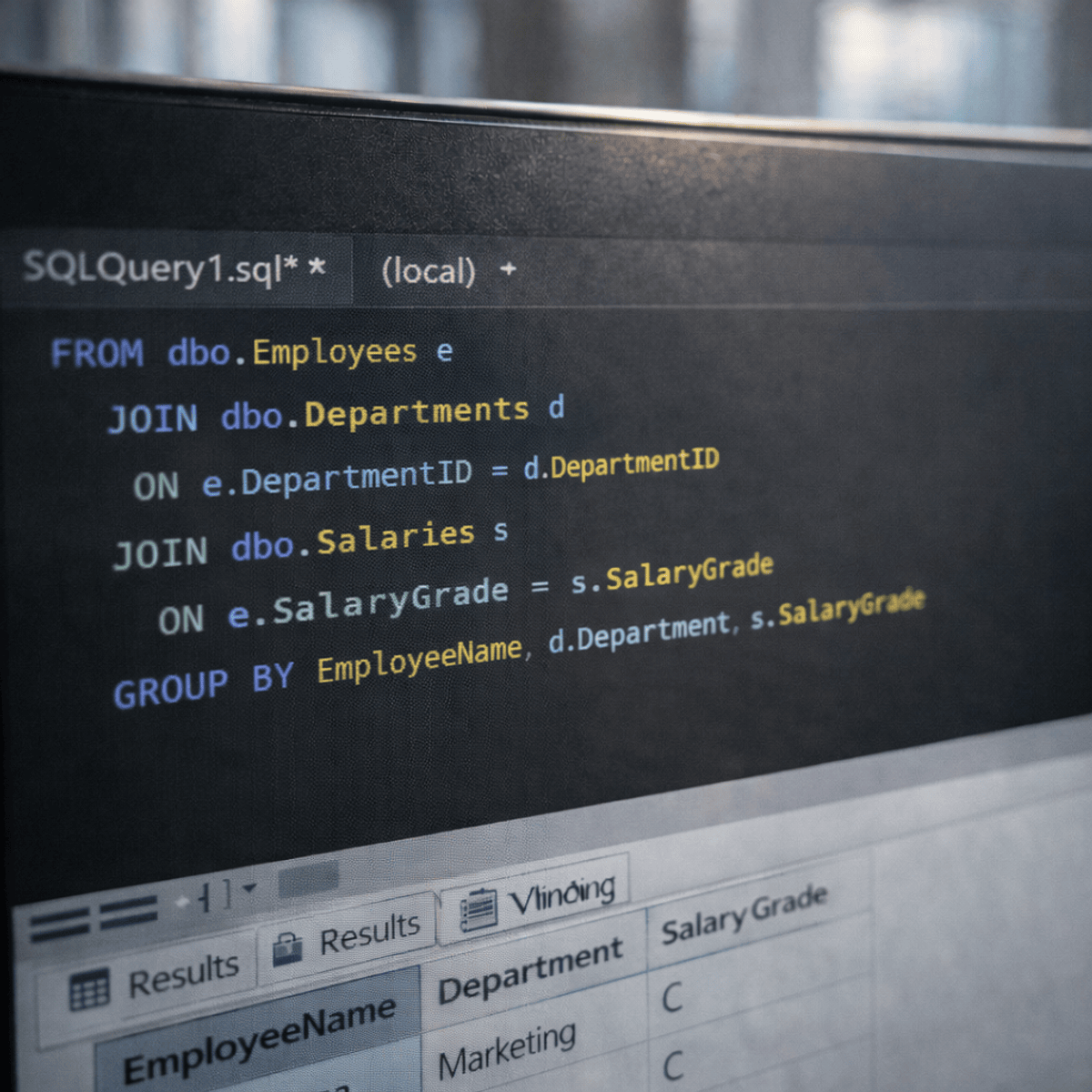
There are five ways SQL is used in the data industry. Number one is ad hoc analysis. As a data analyst, you might write ad hoc SQL queries on your relational database to get insights on your data. Number two is report generation. Your business manager can come to you and ask to generate a report for slicing and dicing data. For this purpose, you might write SQL store procedure. Number three is EDA machine learning. As a data scientist, when you're building a machine learning model, you need to pull the data in your Jupyter notebook. And often this data is in SQL database. You'll be writing SQL query for that. Fourth one is inside BI tools. When you're plugging your data source to PowerBI or Tableau, you will write SQL query to filter or transform data. The last one is ETL and data migration. Data engineers use SQL to perform ETL and data transformation in their pipeline.
Watch on YouTube ↗
(saves to browser)
Sign in to unlock AI tutor explanation · ⚡30
Playlist
Uploads from codebasics · codebasics · 0 of 60
← Previous
Next →
1
 2
2
 3
3
 4
4
 5
5
 6
6
 7
7
 8
8
 9
9
 10
10
 11
11
 12
12
 13
13
 14
14
 15
15
 16
16
 17
17
 18
18
 19
19
 20
20
 21
21
 22
22
 23
23
 24
24
 25
25
 26
26
 27
27
 28
28
 29
29
 30
30
 31
31
 32
32
 33
33
 34
34
 35
35
 36
36
 37
37
 38
38
 39
39
 40
40
 41
41
 42
42
 43
43
 44
44
 45
45
 46
46
 47
47
 48
48
 49
49
 50
50
 51
51
 52
52
 53
53
 54
54
 55
55
 56
56
 57
57
 58
58
 59
59
 60
60

Python Tutorial - 1. Install python on windows
codebasics
Python Tutorial - 2. Variables
codebasics
Python Tutorial - 3. Numbers
codebasics
Python Tutorial - 4. Strings
codebasics
Python Tutorial - 5. Lists
codebasics
Python Tutorial - 6. Install PyCharm on Windows
codebasics
PyCharm Tutorial - 7. Debug python code using PyCharm
codebasics
Python Tutorial - 8. If Statement
codebasics
Python Tutorial - 9. For loop
codebasics
Python Tutorial - 10. Functions
codebasics
Python Tutorial - 11. Dictionaries and Tuples
codebasics
Python Tutorial - 12. Modules
codebasics
Python Tutorial - 13. Reading/Writing Files
codebasics
How to install Julia on Windows
codebasics
Python Tutorial - 14. Working With JSON
codebasics
Julia Tutorial - 1. Variables
codebasics
Julia Tutorial - 2. Numbers
codebasics
Python Tutorial - 15. if __name__ == "__main__"
codebasics
Julia Tutorial - Why Should I Learn Julia Programming Language
codebasics
Python Tutorial - 16. Exception Handling
codebasics
Julia Tutorial - 3. Complex and Rational Numbers
codebasics
Julia Tutorial - 4. Strings
codebasics
Python Tutorial - 17. Class and Objects
codebasics
Julia Tutorial - 5. Functions
codebasics
Julia Tutorial - 6. If Statement and Ternary Operator
codebasics
Julia Tutorial - 7. For While Loop
codebasics
Python Tutorial - 18. Inheritance
codebasics
Julia Tutorial - 8. begin and (;) Compound Expressions
codebasics
Python Tutorial - 12.1 - Install Python Module (using pip)
codebasics
Julia Tutorial - 9. Tasks (a.k.a. Generators or Coroutines)
codebasics
Julia Tutorial - 10. Exception Handling
codebasics
Python Tutorial - 19. Multiple Inheritance
codebasics
Python Tutorial - 20. Raise Exception And Finally
codebasics
Python Tutorial - 21. Iterators
codebasics
Python Tutorial - 22. Generators
codebasics
Python Tutorial - 23. List Set Dict Comprehensions
codebasics
Python Tutorial - 24. Sets and Frozen Sets
codebasics
Python Tutorial - 25. Command line argument processing using argparse
codebasics
Debugging Tips - What is bug and debugging?
codebasics
Debugging Tips - Conditional Breakpoint
codebasics
Debugging Tips - Watches and Call Stack
codebasics
Python Tutorial - 26. Multithreading - Introduction
codebasics
Git Tutorial 3: How To Install Git
codebasics
Git Tutorial 1: What is git / What is version control system?
codebasics
Git Tutorial 2 : What is Github? | github tutorial
codebasics
Git Tutorial 4: Basic Commands: add, commit, push
codebasics
Git Tutorial 5: Undoing/Reverting/Resetting code changes
codebasics
Git Tutorial 6: Branches (Create, Merge, Delete a branch)
codebasics
Git Github Tutorial 10: What is Pull Request?
codebasics
Git Tutorial 7: What is HEAD?
codebasics
Git Tutorial 9: Diff and Merge using meld
codebasics
Difference between Multiprocessing and Multithreading
codebasics
Python Tutorial - 27. Multiprocessing Introduction
codebasics
Python Tutorial - 28. Sharing Data Between Processes Using Array and Value
codebasics
Git Tutorial 8 - .gitignore file
codebasics
Python Tutorial - 29. Sharing Data Between Processes Using Multiprocessing Queue
codebasics
Python Tutorial - 30. Multiprocessing Lock
codebasics
Python Tutorial - 31. Multiprocessing Pool (Map Reduce)
codebasics
What is code?
codebasics
Python unit testing - pytest introduction
codebasics
More on: SQL Analytics
View skill →





Related Reads
📰
📰
📰
📰
Dari Membuat Program Pendeteksi Hujan Sampai Hak Cipta: Apa yang Saya Pelajari Tentang Data &…
Medium · Programming
How to Query Databricks from Salesforce Apex (Without Copying a Billion Rows)
Dev.to · Md Mohiuddin
Can a Data Science Course Really Change Your Career in 2026?-IABAC
Medium · Data Science
How to Add and Manage Excel Slicers in Python: A Practical Guide
Medium · Python
🎓
Tutor Explanation

 DeepCamp AI