Delivering Cloud-Native Network Transformation
Skills:
Cloud Fundamentals70%
Key Takeaways
Delivering cloud-native network transformation with Google Cloud
Full Transcript
foreign [Music] hello everyone and welcome to Deutsche Telecom stage here at Mobile World Congress our next session is going to focus in on the topic of cloud native Network transformation as and is going to be hosted for you by Ray lamester who is the editorial director of Telecom TV please give them a warm Round of Applause okay thank you very much and welcome to this very special fireside chat focused on cloud native Network transformation my name is Ray lamatron I'm the editorial director at Telecom TV and I'm going to be the moderator for today's discussion but the stars of this show are two very knowledgeable and experienced Executives and I'm very glad to introduce be cash Coley Google Cloud VP of global networking and Abdu mudazir group CTO of Deutsche Telecom so let's give them a good Round of Applause be cash good to see you happy as always so we've got a short amount of time we're going to get stuck straight into the conversation so uh Abdu let's start with you um there's lots of Telco and hyperscaler relationships they've been formed now for quite some time what's special about the one between Deutsche Telecom and Google Cloud what what is it that what is it delivering that is pushing boundaries in this industry thank you Maria first off uh I'm a little bit disappointed because he was telling us it's going to be about movies now it's about clouds it's not bad no um in a serious note I think what is special about this joint collaboration that we have going is we have two companies that have a very strong engineering culture and Engineering competence and what we're trying to do is not take off the short product that's already solved all the problem but rather start from what are the open problems that we need to address and then try to come from a real technical solution perspective and solve that and that's exactly what makes this collaboration very unique and very important okay now uh be cash what kind of challenges do Telco workloads bring to to Google Cloud because this is a very particular industry and how has the relationship with Deutsche Telecom changed the way that Google Cloud Works uh with its Telco Partners what have you learned first of all um Abdul thank you for uh inviting me here um you know telcos uh have always been a national partner in many ways to Google whether it's Android as an operating system whether it's pixel and other devices and of course Cloud now there are many natural collaborations between Telecom carriers such as Telecom and Google telcos of course Run mission critical systems they have stringent requirements on uptime on privacy on security reliability as a whole in many ways they are very unique to what the telcos do in some ways those are also things that Google as a company had to go and solve for quite some time because of the applications that you run like one would argue if you ask you know any of our users many of you are users that what reliability you expect out of search or Google Map you'd probably say five nine plus for sure we are heavily attacked domain oftentimes by nation states so the security is very core to what we do and privacy is of course fundamental so a lot of what we have been doing in the Telecom space are actually taking our learnings from many years of running highly critical highly reliable infrastructure and then learning from really Innovation leaders like The Watcher Telecom on the key problem that has to be solved but a lot of those lessons come from you know running Cloud native Network for a long period of time ensuring that we have build infrastructure where we can run data plane as optimally as we can for users while running control plane where it makes the most sense sometimes in Cloud ensuring that this infrastructure built for operations with SRE it's not a traditional operation model ensuring that these networks are intent driven fully automated fully automated and increasingly autonomous in in how we build it so in in many ways you know I view uh this Telco Network modernization especially in Cloud native Telco Network modernization as taking the lessons learned from what we have what we had to do in Google learning from what the telcos have been solving especially the really Innovative ones like Dodger Telecom and applying those combined knowledge as a partnership something that uh Abdul said co-innovation co-innovation is absolutely the key aspect of that and I'll say you know the last bit that I must add there uh we have been big proponent of open and open source yeah we have always done that in networking you know open Flow open config of course kubernetes same approach with the Telecom Deutsche Telecom has been a big big believer of open and open source so it's it's a combination of technology and how we bring the technology to solve real world problems that's what we're essentially doing okay yeah so I have to how does this approach meet your needs as a major Telco I mean you talk about Telco as a platform and this is a term that's just come out recently I mean what does that mean and how does Google Cloud fit into that yeah I think this approach is for us and natural approach because you could say I mean why do we even look at hyperscalers when we talk about Cloud infrastructure there has been a lot of experience that because just described but I think the approach some take and and we ourselves have been looking at is can I just take the Enterprise type hyperscale Cloud i t type Enterprise cloud and start deploying the network there and I think the simple answer is I wish because that would have made a lot of sense in terms of scale in terms of really cost and time but it just doesn't work that way we have extreme stringent requirement that because just described and I think what makes sense for us is to start from what is the end game what do we want to have we want to have a highly reliable Mission critical communication I think I can't give any excuse to someone that couldn't do emergency Call at 3am in the morning because my cloud was down it's just not acceptable and this is the kind of expectation that we have that we need to work together maybe you will be okay with an I.T system that's down you couldn't build now but I think it's a different expectation that we have and that's what we're working through now what it means for us to talk about teleco as a platform it's the platform aspect which means you don't have to have a cloud infrastructure or anything the underlining platform repeated 10 20 times and completely rebuild right and this horizontalization is what we try to achieve in Deutsche Telecom so what do we do we make sure that first off we go for multi-cloud strategy and I think my friends really know that because and everyone that we won't put all our eggs in one basket and that's not the expectation and as part of this multi-cloud strategy is also making sure that we don't have snowflakes yeah that we can't have 10 different flavors of cloud and that is something we built for scale we built for reliability and we make sure this is a platform that gets used across all our operations and that is something we scale it big time and that's exactly what it means with a Telecaster platform but I think Ray one thing that you hear me emphasize every time I talk about teleco as a platform is the radical automation bit it's not enough to have a scale and say hey I have built a cloud infrastructure that works and scales but it needs to run in autonomous mode and it won't be 100 autonomous but it needs to start from being really automated start using the capabilities of the analytics and Ai and then make sure that we drive towards the auto autonomous Network and that also needs to scale across all our operations that's what it means this partnership okay so I mean you know it's great to hear about these things but of course everybody will say well you know what are you actually doing yeah um so can you tell us about the 5G Standalone core uh proof of concept that you Google cloud and Ericsson have worked on uh in Austria which was talked about recently because the the time scales for onboarding a cloud native function and acting activating a service suggests that the that Telco Cloud dream that we've been hearing about for years might be actually close to becoming a reality and making a massive difference to the operations and efficiencies and time scales yeah absolutely right so what we chose to do was to say okay let's start from 5G core 5G essay core and why is that so I think one of the challenge that Pikachu described as well is that it's not enough to have the cloud infrastructure that's perfect and great and it has been scaled or even the automation framework that you have the application has to be designed in a cloud native way if I'm not able to do on service upgrade and I have to switch off and impact customers every time just doesn't work so which means we need to be able to start from applications that are Cloud native and start working through our way on other application and I think one of the first application in many ways was standardized as a service based architecture was 5G core and we partnered with Ericsson here in Austria where we try to onboard this application with minimum effort as much as possible and make sure that we are able to show the reliability aspect but also the ease of operation using all the tools that we have at hand and that's something we try to do and we actually succeeded in many ways and we are continuing to collaborate on that it's not the end yet but that's exactly what we achieved in Austria okay and uh because the proof of concepts are all very well but there is little use if they're just to ad hoc one-offs you know if you just do it in Austria and then it doesn't scale or can't be replicated so what can be done to be turned these kind of Pilots into reusable uh models blueprints that can actually accelerate cloud-native processes in other markets yeah sorry if I may I think this proof of concept was somewhat special because it actually took us minutes to take a 5G Sr core activated on Google distributed Cloud Edge and have a call done so it is not run off the mail proof of concept or you work on it for months and get the application to work this was real this was very real in the way we're doing it um and a lot of work has gone in preparation for it with Georgia telecoms amazing engineering team many of them are here president I saw Nathan somewhere around uh Ericsson and at great work that Ericsson did and of course the Google Cloud engineering team but there are a couple of key things that we have learned over years of running large-scale Cloud native Network infrastructure very high performance Network infrastructure on our Network and that were applied so we even though Google distributed Cloud Edge is a relatively new platform it has 15 years of development in it because we leveraged what we built for building what we call Google global cash 3000 locations in 200 plus country and and territory the same software stack that has that has gone into building that has been heavily leveraged in building GTC and why is that important like if you imagine you have a rack full of server that has a set of cloud native functions uh you ship them to an ISP in India and ISP in us and I've been in Nigeria Brazil and in Bangladesh it has to work the same way the life cycle management has to be the same and it must work every single time so it's the exact same principles that we applied in GDC and there are a couple of principles that actually five that I can I can spell out you need to have opinionated Hardware with highly integrated platform software that is designed to work together and running pure Cloud native software this is something that Abdul also pointed out a lot of the work has gone between Google analytics and Orchard Telecom in making the application fully Cloud native so you actually can do it so that's number one number two this platform must be designed from day one to be fully automated 100 automated uh so that that requires a set of assumptions that you make but you cannot let go of any of those assumptions when you are building this um three privacy and security has to be a design consideration from day one uh you cannot do this as an afterthought that's why many of these pocs take a very long time because you then solve privacy and security problems that should have been designed on on uh day one um four you must have a robust cicd platform that is designed for full life cycle management also cannot be after thought so this platform is built where it is it is ready for day one day two day three day four of the platform last you must do thorough validation in the lab so in this specific case this platform is validated in our lab in Ericsson's lab and Industrial telecoms lab right so by the time it hits what is POC this thing is designed to work and so you know I would say it's a combination of knowing what Deutsche Telecom needs out of this platform from day one making sure that went into the design and good engineering like that's what ultimately has gone into and I would I would say you know again Abdul and I discussed this quite a bit uh yeah you know with the amount of energy that I have put on doing Network function virtualization and doing Cloud native Network functions ultimately getting complex Network functions to run in a couple of minutes on a cloud I think we're we're you know Ray you said I think we're we're actually pretty close very close to where we all have been wanting to go in terms of making this production ready well I mean it's it's certainly a massive Leap Forward even from a couple of years ago when things were still taking months lots of people lots of time lots of energy so these kind of things are a real Leap Forward But ultimately uh Abdu what does this all mean at the end of the day for Deutsche telecom's customers you know what's the ultimate impact of this kind of collaborative effort ultimately what it means is if I have to act on customer demand a new feature requirement anything that comes it's not going to take me years or months to develop and to roll out it's going to be more days or weeks and this is having the ability to be able to react to customer demand and second to be able to take on and take a risk on introducing new Innovations without worrying if this is going to stick or not because you have the capability to roll back and roll out much faster and this agility is not just the theoretical concept it's something that I believe customers will get to enjoy and will be able to demand in the future and of course I I at the end we are in a business so I expect that this has to be TCO positive the total cost of ownership has to be bringing value for us as a customer as a company which we can pass on to our customers okay excellent well I mean uh for me I think that's a that's a really really important point a great point to end on but because did you want to add any final thoughts before we uh exit stage right yeah I I would I completely agree with Abdul ultimately for Telecom carriers they should be spending their time in building the most innovative business and services uh services that they can build for the customers not worrying about whether the underlying Cloud infrastructure is running because that doesn't produce any revenue for the telcos right that's a mechanism of running it and I think we have taken this very close to our heart and you know part of this approach uh in making that easy for everybody Deutsche Telecom has a fantastic engineering team there are many Telecom carriers who do not have the same engineering team that Deutsche Telecom has to make it easy for everybody we have open source this thing uh this this whole approach of automating cloud native Network function in a project called nephew in Linux Foundation yeah we announce a product called Telco Network automation which is built on top of nephew to actually make this easy and we announced something else called Telco data fabric which is again for these systems to work well you need a closed loop system where you know what's happening in your infrastructure and you can act increasingly based on AI on what's happening on the infrastructure right so bringing this whole ecosystem together for all telcos so that they can have the cloud system just work and they focus on what is really valuable for their customer which is Building Services for customers that's our goal and I think we're making some real forward progress towards that direction so thank you again for inviting us here thank you so much thank you so much great to chat to you both thank you and maybe next year we can organize the Barcelona film festival at the same time and extend the conversation and talk about those great movies I'm looking there'll be a lot more entertaining than the cloud let's give it around thank you very much [Music] [Applause]
Original Description
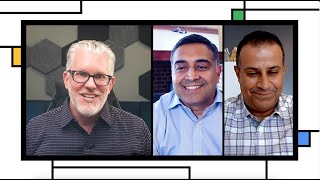
Fireside chat with Abdu Mudesir Group CTO, Deutsche Telekom and Bikash Koley VP Global Networking, Google Cloud hosted by Ray Le Maistre Editorial Director, TelecomTV. Listen as they discuss cloud-native network transformation and how the partnership between Deutsche Telekom and Google Cloud is pushing boundaries in the telecommunications industry.
#Telecommunications #Googlecloud #DeutscheTelekom
Watch on YouTube ↗
(saves to browser)
Sign in to unlock AI tutor explanation · ⚡30
Playlist
Uploads from Google Cloud · Google Cloud · 56 of 60
1
 2
2
 3
3
 4
4
 5
5
 6
6
 7
7
 8
8
 9
9
 10
10
 11
11
 12
12
 13
13
 14
14
 15
15
 16
16
 17
17
 18
18
 19
19
 20
20
 21
21
 22
22
 23
23
 24
24
 25
25
 26
26
 27
27
 28
28
 29
29
 30
30
 31
31
 32
32
 33
33
 34
34
 35
35
 36
36
 37
37
 38
38
 39
39
 40
40
 41
41
 42
42
 43
43
 44
44
 45
45
 46
46
 47
47
 48
48
 49
49
 50
50
 51
51
 52
52
 53
53
 54
54
 55
55
 ▶
▶
 57
57
 58
58
 59
59
 60
60

Top 3 ways organizations are adjusting their cloud strategies to prepare for economic uncertainty
Google Cloud
Google Cloud Retail Search and Browse Console deep dive
Google Cloud
Google Cloud Backup and DR - How to mount, clone or restore a VMware VM
Google Cloud
Google Cloud Backup and DR - VMware vSphere Backup Overview
Google Cloud
Google Cloud Backup and DR - Creating backup Plans for VMware VM backups
Google Cloud
Google Cloud Backup and DR - Compute Engine Instance Backups and Sole Tenant Nodes
Google Cloud
Google Cloud Backup and DR - Managing Service Accounts
Google Cloud
Let’s solve for what’s next
Google Cloud
Google Cloud Executive Briefing Center | Cloud Space | Silicon Valley
Google Cloud
Tinyclues with Google Cloud offers CRM Intelligence to maximize conversions
Google Cloud
Aible partners with Google Cloud helping customers build predictive models within minutes
Google Cloud
TELUS streamlines big data ingestion with help from Google Cloud and Accenture
Google Cloud
Getting started with Apigee API Management
Google Cloud
Google Cloud Retail Search
Google Cloud
Building your first API proxy with Apigee
Google Cloud
Brands and agencies develop dynamic video ads with Connected-Stories NEXT and Google Cloud
Google Cloud
Redefining the transportation industry
Google Cloud
Google Cloud Project Katalyst
Google Cloud
Israel's Family Court: Creating more compelling experiences for its citizens
Google Cloud
Tausight partners with Google Cloud to help healthcare industry protect PHI activity & take action
Google Cloud
Google Cloud Retail Browse
Google Cloud
Verifying API keys and debugging your API proxy flow
Google Cloud
Getting started with Apigee API Management
Google Cloud
Adding policies to your APIs
Google Cloud
Google Cloud Backup and DR - Configuring Google Cloud VMware Engine to work with Backup and DR
Google Cloud
Topaz Subsea Cable
Google Cloud
Episode 29: Building a culture of data literacy with Latin America’s biggest ecommerce platform
Google Cloud
Weshalb Datananalysten die Sparringspartner von Produktmanagern sein sollten
Google Cloud
Warum und wie METRO eine Machine Learning-Pipeline implementiert hat
Google Cloud
Wie nutzt METRO Data Science, um geschäftliche Herausforderungen zu meistern?
Google Cloud
Google Cloud in Qatar. Let's get solving.
Google Cloud
Google Cloud for Qatar
Google Cloud
Doha has a new Google Cloud region
Google Cloud
The new Google Cloud region in Qatar
Google Cloud
Build, tune, and deploy foundation models with Vertex AI
Google Cloud
Generative AI on Google Cloud
Google Cloud
Who will be coming to Google Cloud Day Tel Aviv? #Shorts
Google Cloud
Protect your organization at the edge
Google Cloud
Google Cloud Backup and DR Alert Notifications setup
Google Cloud
Build, tune, and deploy foundation models with Generative AI Support in Vertex AI
Google Cloud
Where the Internet Lives: Data center on the prairie
Google Cloud
Which developer program are you joining?
Google Cloud
Lufthansa Group baut intelligente Systeme zur Vereinfachung des Flugbetriebs
Google Cloud
How ASML revived Moore's Law and remade chipmaking
Google Cloud
CMO of Unity celebrates Women's History Month
Google Cloud
Vint Cerf on Google Cloud Digital Leader
Google Cloud
Mobile World Congress 2023
Google Cloud
Topaz - Canada
Google Cloud
Google Data Cloud & AI Summit 2023: Reveal opportunities to transform your business
Google Cloud
Building a conversational bot with Google Cloud Gen App Builder
Google Cloud
Elisa Polystar and Google Cloud partner to bring the power of analytics and automation to CSPs
Google Cloud
Network modernization - how can CSPs start now?
Google Cloud
How Semios uses imported and remote models for inference with BigQuery ML
Google Cloud
Deliver your AI solutions up to 100 times faster with Google Cloud partner, Snorkel AI
Google Cloud
Capture consumer perspectives for CPG using NLP and analytics with Harmonya and Google Cloud
Google Cloud
Delivering Cloud-Native Network Transformation
Google Cloud
Proactively detect & investigate anomalies & data quality issues in BigQuery with Telmai
Google Cloud
Introducing AlloyDB Omni
Google Cloud
Episode 30: How Auto Trader transitioned to the cloud to analyze tricky customer data
Google Cloud
MongoDB Atlas on Google Cloud
Google Cloud
More on: Cloud Fundamentals
View skill →



🎓
Tutor Explanation
 DeepCamp AI