All Machine Learning Concepts Explained in 18 Minutes!
Key Takeaways
The video covers machine learning fundamentals, including supervised and unsupervised learning, reinforcement learning, gradient descent, and hyperparameter tuning, using concepts such as features, models, loss functions, and regularization.
Full Transcript
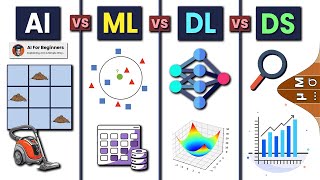
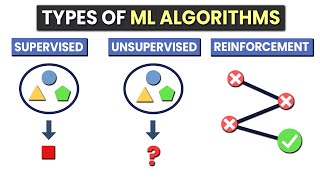
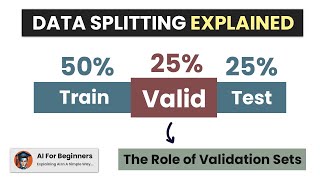
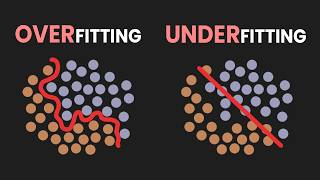
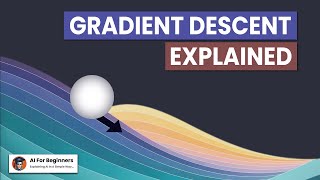
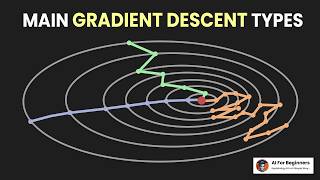
In this video, we will go through all main machine learning terminology used in practice from beginner to advanced level. Data is information in a form of numbers, text, images, audio or other types that are recorded and analyzed. Structured data is data that is organized into a fixed format like rows and columns. Unstructured data is information you can't easily put in a table such as text, images, or audio. Features are the individual pieces of information used to describe something in a data set. For example, age, gender, income, or address in a customer data are features. Each pixel of an image is a feature. Different data sets have different sets of features. Observations are the individual data points or records in a data set. For example, rows in a table. One image is an observation, one email, one recording, one video. Artificial intelligence refers to enabling computers to perform tasks that typically require human intelligence. It covers not only machine learning algorithms, but also search and optimization algorithms. For example, a chess playing program with hard-coded rules. Machine learning is a type of artificial intelligence that allows computers to learn from data and improve their performance on a task without being explicitly programmed. For instance, given a data set of spam and non-spam emails, the model can learn patterns to predict whether a new email is spam. Deep learning is a sub field of machine learning that uses deep neural networks to learn complex patterns from data. For example, train a model on thousands of voice recordings to convert sounds into written text. Data science is the field of using data to answer questions and solve problems, often through machine learning, statistical techniques, or descriptive analysis. For example, data scientists might run an AB test to determine whether one thumbnail performs significantly better than another. A machine learning model is a mathematical algorithm that learns patterns from data and uses them to make predictions or decisions. For example, linear regression is a basic statistical or machine learning model that aims to find the straight line that best fits a given data set. A target variable is the value you want to predict or explain using a machine learning model. During training, the model improves its predictions by comparing them to the correct answers and learning from its mistakes. For example, a model that recognizes handwritten digits improves by training on thousands of labeled images. Learning to identify digits like three based on its past mistakes. Supervised learning is a type of machine learning where the model learns from examples that include both the input and the correct output. The goal is to discover patterns that can be used to make accurate predictions on new data. For example, the size of the house as input, the price as output. Classification is a type of supervised learning where the model learns to predict categories or classes from input data based on past examples that include the correct answers. For instance, predicting if the patient has a disease or not given the patients demographics and health measurements. Regression is a type of supervised learning where the goal is to predict a continuous numerical value based on input features. For example, predicting the view counts of YouTube videos based on their title, thumbnail, and keywords. Class imbalance occurs mostly in classification problems when some classes are significantly under reppresented compared to others. This can lead to biased models that perform poorly on the minority class. Unsupervised learning is a type of machine learning where the model is trained on data without target features or labels. The goal is to find patterns or structure in the data. For example, given music features like tempo, danceability, and rhythm patterns, a model can be trained to group similar songs into playlists. Clustering is an unsupervised learning technique where a model is trained to group data points into clusters so that items in the same group are more similar to each other than to those in other groups. For instance, clustering can be used to group customers based on their shopping behavior. Reinforcement learning is a type of machine learning where the model learns by interacting with an environment, making decisions, and receiving rewards or penalties based on its actions. In other words, the model generates its own data by exploring, taking actions, making mistakes, and learning from feedback. For example, a robot learning to walk through trial and error. Parameters in machine learning are internal values that a model learns from training data to make accurate predictions. For example, in linear regression, the slope and intercept are parameters. Loss function is a way to measure how well a machine learning model's predictions match the actual values. It measures the difference between the predicted and actual outputs. For example, in predicting house prices, the loss function measures how far the model's predicted prices deviate from the actual prices. Optimization in machine learning is the process of adjusting the model's parameters to minimize the loss function. This is typically done using optimization algorithms such as gradient descent. Gradient descent is one of the most widely used optimization algorithms in machine learning. It works by repeatedly adjusting a model's parameters in small steps to reduce the value of the loss function. The direction of each step is determined by calculating the gradients of the loss function with respect to each parameter, guiding the model toward parameter values that minimize the loss. However, it's important to note that not all machine learning algorithms use gradient descent. Training in machine learning is the process of learning patterns from data. Training instructions depend on the algorithm. Some models don't require training at all. Usually training involves using data to make predictions, comparing its predictions to the actual outcomes, calculating the error, and then updating the model's internal parameters to reduce that error. This cycle is repeated until the model performs well on the training data. Model evaluation is the process of measuring how well a machine learning model performs after training, typically using numerical metrics. Hyperparameters are the settings or configurations that you choose before training a machine learning model. Different ML models have different hyperparameters. For example, what should the degree of the polomial be in polomial regression? What should be the number of trees in a random forest model? Hyperparameters are not learned from the data, but they can be tuned. [Music] Hyperparameter tuning is the process of finding the optimal set of hyperparameters, defining the model or its training process to achieve better performance. You often train models with different sets of hyperparameters and evaluate which one performs best. An epic in machine learning is one complete pass through the entire data set during training. When training a model, the algorithm often needs to see the data multiple times to learn effectively. Each time the model goes through all the data once, it's called an epoch. Learning rate is a hyperparameter of the gradient descent algorithm that controls how large the steps are when the model updates its parameters during training. If the learning rate is too high, the model might take steps that are too large and miss the optimal solution. If it's too low, the model learns very slowly and may get stuck before reaching the optimal point. Too slow and it may take forever to get there. Batch size is a hyperparameter that defines how many training examples the model processes at once before updating its parameters. Using the entire data set for training can be memory intensive. So we often process the data in batches. For example, if the batch size is 100, the model updates its parameters after processing every 100 examples. [Music] Generalization in machine learning refers to how well a model performs on new unseen data, not just the data it was trained on. It's like studying your homework and then being tested on questions you haven't seen before. Overfitting happens when a machine learning model learns the training data too well, including its irrelevant patterns and specific characteristics. For example, if you train a model on just five Apple images with white backgrounds, it may overfit the background. As a result, it might fail to recognize apples on non-white backgrounds. Underfitting happens when a machine learning model is too simple to capture the patterns in the training data. As a result, the model performs poorly on both the training and unseen data because it lacks the capacity to learn enough patterns. Underfitting can also occur when a model is trained for too few iterations. Model complexity refers to how flexible or powerful a machine learning model is in capturing patterns in the data. In most cases, the higher the number of parameters, the higher the complexity of the model. A simple model like linear regression has low complexity and may struggle with capturing complex patterns. A complex model like deep neural networks can learn more detailed relationships but also risks overfitting. Meaning it learns training data specific patterns instead of general rules. [Music] Bias variance trade-off explains the balance between overfitting and underfitting. Increasing model complexity usually decreases bias but increases variance. Decreasing complexity does the opposite. Lowers variance but increases bias. The goal is to find the right balance where both bias and variance are low enough to achieve good performance on unseen data. Train test validation split is a method in machine learning where the data set is divided into three parts. The training set is used for learning the model. The validation set is used to tune hyperparameters and select the best model. And the test set is used for final evaluation on unseen data. Imagine the training data as homework, the validation set as mock exams, and the test data as the unseen final exam. Data shuffling means randomly mixing the order of the data. It's used in machine learning to ensure that the resulting subsets contain representative samples from the overall data set. For example, if the data set is sorted by time with older observations at the top and newer ones at the bottom, then splitting it without shuffling means each subset will come from a different time period. Inference in machine learning is the process of using a trained model to make predictions on new unseen data. Early stopping is a technique used to prevent overfitting when training machine learning models. For example, if the validation error stops improving for a certain number of epox, the training stops. Regularization is a technique used in machine learning to prevent overfitting by discouraging overly complex models. It adds a penalty term to the loss function that the model is trying to minimize. This penalty discourages large weights or complex relationships. Data leakage happens either when information from outside the training data set, usually from the test set, accidentally gets included in the training process or a common beginner mistake is including the target variable as one of the input features. This leads the model to cheat by learning from the answer it is supposed to predict causing data leakage. Data encoding is the process of converting categorical or textual data into a numerical format so that machine learning algorithms can understand and use it. For example, one hot encoding is used for categorical variables that do not have an inherent order. Ordinal encoding is used for categorical variables that have a natural ordering. Label encoding is used to encode a categorical target variable. It maps each class to an integer regardless of whether the target has a natural order. Outliers are data points that are significantly different from the rest of the data. They lie far outside the typical range of values and can occur due to errors, rare events, or natural variability. If most people's heights in a data set are between 150 190 cm, but one person is listed as 3,000 cm, that value is definitely a measurement error. Missing data refers to instances where some values in your data set are not recorded or unavailable. This can happen for many reasons like users skipping survey questions, sensors failing to record, or data entry errors. Data prep-processing is the process of cleaning and preparing raw data before feeding it into a machine learning model. It includes conducting different transformations. Feature scaling is the process of adjusting the values of numerical features so they are on a similar scale. Certain algorithms in machine learning use distance calculations. If you use income as one feature in height and meters as another, the scale of the larger feature is going to dominate the training process. Most scaling methods bring all values to a range of 0 to one or similar. You can then rescale to bring back the original measurements. Cursive dimensionality refers to the set of problems that arise when working with data in highdimensional spaces. Increasing the number of features significantly makes machine learning models harder to train. Dimensionality reduction is the process of reducing the number of input variables or features in a data set while preserving as much relevant information as possible. You either choose a subset from the set of all features called feature selection or create new features from the existing ones called feature extraction. Feature engineering is the process of creating new input features or modifying existing ones to improve the performance of a machine learning model. For example, creating ratios. Feature importance refers to a technique or metric that ranks the input features based on how useful they are for predicting the target variable in a machine learning model. Data augmentation is the process of artificially increasing the size and diversity of a data set by creating modified versions of existing data samples. For example, rotating and flipping images. Ensemble learning is a machine learning technique where multiple models are combined to produce a stronger, more accurate model. It is inspired by the idea that a group of people working together often makes better decisions than one individual. Congratulations, you made it to the end. You learned a lot today. Like the video to return back for revisions. Subscribe if you like the format.
Original Description
#ai #ml #artificialintelligence #education #machinelearning #learning
🔥 All Machine Learning Terminology Explained in 18 Minutes! Machine learning is full of technical terms and abstract ideas, and for beginners, it can quickly become overwhelming and confusing.
In this video, we will go over 54 different machine learning terminology from beginner to advanced level.
This video is the best, quick Machine Learning course for free to learn or refresh the main concepts that appear in Machine Learning.
The following concepts are covered:
Data, Structured Data, Unstructured Data, Features, Observations, Artificial Intelligence, Machine Learning, Deep Learning, Data Science, Machine Learning, Target Variable, Training, Supervised Learning, Classification, Regression, Class Imbalance, Unsupervised Learning, Clustering, Reinforcement Learning, Parameters, Loss Function, Optimization, Gradient Descent, Training (Revisited), Model Evaluation, Hyperparameters, Hyperparameter Tuning, Epoch, Learning Rate, Batch Size, Generalization, Overfitting, Underfitting, Model Complexity, Bias-Variance Tradeoff, Train-Test-Split, Data Shuffling, Inference, Early Stopping, Regularization, Data Leakage, Data Encoding, Label Encoding, Outliers, Missing Data, Data Preprocessing, Feature Scaling, Curse of Dimensionality, Dimensionality Reduction, Feature Engineering, Feature Importance, Data Augmentation, Ensemble Learning.
🔍 Key points covered:
0:00 - Introduction.
0:09 - Data.
0:19 - Structured Data.
0:27 - Unstructured Data.
0:36 - Features.
0:56 - Observations.
1:10 - Artificial Intelligence.
1:37 - Machine Learning.
2:00 - Deep Learning.
2:19 - Data Science.
2:39 - Model.
3:00 - Target Variable.
3:11 - Training.
3:33 - Supervised Learning.
3:56 - Classification.
4:17 - Regression.
4:36 - Class Imbalance.
4:52 - Unsupervised Learning.
5:15 - Clustering.
5:36 - Reinforcement Learning.
5:58 - Parameters.
6:15 - Loss Function.
6:38 - Optimization.
6:54 - Gradient Descent.
7:25 - Traini
Watch on YouTube ↗
(saves to browser)
Sign in to unlock AI tutor explanation · ⚡30
Playlist
Uploads from AI For Beginners · AI For Beginners · 30 of 32
1
 2
2
 3
3
 4
4
 5
5
 6
6
 7
7
 8
8
 9
9
 10
10
 11
11
 12
12
 13
13
 14
14
 15
15
 16
16
 17
17
 18
18
 19
19
 20
20
 21
21
 22
22
 23
23
 24
24
 25
25
 26
26
 27
27
 28
28
 29
29
 ▶
▶
 31
31
 32
32
Artificial Intelligence Explained In Simple Words | What Is AI? | Explained On A Real World Example!
AI For Beginners
AI vs. ML vs. DL vs. DS - Difference Explained | On Real World Examples | AI For Beginners
AI For Beginners
Types Of Machine Learning Algorithms | Explained On Real World Examples | ML For Beginners
AI For Beginners
Best AI Music Generator | Music Generation Tool for FREE | MusicGen developed by Meta AI
AI For Beginners
The Ultimate Guide To Supervised Learning | Explained On Binary Classification Example | Part 1
AI For Beginners
The Ultimate Guide To Supervised Learning | Classification And Regression | Part 2
AI For Beginners
Linear Regression Explained | A Beginner's Guide To Regression | The Basics You Need to Know!
AI For Beginners
Assumptions Of Linear Regression | What To Do If The Assumptions Do Not Hold? | Part 1
AI For Beginners
Checking The Assumptions Of Linear Regression | Statistical And Visual Methods | Part 2
AI For Beginners
The Purpose of Train-Test Split in Machine Learning | How to Correctly Split Data?
AI For Beginners
The Role of Validation Sets in Model Training | Train-Test-Validation Splits | Clearly explained!
AI For Beginners
Overfitting and Underfitting | Bias and Variance Tradeoff in Machine Learning | Clearly Explained!
AI For Beginners
Gradient Descent Explained | How Do ML and DL Models Learn? | Simple Explanation!
AI For Beginners
Main Types of Gradient Descent | Batch, Stochastic and Mini-Batch Explained! | Which One to Choose?
AI For Beginners
The Role of Loss Functions | Most Common Loss Functions in Machine Learning | Explained!
AI For Beginners
How to Evaluate Your ML Models Effectively? | Evaluation Metrics in Machine Learning!
AI For Beginners
8 Best Tips For Cleaning Your Data | Data Cleaning | Machine Learning, Data Preparation.
AI For Beginners
Numerical vs. Categorical Data | Represent Your Dataset Correctly!
AI For Beginners
3 Main Types of Missing Data | Do THIS Before Handling Missing Values!
AI For Beginners
7 PROVEN Strategies To Become An AI Engineer (2025 Updated)
AI For Beginners
Easiest Guide to K-Fold Cross Validation | Explained in 2 Minutes!
AI For Beginners
Normalization and Standardization | Why to Scale the Features? | ML Basics
AI For Beginners
The Ultimate Guide to Hyperparameter Tuning | Grid Search vs. Randomized Search
AI For Beginners
How is Artificial Intelligence different from Traditional Programming?
AI For Beginners
All Machine Learning Models Clearly Explained!
AI For Beginners
6 Mistakes to Avoid When Learning Machine Learning in 2025
AI For Beginners
Best Practices for Effective Data Visualization In Machine Learning!
AI For Beginners
Central Limit Theorem Intuition Explained Like You're 5!
AI For Beginners
Which Door Would You Choose? | Monty Hall Problem Explained!
AI For Beginners
All Machine Learning Concepts Explained in 18 Minutes!
AI For Beginners
What’s the Probability That Two Randomly Drawn Chords in a Circle Intersect?
AI For Beginners
Causation vs Correlation | The Most Confused Concept in Data Science
AI For Beginners
More on: ML Maths Basics
View skill →




Related Reads
Chapters (25)
Introduction.
0:09
Data.
0:19
Structured Data.
0:27
Unstructured Data.
0:36
Features.
0:56
Observations.
1:10
Artificial Intelligence.
1:37
Machine Learning.
2:00
Deep Learning.
2:19
Data Science.
2:39
Model.
3:00
Target Variable.
3:11
Training.
3:33
Supervised Learning.
3:56
Classification.
4:17
Regression.
4:36
Class Imbalance.
4:52
Unsupervised Learning.
5:15
Clustering.
5:36
Reinforcement Learning.
5:58
Parameters.
6:15
Loss Function.
6:38
Optimization.
6:54
Gradient Descent.
7:25
Traini
🎓
Tutor Explanation
 DeepCamp AI