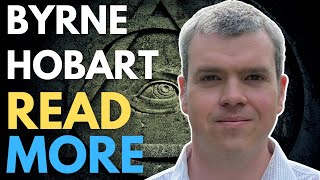
Byrne Hobart - FTX, Drugs, Twitter, Taiwan, & Monasticism
Key Takeaways
Byrne Hobart discusses FTX, drugs, Twitter, Taiwan, and monasticism, analyzing inflections in finance and tech, and explaining how to be long AI while hedging Taiwan invasion, with topics ranging from financial markets and cryptocurrency to talent identification and research methods.
Full Transcript
What drives the response to what happened with FTX and Alama is that if you think the story is pure fraud, it's very easy to say you would never do that. I do think that the impact of new drugs on financial markets is underrated. It's maybe merciful that the atoms to bits interface has not been fully completed while we still have time to deal with malevolent, unfriendly EA. So that's that's good. Your big concern is not your portfolio. In a world where an invasion is the reason AI does not happen, one possibility is that every other society got it wrong and that the monastic tradition is stupid and it has been independently discovered by numerous stupid civilizations that have all been around for much longer than effective altruism. Okay, today I have the pleasure of interviewing Burn Hobart again for the second time now who writes at the diff.co. The way I would describe burn is uh every time I have a question about a concept or an event in finance, I Google the name of that event or concept into Google and then I'd put in burn Hobart at the end of that search query and nine times out of 10 it's the best thing I've read about that topic. Um and it's just like just so interesting, right? just like the most schizophrenic and galaxy brain takes about like how you know the discourses of uh you know Makaveill's discourses relate to big tech or like how Soros reflexivity uh explains hiring in finance and tech. So just very interesting stuff. I'm glad to have him back on again. Yeah, great to be back. Awesome. Okay, so first I I really want to jump into the FTX saga. What the hell happened? Let me just like leave an open-ended question for you. Yeah. So, I think um I think the first thing to say is that uh there's a lot we don't know. Um there's a lot we may never know because so many of the decisions at FTX were made through um self like autodeing encrypted chat. So like there there are some holes we will never be able to fill in. The lack of accounting is also going to make it tough. Like basically I think you can tell a bunch of different stories here. The really obvious one is um fraud and you can debate over exactly when it started. Like one version of the story which is getting some currency is that um SPF had this entity Alamita and it was supposed to be this really hot crypto trading fund but maybe it was a Ponzi scheme all along and then um maybe at some point that Ponzi scheme started to run short on cash so he decided to start an exchange and the exchange got more cash and then he used the cash to pay off previous investors whatever. Um, I think that's that's one version. And then kind of the the maximally exculpatory version, which actually is still really bad, is um Alamita was a real company. They really made money trading. Um, they took tons of risks and, um, SPF has talked about why he thinks that's a good thing. That, um, FTX cut some corners when they were raising money and that they had really bad internal accounting. And um that basically the the extended entity of Alama and FTX sort of lost track of whose money was where and ended up uh it ended up with Alama spending FTX customer money which um I think is like like one way to look at that is like if you think okay fraud is like twice as bad as just incompetently losing money. Well it's not as if um if we had a $4 billion fraud instead of$8 billion fraud everyone would be like well that's that's fine. That's normal. Like why are you giving Sky a hard time? It's it's bad no matter what. Um you know, running a big company that is systemically important in crypto and then having that company completely vaporize over the course of a couple days. Um really really bad and worth understanding what happened, but it's partly worth understanding what happened because there are just different solutions that present themselves depending on what you think the story is. Like if the story is fraud, it's actually a lot harder to solve because there are just a lot of um a lot of people who are willing and able to commit fraud and to to lie. Um, if the story is bad accounting, then that's actually a lot more solvable because then you could say things like the solution is um, make sure you never invest in a crypto exchange that doesn't have a real auditor and um, you know, make sure that they have like their, uh, proof of reserves calculation and it's happening consistently and that you can audit that. um you know there there are different solution sets and then I think the actual story is going to be somewhere in the middle of um extreme risk tolerance plus extremely poor accounting plus um fraud at some point but I suspect the fraud actually happened pretty late um you know if it if it happened which I think there's like you know 80 90% chance that there was some level of fraud um versus pure incompetence but if so I think may have happened um fairly late in the story and as kind of a last desperate Like and I think I think part of part of what drives the response to what happened with FTX and Alita is that if you if you think the story is pure fraud, um it's very easy to say you would never do that. Like I I could say very easily I I would definitely never start a Ponzi scheme and then start another bigger Ponzi scheme to pay off the first Ponzi scheme. That that's not me. Um that's not most people. But um I think if you if you draw the scenario where they discover at some point like a couple months ago or even a month ago, they realize, hey, we actually um there's a billion dollars plus that was supposed to be customer money, but um we thought it was Alama money and we actually spent it and now it's gone. We've lost it. What would you do in that circumstance? And you know, I think the ideal answer is well, I'd immediately come clean and you know, step down and commit myself to getting everyone paid back and made whole. And I think there's also the possibility that, you know, I would like the answer the realistic answer is more like, well, I would scramble and try to make sure that that uh didn't cause the company to collapse and try to beat people later. And so at that point, you've sort of backed your way into fraud through earlier episodes of incompetence. But I think like one of the problems with the fraud story is um frauds frauds have to be good at accounting because um they have to like you know this very rough schematic sense. They have to be twice as good as at accounting as everybody else because not only do they have to have the the real books that tell them how much money the business has and whether or not the next check they write will bounce, but they have to have this the fake set of books and they have to have a way to make those tie out with one another. So they actually like frauds, accounting frauds tend to be fairly sophisticated. They tend to really dive into edge cases. this. I was reading up on um MF Global, which was a big futures brokerage that collapsed in part because they were dipping into customer funds and making some investments they shouldn't have. And um they they did a lot of um clever and shady stuff. Like one of the things they would do is um there's one point where they were transferring money at the last minute out of their consumer out of their customer funds in order to make margin calls. And um what they would do is they would send the wire from the customer account to a different company account and they'd send it a couple minutes before the wires closed for the night and then they would send this email right after the wires closed saying, "Hey, we just realized we set this a transfer raw account. We got to reverse tomorrow." But that gave them at least one night of enough liquidity to survive. Now, you can only do that kind of fraud if you are actually keeping really close track of where your money is, where it's supposed to be, what the rules are, so that you know exactly how to break those rules. Um, I don't think SPF, I don't think FTX was in any position to commit that kind of fraud. I think that they could have, if they tried to do something like that, like they wire the money from an account that didn't have any money in it or something or send it to the wrong account. Um, there are these stories about them accidentally burning a bunch of USDC by sending it to an address that didn't exist or something like that. like they the operational slip ups actually make it harder for them to have committed fraud and it's unquestionable at this point that their their recordeping was very bad. Yeah. Yeah. To to your point about the fraud being harder. I mean it's like a classic story about if you just tell the truth uh you know you just it's just going to be much easier for you. You just don't know how to keep track of that many things. Um um but the one thing I'm I've been thinking about I interviewed him for like an hour and before that I tried to do quite a bit of research into how FTX worked and um what was going on. Uh and I had this impression that this guy was like the most competent uh genius that had ever graced finance. And this was like a common impression. this wasn't just and then but it turns out that you know they like co it just like out of sheer incompetence he loses track of billions of dollars the internal operations it just like him putting together spreadsheets and throwing them around and putting emojis on Slack messages asking for payments and I I I just like I I want to understand how it is that he this guy put out the impression out there that he is just hyper competent uh and it turns out that it's like the opposite it's not even that he's mediocre. It's the opposite, right? Yeah. So, I think you can tell a couple stories there. Like one story, and I know I've been saying a lot, like you can tell multiple stories. There there are multiple stories that fit the fact that we have lots of lots of different um different weird things to explain and therefore many different weird explanations that fit them. So, I think I think one version is okay, he's never all that smart and decided that he could just play up this weird um you know, eccentric genius thing and that would that would he'd be able to get away with it. And you know, there's these anecdotes about how um someone told him to cut his hair and he said, "No, I have to look kind of crazy for this." And um so, you know, that that fits in. And it is kind of like it is kind of an MIT thing to to do that to like play up your eccentricity because you know that there are these super brilliant very eccentric people and you can you can be like them. It's kind of like you know a lot of people um they read about Steve Jobs and they're like well the secret to success is um be this brilliant perfectionist who can always see the future and also be just a giant [ __ ] to everyone you meet. And I'm going to try to do both of those things. And it turns out one of those is really really easy to do and then one of them is really really hard. and you have to do both to BC jobs, but you can you can sort of give this service level impression of jobs by by just being really obnoxious to everyone. Um, so I think some of it is some of it is that, but the other is that you can if you get really good at just very narrow domain specific stuff, you might miss what other stuff people have to be good at for that that skill set to be valuable. And um so I think like thinking about his previous background where he worked at a prop trading firm and um seemed to do well there it's Jane Street they're very very selective in who they hire very hard to get in and they're very profitable so you know good to get in um it's entirely possible that part of what happened was just that um like Jane Street has has its operations people they have their trading people and um it may there may have been enough um siloing within that that you know if your job is just identify discrepancies in ETF prices and take advantage of them you don't actually have to know things like how do we figure out which counterparties are creditw worthy how do we make sure we have enough liquidity how do we have backup plans upon backup plans upon backup plans in case something goes wrong with our liquidity situation because that like part of the Jane Street model seems to be they're they're very very opaque but like very opaque in terms of their their trading operations but part of the model seems to be that they want to be the trader who is and trading and making a market when everything fells apart. And what that means is that um like the way you make the most money in trading is when markets are insanely volatile, volume is very very high and you're still trading. But the reason that markets get really volatile when prices collapse and there's a lot of chaos going on is that other people who would love to be trading can't trade because maybe the broker they use is suddenly insolvent and they can't get to a new broker, their money is frozen. Um, so you know, if you if you're planning to be there when everybody else is out of the market, then you have to have lots and lots of contingency plans and it's not enough to buy lots of deep out of the money put options as Jane Street does. You also have to make sure that you're buying those options from the counterparty who will actually send you the money when u when you need it or you know that you like you want to structure those things so the actual cash gets to your account at the time that it needs to be there. And um that maybe is something that a prop trader should not be spending most of their time thinking about. Like you know it's one of those things where it's like you know if you if you own a house and you like if over the last 24 hours you learned a whole lot about electrical wiring or you learned a whole lot about how plumbing works or how septic takes work. Like that's not good. That means something very very bad happened in your house. And um you know it could be nice to be an expert on those things but if you suddenly became an expert it's because somebody else wasn't doing their job. Um, so I think you could you could view a trader like that where they they can be very good at the the finding little pricing discrepancies thing and have just no awareness of what the operation stuff is. Especially because the better the operations team is, the less anyone else needs to be aware of them. Like they they like you only email them when something is going wrong. So if nothing is going wrong, you never email them and then you forget they exist. Yeah. Yeah. No, that that's a good point. Uh the in fact in the interview I did of him he mentioned that I asked him what is the difference between Jane Street and FTX and he mentioned that at Jane Street there was like this button he could press to like buy uh and all that's all the intermediaries all the servers it was just taken care of and what's really funny is then he said um and just getting a bank account and he goes and let's talk about that just getting a bank account is so hard when you're an independent and it it apparently turns it so hard that you might have like co-mingled funds because you couldn't manage to separate them out. Yeah. No, that's crazy. U you had this really interesting take. I think one point we were talking about how every single market crash can be explained by the drug that was common in the industry at the time and we finally achieved like the hyperrade meth uh stage of I forgot the name of like that patch he was taking but it's it's like stronger than aderall or whatever but so it was um I think saying every crash could be explained by the drug they were taking at the time um that takes it a little far but I do think that the impact of drugs of new drugs on financial markets is underrated. And um you can have you have examples of this going back pretty far. Like um there is some connection between caffeine consumption and like extraversion and risk-taking. Like you you temporarily get a little bit more willing to do deals when you have consumed caffeine and um you know Lloyds of London before it was this insurance consortium it was a coffee shop. It was Lloyd's coffee shop. So um you do have some history of you know coffee shops being associated with um with financial centers and um and then you know you then you have to zoom forward because we we just haven't had that many novel stimulants. I guess you know depressants delirants whatever like other other drug categories probably just don't lead to that much financial activity. I don't know what um how someone would trade differently or invest differently if they had, you know, a really strong acid trip or or took ecstasy or something, but but the stimulants where people can just consistently reuse them. They keep people alert. They make them active and wanting to do things. It seems like stimulants would have a connection with financial markets. So yeah, that that theory is like if you look at the 1980s where a lot of there were a lot of these hostile takeover deals where someone would find a company that's underperforming and you know from when you look at the spreadsheets and say this company's underperforming, what you're often looking at is a story that is more like this company believes that they have this social obligation to the community where people work and that they have an obligation to give their customers a fairly priced product and maybe they give them really good customer service that um it doesn't really pay for itself and it's the right thing to do. Well, um maybe especially if you are a a a cokehead with kind of cokehead morality, you decide, well, that's not the right thing to do at all. We should actually just take the money and uh we should fire these people and replace them with cheaper employees. So, um you know, levering up a company and then like levering up in order to buy out a bigger company and then firing everyone and you know, shutting down the pension plan and distributing the surplus to shareholders like it is just very standard cokehead behavior. Whereas if you look at the mortgage back securities boom um and structured products generally in the mid200s the way that people made money in that was just by being very very detail oriented and being able to make these incredibly fine grain distinctions between different products that were basically similar but one of them pays 5.7% and one of them pays 5.75% and if you lever up that difference enough times you're actually making really good money consistently. um super boring, but maybe with enough aderall, it's actually very tolerable work that you can enjoy. So, so I do I do think that just like within stimulants, the difference between short acting stimulants and long acting stimulants does mean the difference between a hostile takeover boom and a structured products boom. And then um yeah, there's I think the drug is called MSM or something which is like a like a Parkinson's treatment. And um there's some evidence from pretty small sample size studies that one of the side effects of this drug is compulsive gambling. So um yeah there and you know the drug story there there have been very very fun um fun tweets about this claim and then um there have been these official denials from the company doctor. On the other hand, if you're a company that has a company doctor, maybe that says something about the level of medication you're consuming. And maybe the company doctor's job is partly to say, "As a doctor, I can assure you I would never give someone, you know, three times the normal dose of Adderall just because their boss hired me to do that specifically." Like, um, you know, and like I think, you know, dealers don't exactly have like patient confidentiality norms. Doctors do. So, so maybe you hire a doctor instead of a dealer specifically to get that plausible deniability. Other than drugs, I also want to like ask you about the the phenotype of the founder. You wrote a post. I think it was like just a couple weeks before this crash happened where you were pointing out that this idea of a founder who comes in shorts and a t-shirt and a crazy haircut. By the way, so FTX had a barber who would come in every Tuesday to cut everybody's hair. It might have been Thursday. And that so he could have just like sat in line and gotten his haircut. That was that was completely unnecessary the way he dressed and it was like very purposeful. But um yeah, so if that archetype of a founder who's in a t-shirt and shorts, if that's been priced in and that's beta instead of alpha now, what is the new phenotype and physiogamy of the founder? Where where are you looking for alpha? Well, um I guess I would draw the distinction between like the the physical type of someone versus their their presentation and their dress. might um yeah I don't I don't know I'm sure someone could could run some interesting numbers on that but I I don't have a good uh good sense of what exactly they' get from that but in terms of you know how people people publicly present present themselves my guess is that yeah there will be this swing towards investing in people who look a little bit more formal a little bit more boring and these things are are somewhat cyclical like I think part of you know part of the norm on um investing in or you know treating basically treating the suit as a negative signal is that a lot of investors have this view that when when the MBAs come into an industry a lot of the alpha is gone and it is true that MBAs at least you know there's um it's like a decent market timing signal apparently that if a lot of people from Harvard Business School go straight into some field that field is probably peaking um so there's a little bit to that where the suit is some example of conformity On the other hand, wearing a suit in Silicon Valley is an example of non-conformity. And um I guess outside of outside of New York, within the US, most of the time, wearing a suit as a tech company founder would be this weird sign that you know, you're either like you don't know what you're doing, you don't know what the right signals are, or you know, you're about to testify Congress and that's why you have a suit now. um you not not generally a great sign but maybe it is a sign that you are willing to do some more conformous things and that you can pay attention to details the details are boring and and also that you are putting some you're making some kind of financial investment in in that particular appearance so yeah I would I would guess that there's um there will be a tilt away from the hyperinformal founders but I also think that if you treat that hyperinform formality is either this attempt to gain the system and just say like I'm going to be as much I'm going to try to remind people of Mark Zuckerberg circuit 2005 as much as possible so I can raise money and pretend to be the next big thing. Um that is that's one thing people are signaling and then the other thing is they're just accidentally signaling um total indifference to anything except the thing they're working on. And maybe that's a good thing but maybe maybe it's a good thing in unregulated domains and then a really really bad thing in regulated domains. Like if you're investing in a medical devices company, you you probably don't want a founder who just cannot focus on anything except the product because there are rules they have to follow and you know norms and things and yeah it gets bad if all they're focused on is this one element. Um, you know, if the hyper focus is like just right, perfectly calibrated, that's good. But then maybe maybe adjusting your appearance is this way to say that you have correctly calibrated your hyperfocus and you're going to get one thing right and it's going to be really really right. Like you're going to get things right, they're going to be really really right and you've identified what things matter and what things don't. Yeah. Yeah. You'll lose track of your bank accounts. Um, but that's the dress itself. But I also want to ask about the other characteristics. you had this really interesting point in that blog post about how uh you know when you try to scout for talent when the talent is young, you're overindexing for parental involvement. Um, and I'm curious if you had to identify somebody who had to be under the age of 18 or under the age of 20, what is the metric you're looking at that least indexes for parental involvement where they're being forced or encouraged by their parents to do it? Um, I think the closest you could get is something that is either um totally illegible to the par parents status like understanding of status or something that is actively low status. And um it's hard to hard to enumerate those and not just get swamped in well should this thing be low status? Is it high status? Is it actually terrible to say that you'd ever want to hire someone who was really good at X for some value of X? I do think that you so so basically the origin of that point was that I was arguing that when you if you look at people who are at some percentile and they're in their 20s or 30s like a lot of like at a high percentile like a lot of it has to be that they have some combination of talent and have tried really hard. There's probably been some element of luck but um over time the luck starts to starts to wash out hopefully. But the younger you go, and this is partly just my experience of having kids, like if you talk to your kids every day about multiplication, they will start doing multiplication at a pretty early age. And um it's not that they are, you know, really really smart and they got to multiplication a couple years early. It's that you push them in that direction and they were able to do it early. So like the earlier you go, the more you are overindexing on what the parents did, what they emphasized, and also what they told the kids was just part of the script. And um there are anecdotes about this from um none of the specifics come to mind but I I remember anecdotes about people who grew up in lower middle class or below circumstances but would have one distant relative who owned a business and that made them aware that they could own a business and this is like a thing they could do. It's part of the script now. And that wasn't the only reason that they would have started a business but it could be a reason that they decided to do that when they did. And you have to imagine that for for everyone who had one uncle who owned a scrap dealer or something that maybe there are five or 10 or 50 people who grew up in similar circumstances, had a similar level of innate ability and just didn't have anyone in their social circle who demonstrated to them that this was something you could actually do. Um, so I think like getting getting back to the the talent identification problem, part of my thesis there was that it's it's really hard. Um, and it's getting harder that you had Y Combinator going after the relatively young talent versus what the median VC was going after when YC started. And then, um, stuff like Pioneer and Emerging Ventures is going even younger. And the younger you get, the more it is this luck driven thing that is about what they got exposed to with the exception of of prodigies. So, I I' I'd like to think that if I encountered an 8-year-old Mozart, I would be able to identify this person as just extraordinary talent where like even if their parents were making them practice 10 hours a day, they couldn't be that good without talent. Um maybe something similar with the polar sisters where okay if I you know encounter a six-year-old who can routinely beat me at chess and so I go Google some you know read some chess books and then go back and try to beat them again and they're actually better um and they're laughing at me and things like at some point you decide that this is actually natural talent but um there's for a lot of other domains there's just so much room for parents to push one thing and through some combination of their kids talent and their own emphasis to get their kids really good at it and That's very hard to adjust for, especially because if you ask the parents, they're they're going to underestimate how much they overemphasize things because to them, this is just a normal thing that everyone should be interested in. And um so you won't you won't get a good signal from asking parents. And then you won't get a good signal from asking other people because they don't know how this family spends time at home. And you know, if if the medium family has more more YouTube and Netflix time and less um you know, less math practice time, um that family is just going to assume it's pretty pretty much their behavior is normal. It's a bit confusing because you also want to potentially include parental involvement in your estimate of how good this person will end up being. Um, if you think for example that giving somebody a shot to get started programming early is actually a big factor in putting them on that sort of like loop where they get better by practicing and they enjoy it more or so on. Um, you might expect momentum more than mean reversion uh in that kind of like early start. Sure. So I think part of part of what this gets to is the question of what are you optimizing for when you're doing a talent search? And um I think this is this is maybe one reason there could be some alpha left in talent search among people who are super young is that a lot of the academic institutions that are doing some form of talent search, what they're pretty much optimizing for is how does this person do over the next year. So, you know, if someone is a a math prodigy and they get to join the math team at that school, the school is not trying to optimize for will this person be proving novel theorems when they're 25. It's really will this seven-year-old be doing, you know, algebra by the time they're eight. And that's that is still very tied to parental involvement, especially once, you know, parents like kids. They like structure. And if you tell them this is the appropriate next thing to do with your kid, then they're more likely to do it. So you can coast on that momentum for a while. But what I think you the trap you can run into is that you identify people who are like 95th percentile talent with 99th percentile just super aggressive parents. And that combination gets them to 99th percentile performance until they leave home. And then they never do whatever that thing is ever again because they didn't really like it. it was just something their parents pressured them into. Now maybe the ideal would be you get 99% on both. So the parents are putting them on this trajectory but the parents are actually aiming you know a very powerful rocket ship and it's going to go right in the right direction. um which is ideal and I I think there's a you know there's a reasonable possibility that like I think there are there's like some level of just imprinting that young kids have where a lot of kids learn about programming when they're very young and that's something that they do from a very very early age and then it becomes a thing that they work on for their entire career. Um, obviously that has to be fairly new because it's not like they're, you know, from um, like anyone who was born before 1970 just had this constant yearning to program computers and could never satisfy it. Like those kids found something else to do. Maybe a generation before it was repairing transistor radios like mine did when he was a kid and maybe a century before that it was experimenting by building little internal combustion engines and seeing whether or not they explode like Henry Ford did with his friends at school. Um, and maybe before that, like the earlier you get, the harder it gets to really map these activities to anything concrete that we understand um, and can relate to. But there's there's probably some extent to which um, you can you can sort of direct kids into whatever the modern instantiation of this long-term enduring um, tendency is. And I guess one so one interesting example of that um I've been reading the Robert Caro LBJ biography and um there's this bit towards the end of the first volume where LBJ is put in charge of this fundraising organization for Democrats in Congress. And when you read about it, he sounds like a traitor. He sounds like someone who was just born to be slinging currency derivatives or something because he is constantly on the phone, constantly picking up rumors, constantly sending money here and there and everywhere else. and he's like always sending money overnight and then sending someone a telegram the the day before saying you're going to get a package from Lyndon Baines Johnson and you're welcome. Um so he's like he's doing this thing where he's constantly relentlessly optimizing every little tiny detail of some very complicated process. Clearly requires enormous working memory requires a very strong um basically a very strong poker face. like he has to be able to differentiate between someone who is begging for money because they are at they're pulling at 49%. And with a little bit more money for newspaper ads, they'd get to 50.1%. Versus someone who just wants the money or just is constantly freaking out by their nature. So, it requires a lot of the same character traits, but um 1930s were just not a great time to go to Wall Street. Maybe if LBJ had been born at a slightly different time, that's that's just what he would have done and he would have been a very successful private equity executive or something. But sometimes those these general skills, they can translate into a lot of different areas and they get honed into very specific skills through through deliberate practice in those areas. So if you have that combination of natural tendency and some level of motivation, which in LBJ's case, his dad was also a politician. So he had this example of this is part of the life script, you can't do it. But he also had the example of his dad was broke after a while and so he he had this example of what not to do and um ended up making good money for himself in addition to his political career. Yeah. Yeah. Yeah. I'm I'm glad you brought the biography. I'm reading it right now uh as well. And the other biography by Robert Caro uh the power broker just for the audience uh the last episode or the second to last episode in the feed is um we go deep into deep into that biography and uh talk about why it might be inaccurate in certain respects. But what is what it is accurate and and I think what Carol has a genius in is talking about the personalities of these great uh great men about the people who have really shaped uh their cities or their countries for decades and centuries. Um there's many places where I mean I'm sure this is true for you if you understand like the economics of an issue he's talking about. Uh there's a lot to be left to car's explanation. Uh but the actual like the the sort of breakdown of the personalities is just so fascinating and worth reading Cara for. Um but you know come to think of it so maybe the difference between the cases where you want to price in the parents involvement and the ones where you don't is where in situations like maybe being a politician where it really is about building a network building knowhow building this sort of inarticable knowledge from an early age. Uh it might be the case that in those situations just having connections and having parental involvement gets you far. But if it's like becoming a programmer, sure you'll like have done data structures by the time you're 16. But eventually you'll get to the point where you know everybody knows the basics and now you actually had to do interesting and cool things in computer science and now you're like a 95th percentile of spatial reasoning. IQ is not going to get you that far. But let let me ask you about the carbiography because you had a really interesting comment uh that I've been wondering about as well in your um in your review of the book or in your comment about the book. You said it's worth speculating on how many LBJ level figures exist today perhaps in domains outside of politics and how many ko level biographers there are who could do them justice. So do you have some idea of who these figures are or if not that at least what areas you'd expect them to be in? I think a lot of people who are close to that tier um and have some of the same personality types are in sales and corporate development and stuff like that where they, you know, they're they're building a big network. They are constantly building out this giant levered balance sheet of favors, you know, favors owed to them, favors they owe to other people. And like all forms of leverage, it does allow you to grow a lot faster, but you occasionally run into these big u big blowups. So, um that's that's one place I would look, I think. Um, if you try to look at the more, you know, pure executive founder types, then it gets harder to find someone who would have exactly that kind of personality. Um, this like part of what made LBJ's methods work was that he was adjacent to a bunch of these really big institutions and he could sort of siphon off some of the power that these institutions had and in some cases could make them more powerful. So, I'm about a third of the way through Master of the Senate right now. So, it's it's just getting to the point where he's really getting cooking and really making the Senate um more more effective than it used to be and also making it an organization where someone where it's less seniority based. Um so, you kind of you need to be attached to something much bigger than yourself for that particular skill set to work really well. That said, you could have a really big impact because it is it's another form of leverage. So if you are one of 100 senators or I guess at the point at that point it was 96 senators and you're um you're able to exert a lot more influence and be you know be the equivalent to 40 senators for example then um you can get a whole lot done because it's it's the US Senate. But if you have that same kind of skill set and you're the CEO of your company well you're you're already in charge of the company. Like there's only so much extra force you can exert. So you you kind of see a figure with exactly that kind of personality trait in a case where there are big institutions that have slowed down somewhat. And this is another interesting point that is raised early and mastered the Senate is that the Senate was getting old. And um if you look at these long-term charts of average age of politicians, you know, we're we're definitely in a bull market for extremely extremely old politicians in the US right now, but we've gone through cycles before. And one of the things that um that tends to cause a reset is the war where wars among other things cause this huge reset in social capital. So um the people who made mistakes in the early stages all get discredited and then the the social bonds that people forge from actually fighting alongside one another and the the prestige you get from actually being um part of the winning side that is very hard to replicate and so you end up with much younger people in much you know in positions of a lot more power. Whereas the um the the way that that worked a decade and a half earlier was um in the 1930s, there just weren't a lot of organizations that were hiring heavily and looking for really ambitious young people who were going to shake things up, but the US government was. So that's that's how LBJ got in and started on its path was that um the New Deal created these big programs like the National Youth Administration and um they needed people like Johnson to to run them. So when you look at um when you look at an industry that is aging, it's usually an industry where um ambitious people stay away from it. Like they recognize it's becoming more seniority focused and there's just less going on. But there becomes this huge opportunity when the aging stops because a bunch of people either retire or they get discredited and have to leave and suddenly the average age of the industry ratchets down and you can basically look at the set of opportunities that were missed over the previous decade for example because um because the industry was like the whatever this institution was was too riskaverse. You you get to take all of those opportunities at once. So you have tons and tons of lowhanging fruit when that shift happens. So I think that's that's the other thing to look for is look for cases where there's some some institution some part of the economy or society that has just been slowing down for a long time clearly getting to the limit of whatever its current operating model is hasn't found a new model and there's someone young and disruptive who's just entering it. So, I mean, maybe maybe the place to look for the next LBJ is um someone doing independent films and someone who looks at the top box office results and sees that everything is a spin-off of a spin-off of a spin-off and it's, you know, 50% Marvel and says, "This is disgusting. We have to destroy it and I'm going to build something completely different." Like, maybe that person is actually the kind of um LBJ archetype. Now, the other half of this question is the Carol archetype. And part of what I found fun about this was that um I felt like Carol had this kind of um like he was kind of disgusted with himself when he realized how similar his some of his methods were to LBJ's because he's writing this story about this guy who's will do anything to make a sort of friendship but it's really a fake friendship just to accomplish his goals and he's constantly doing doing the reading that other people aren't doing and doing the work and making the calls and reiterating and reiterating reiterating just endless patience. And then you read about how Cara works and he does things like moves DC for a while, talks to everyone in DC, befriends people, moves to um Texas, talks, you know, moves to the Hill Country and gets to know people there. He has these anecdotes in the book as the book is like um it's sort of has these hints of Gonzo journalism where sometimes Carol will just narrate he'll he will go from here's what happened in 1946 to here's what happened to me in the 70s while I was talking to this guy about what he did in 1946. And sometimes he he will basically come out and say, "I waited until the person who paid this bribe had Alzheimer's and then I asked him if he remembered paying the bribe and he remembered that he did it and didn't remember he wasn't supposed to say it. So that's how I know." And um there's this line that Carol keeps quoting from LBJ, which I think was from LBJ's speech coach days or speech like debate team coach days where his line was, "If you do everything, you will win." and KO does everything. Um, so I think probably the population of KO is smaller than the population of LBJs because the people who have that skill set probably have ambitions other than writing a canonical book about one particular person or you know writing two canonical books, two canonical works on um on two important people, but maybe a lot of those people are just doing things other than typing. Uh man, there's so many threads there that I I I'm like tempted to just spend the rest of the episode just digesting um and talking about that. But one thing that like there's so many interesting things about Kira's story uh and I guess the impact has had. One of them is there's been this focus in terms of thinking about impact especially in like circles like effective altruism of trying to crunch the numbers and there's no reasonable crunching of the numbers you could have come up with before the power broker's written where you say I'm going to spend by the way this is he tries to downplay his accomplishments as a journalist before he wrote the power broker but he was nominated for the puliter prize for his journalism before the power broker so he's a like a top level uh investigative journalist And then you say, "Here's I'm going to spend my talents. I'm going to spend eight years looking into and researching every conceivable person who has even potentially been in the same room as or been impacted by Robert Moses. And I'm going to document all this. I'm going to write a book where that's like million words or something." And but in fact, that's he probably didn't think about it this way, right? But what what was the result? He pro that book probably changed how many of the most influential people who came up through politics uh think about politics. think it would probably change how urban governance is done, how we think about accountability and transparency for good or ill, right? Depending on your perspective. Um, and just that example alone really makes me suspect the sort of number crunching way of thinking about what to do and rather just like I don't know I got to understand how the you know from perspective I got to understand how this guy accumulates this power he does it and it like completely transforms uh you know how urban governance is done. Yeah. You know it actually uh kind of looping back to the the parental influence thing. I think part of what happened was that the more Caro dug into it, the more he realized this is actually a big and compelling project and there's there's this kind of fun phenomenon that you can get when you're researching something where you you you've read enough that when you read something new and you see that there's a footnote, you actually know what is going to be cited in that footnote. And maybe you've also read the thing about how the thing in that footnote is wrong and here's why. And um you know, you're you're picking up information a lot faster. you you get that that nice convexity where you can skim through the stuff you know and everything you read is new information and challenges something about what you what you previously knew and that's just a really intoxicating feeling and um I can imagine that it's even more fun if you're actually digging up the primary sources so you know if you're car you you've gone through the New York Times archives you've read through all of the all the external coverage of what people said about those time and then you start talking to people and you realize here are things that that we got completely wrong. Like we thought Moses didn't want X to happen and it turns out that he kept scheming and plotting to make X happen and just wanted to pretend that it wasn't his doing. Um you So I think that but what happens is you you build this ongoing motivation and then you can you can make something that you just wouldn't be able to make before. And I think if um if you start out saying I'm going to write a million words about how cities are run um you will probably fail. But if you keep writing another 500 words a day about how Robert Moses operated and what he did and then you have some reflections throughout that on what that means for cities, then then maybe maybe you actually get there in the end. So, um, and and maybe some of this is like you you want to have an adversary. Like a lot of these like the carrot books do seem partly to be this cross-examination of u of who he's writing about. And often he he seems to have very mixed feelings. like he you know with um I think one of the one of the really interesting things in um in the years of Lyndon Johnson is the Carol's description of um K Stevenson and how he contrasts him with LBJ because it's really clear that Carol's politics are completely opposed K Stevenson's and that when car's writing about LBJ there's like the good stuff he did which is the the great society and his his participation in the New Zealand and then there's the bad stuff which is anything that wasn't bad and Um, so he clearly like he likes what LBJ accomplished and despises the person and then really likes the person of K Stevenson and kind of wishes him well, but also doesn't actually want people like that to be in charge of anything. And so it's like a you know it's partly partly Ko debating with his subject and interrogating his subject and partly Ko debating with himself and asking these very long-standing questions about whether or not justify the ends and you know would it be worth it to not have a great society in exchange for not letting LBJ steal an election in 1948 and I don't think that like if he's good at his writing he shouldn't be coming to firm conclusions on that and He should be presenting this very very mixed picture where you really only get the things you really want if you also accept that there are some very bad things that come along with that as long as as long as the things you want come from powerful ambitious people who will do anything to win. Yep. Yep. No. And it's worth remembering that it takes him a decade to write each of those volumes and each of I guess in the case of the power broker or that entire book. in the course of a decade. Just imagine how many times you would change your mind on a given subject. And you really notice this when you read different paragraphs of like for example the Power Broker where you notice um early on if you just read the first third or the first half of the Power Broker, you're like clearly Caro is like writing about uh uh Robert Moses the way he writes about Robert uh Lyndon Johns Hood where it's like yeah this guy had some flaws but like look at the cool [ __ ] he did and the awesome stuff he did for New York. Um, and then the tone completely changes. But you got to remember it's he's just writing this so many years and uh in between. I I do want to uh talk about the thing about you know young people being able to you know young
Original Description
Perhaps the most interesting episode so far.
Byrne Hobart writes at thediff.co, analyzing inflections in finance and tech.
He explains:
- What happened at FTX
- How drugs have induced past financial bubbles
- How to be long AI while hedging Taiwan invasion
- Whether Musk’s Twitter takeover will succeed.
- Where to find the next Napoleon and LBJ
- & ultimately how society can deal with those who seek domination
Apple Podcasts: https://apple.co/3GYC6B1
Spotify: https://spoti.fi/3VKmncT
Episode Website: https://www.dwarkeshpatel.com/p/byrne-hobart-2
Follow me for updates on future episodes: https://twitter.com/dwarkesh_sp
Timestamps:
0:00:00 Intro
0:00:50 What the hell happened at FTX?
0:07:03 How SBF Faked Being a Genius:
0:12:23 Drugs Explain Financial Bubbles
0:17:54 On Founder Physiognomy
0:21:44 Indexing Parental Involvement in Raising Talented Kids
0:31:17 Where are all the Caro-level Biographers?
0:39:45 Where are today's Great Founders?
0:49:07 Micro Writing = Macro Understanding
0:52:13 Elon's Twitter Takeover
1:01:33 Does Big Tech & West Have Great People?
1:12:17 Philosophical Fanatics and Effective Altruism
1:18:00 What Great Founders Have In Common
1:20:39 Thinkers vs. Analyzers
1:26:22 Taiwan Invasion bets & AI Timelines
Watch on YouTube ↗
(saves to browser)
Sign in to unlock AI tutor explanation · ⚡30
Playlist
Uploads from Dwarkesh Patel · Dwarkesh Patel · 37 of 60
1
 2
2
 3
3
 4
4
 5
5
 6
6
 7
7
 8
8
 9
9
 10
10
 11
11
 12
12
 13
13
 14
14
 15
15
 16
16
 17
17
 18
18
 19
19
 20
20
 21
21
 22
22
 23
23
 24
24
 25
25
 26
26
 27
27
 28
28
 29
29
 30
30
 31
31
 32
32
 33
33
 34
34
 35
35
 36
36
 ▶
▶
 38
38
 39
39
 40
40
 41
41
 42
42
 43
43
 44
44
 45
45
 46
46
 47
47
 48
48
 49
49
 50
50
 51
51
 52
52
 53
53
 54
54
 55
55
 56
56
 57
57
 58
58
 59
59
 60
60

Rubik's Cube Encryption Demo
Dwarkesh Patel
Bryan Caplan - Nurturing Orphaned Ideas, Education, and UBI
Dwarkesh Patel
Matjaž Leonardis - Science, Identity and Probability
Dwarkesh Patel
Robin Hanson - The Long View and The Elephant in the Brain
Dwarkesh Patel
Caleb Watney - America's Innovation Engine
Dwarkesh Patel
Alex Tabarrok - Prizes, Prices, and Public Goods
Dwarkesh Patel
Scott Young - Ultralearning, The MIT Challenge
Dwarkesh Patel
Scott Aaronson - Quantum Computing, Complexity, and Creativity
Dwarkesh Patel
Uncle Bob - The Long Reach of Code, Automating Programming, and Developing Coding Talent
Dwarkesh Patel
Michael Huemer - Anarchy, Capitalism, and Progress
Dwarkesh Patel
Sarah Fitz-Claridge - Taking Children Seriously | The Lunar Society #15
Dwarkesh Patel
Byrne Hobart - Optionality, Stagnation, and Secret Societies
Dwarkesh Patel
David Deutsch - AI, America, Fun, & Bayes
Dwarkesh Patel
Bryan Caplan - Labor Econ, Poverty, & Mental Illness
Dwarkesh Patel
Jimmy Soni - Peter Thiel, Elon Musk, and the Paypal Mafia
Dwarkesh Patel
Razib Khan - Genomics, Intelligence, and The Church of Science
Dwarkesh Patel
Pradyu Prasad - Imperial Japan, the God Emperor, and Militarization in the Modern World
Dwarkesh Patel
Manifold Markets Founder - Predictions Markets & Revolutionizing Governance
Dwarkesh Patel
Ananyo Bhattacharya - John von Neumann, Jewish Genius, and Nuclear War
Dwarkesh Patel
Agustin Lebron - Trading, Crypto, and Adverse Selection
Dwarkesh Patel
Sam Bankman-Fried - Crypto, FTX, Altruism, & Leadership
Dwarkesh Patel
Alexander Mikaberidze - Napoleon, War, Progress, and Global Order
Dwarkesh Patel
Sam Bankman-Fried On FOCUS
Dwarkesh Patel
Sam Bankman-Fried on GREAT FOUNDERS
Dwarkesh Patel
$30 BILLION Opportunity Ignored by Sam Bankman-Fried Competitors
Dwarkesh Patel
Fin Moorhouse - Longtermism, Space, & Entrepreneurship
Dwarkesh Patel
Joseph Carlsmith - Utopia, AI, & Infinite Ethics
Dwarkesh Patel
Will MacAskill - Longtermism, Effective Altruism, History, & Technology
Dwarkesh Patel
Steve Hsu - Intelligence, Embryo Selection, & The Future of Humanity
Dwarkesh Patel
Austin Vernon - Energy Superabundance, Starship Missiles, & Finding Alpha
Dwarkesh Patel
Charles C. Mann - Americas Before Columbus & Scientific Wizardry
Dwarkesh Patel
Tyler Cowen - Why Society Will Collapse & Why Sex is Pessimistic
Dwarkesh Patel
Bryan Caplan - Feminists, Billionaires, and Demagogues
Dwarkesh Patel
Brian Potter - Future of Construction, Ugly Modernism, & Environmental Review
Dwarkesh Patel
Kenneth T. Jackson - Robert Moses, Hero of New York?
Dwarkesh Patel
Edward Glaeser - Cities, Terrorism, Housing, & Remote Work
Dwarkesh Patel
Byrne Hobart - FTX, Drugs, Twitter, Taiwan, & Monasticism
Dwarkesh Patel
Nadia Asparouhova — Tech elites, democracy, open source, & philanthropy
Dwarkesh Patel
Bethany McLean — Enron, FTX, 2008, Musk, frauds, & visionaries
Dwarkesh Patel
Holden Karnofsky — History's most important century
Dwarkesh Patel
$30m Grant to OpenAI?
Dwarkesh Patel
Does GPT Have Holden Worried?
Dwarkesh Patel
Lars Doucet — Progress, poverty, Georgism, & why rent is too damn high
Dwarkesh Patel
Deep Learning Changes Everything
Dwarkesh Patel
Garett Jones — Immigration, national IQ, & less democracy
Dwarkesh Patel
Marc Andreessen — AI, crypto, 1000 Elon Musks, regrets, vulnerabilities, & managerial revolution
Dwarkesh Patel
Why You Shouldn't Start A Startup
Dwarkesh Patel
The Future Of Venture Capital
Dwarkesh Patel
The Crucial Skill For A Startup Founder
Dwarkesh Patel
Brett Harrison — FTX US former president speaks out
Dwarkesh Patel
Nat Friedman (Github CEO) — Reading ancient scrolls, open source, & AI
Dwarkesh Patel
Ilya Sutskever (OpenAI Chief Scientist) — Why next-token prediction could surpass human intelligence
Dwarkesh Patel
Impact of Taiwan Invasion on AI
Dwarkesh Patel
Reliability is Bottleneck on AI - OpenAI Founder
Dwarkesh Patel
Next Token Prediction SOLVES AI Says OpenAI Founder
Dwarkesh Patel
Harmful Uses of GPT - OpenAI Founder
Dwarkesh Patel
Why OpenAI Founder Thinks AI Is Near
Dwarkesh Patel
AI will help us achieve enlightenment - OpenAI Founder
Dwarkesh Patel
Eliezer Yudkowsky — Why AI will kill us, aligning LLMs, nature of intelligence, SciFi, & rationality
Dwarkesh Patel
Richard Rhodes — The making of the atomic bomb
Dwarkesh Patel
More on: Research Methods
View skill →








Related Reads
📰
📰
📰
📰
deltaVision raises €10.2M to build the plumbing for in-orbit refuelling
The Next Web AI
Anatomy of the AI "The Gartner Hype Cycle"
Dev.to · Leo Lanese
When Tradition Meets Artificial Intelligence: The Future of Japanese Work Culture
Medium · AI
Crypto Market Navigates Institutional Inflows and Innovation Amidst Rising AI Scam Threats and Valuation Deb Concerns
Dev.to AI
Chapters (15)
Intro
0:50
What the hell happened at FTX?
7:03
How SBF Faked Being a Genius:
12:23
Drugs Explain Financial Bubbles
17:54
On Founder Physiognomy
21:44
Indexing Parental Involvement in Raising Talented Kids
31:17
Where are all the Caro-level Biographers?
39:45
Where are today's Great Founders?
49:07
Micro Writing = Macro Understanding
52:13
Elon's Twitter Takeover
1:01:33
Does Big Tech & West Have Great People?
1:12:17
Philosophical Fanatics and Effective Altruism
1:18:00
What Great Founders Have In Common
1:20:39
Thinkers vs. Analyzers
1:26:22
Taiwan Invasion bets & AI Timelines
🎓
Tutor Explanation

 DeepCamp AI