
Python: Implement & Evaluate Random Forests for ML
Key Takeaways
Implements and evaluates Random Forests for machine learning using Python
Original Description
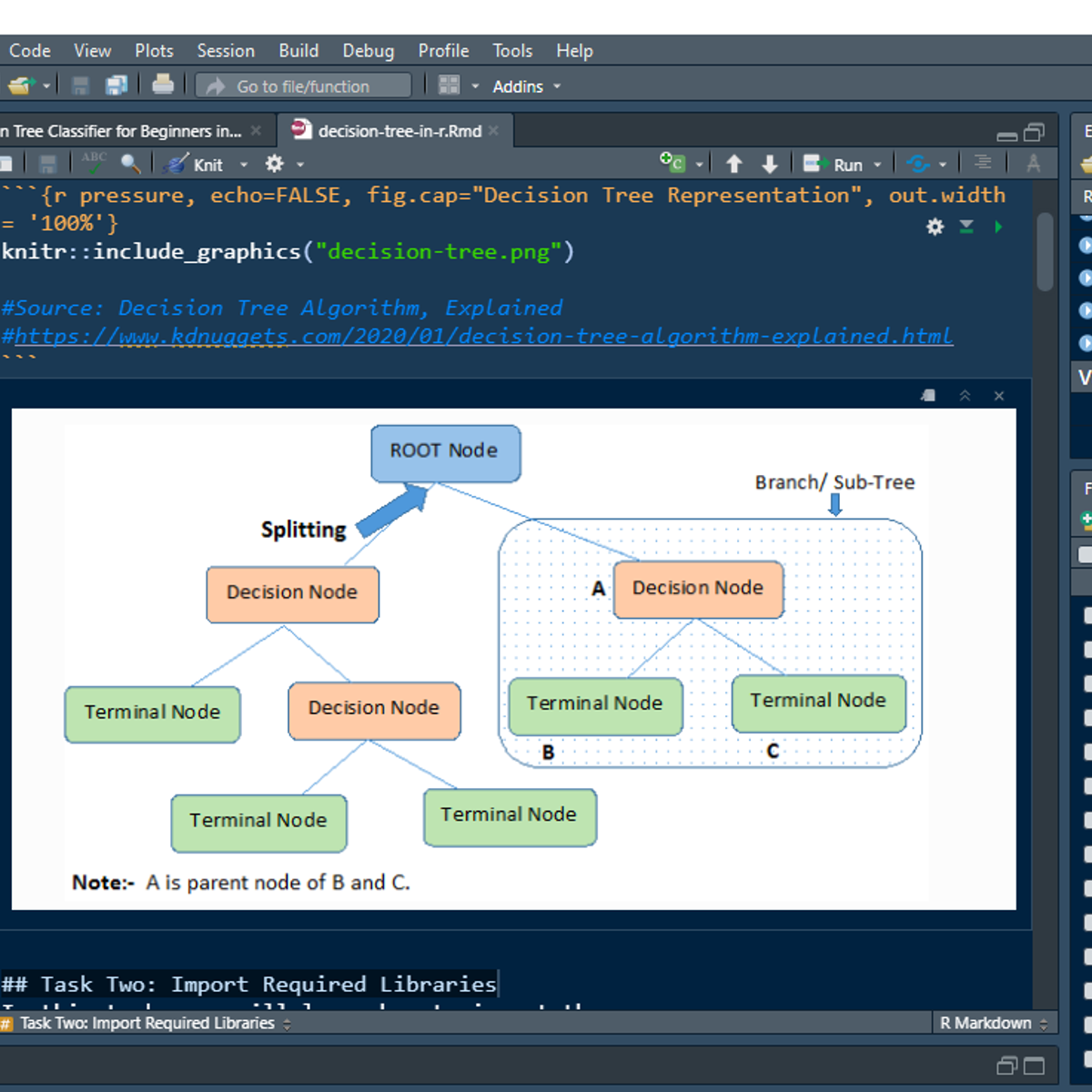
This hands-on course equips learners with the skills to implement, analyze, and evaluate the Random Forest algorithm using Python. Designed around a real-world classification problem using the SONAR dataset, the course guides learners through the entire pipeline—from data loading and preprocessing to constructing decision trees and assembling Random Forest models.
Through code-driven lessons and guided quizzes, learners will apply supervised learning techniques, calculate model performance using cross-validation, and assess decision boundaries using impurity measures like the Gini index. Participants will also learn to optimize model accuracy by employing best practices such as k-fold validation and random subsampling. By the end of this course, learners will have built a working Random Forest classifier and developed the ability to evaluate its effectiveness on real datasets.
The course is ideal for learners with basic knowledge of Python who want to strengthen their foundation in machine learning through project-based exploration and structured learning outcomes.
AI explanation not available for this lesson yet
This lesson is still being prepared for the AI tutor. In the meantime, explore lessons that are ready.
Browse explainer-ready lessons →
More on: Supervised Learning
View skill →







Related Reads
📰
📰
📰
📰
Python Öğrenirken “Vay Canına!” Dedirten 4 Sinsi Mantık
Medium · Python
Reduce ASR inference costs by 75% with NVIDIA MPS on Amazon EC2
AWS Machine Learning
What Is a Tabular Foundation Model (and Why They’re Becoming SOTA)
Medium · Machine Learning
What Is a Tabular Foundation Model (and Why They’re Becoming SOTA)
Medium · Programming
🎓
Tutor Explanation
 DeepCamp AI