
Healthcare SQL for Patient Outcomes
Key Takeaways
Optimizing healthcare database queries with SQL for improved patient outcomes
Original Description
Course Description: Healthcare SQL for Patient Outcomes
Did you know that optimizing healthcare database queries can directly improve the speed and accuracy of patient care decisions? Efficient SQL skills are essential for turning clinical data into meaningful, actionable insights.
This Short Course was created to help data analysis professionals specialize in healthcare database management, performance optimization, and secure patient data retrieval for improved clinical decision-making and operational efficiency.
By completing this course, you will be able to navigate healthcare data structures using primary and foreign keys, write parameterized JOIN queries for secure patient data access, and analyze I/O statistics to recommend effective indexing strategies—skills that enhance data reliability and clinical insight delivery.
By the end of this 4-hour long course, you will be able to:
Understand the role of primary and foreign keys in relational database schemas.
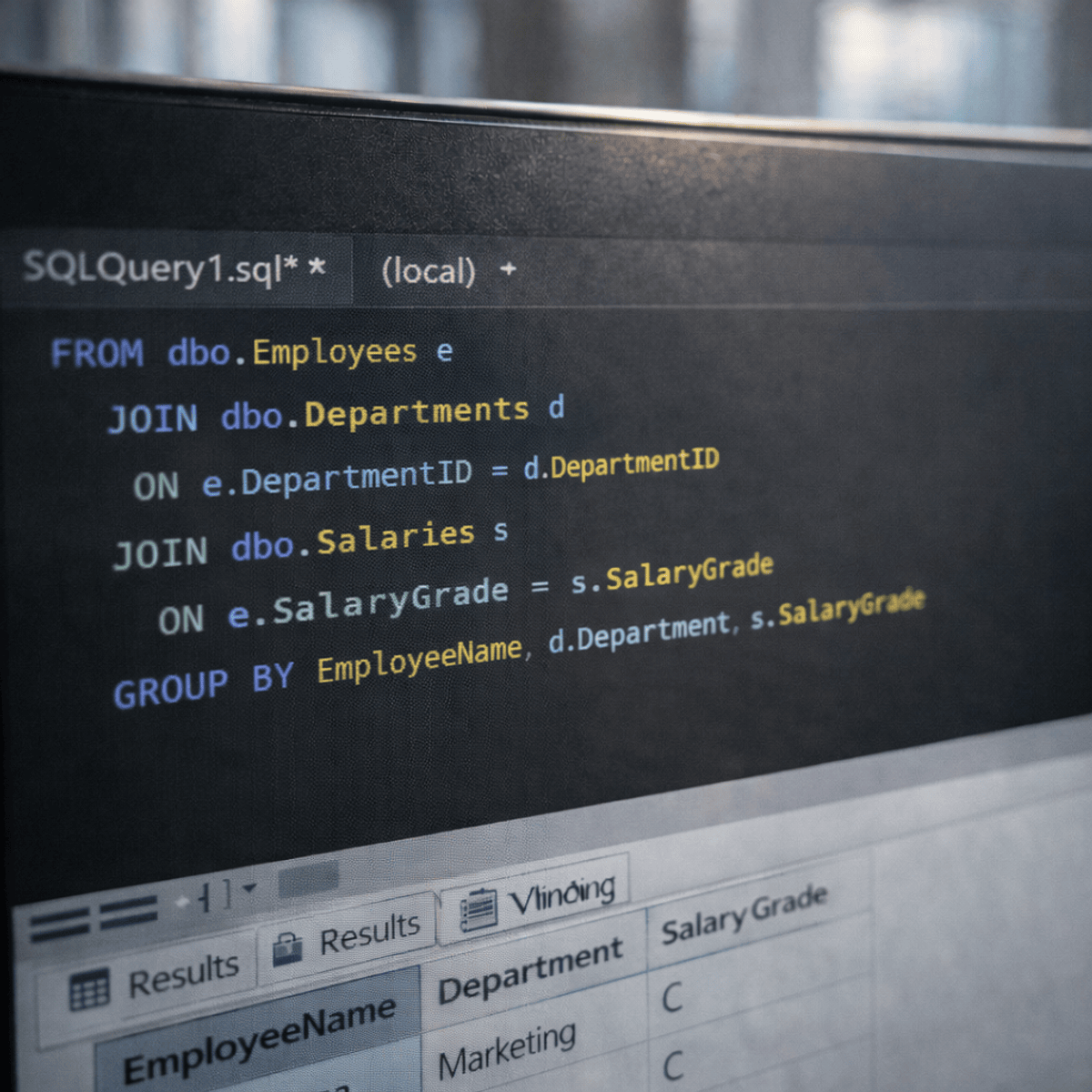
Apply parameterized queries with JOINs to retrieve data from a database.
Analyze I/O statistics to recommend appropriate database indexing.
This course is unique because it blends healthcare domain knowledge with SQL performance techniques, empowering you to support safer, faster, and more informed patient-centered decision-making within clinical data environments.
To be successful in this project, you should have:
Basic healthcare data concepts
Fundamental computer skills
Understanding of database concepts
Did you know that optimizing healthcare database queries can directly improve the speed and accuracy of patient care decisions? Efficient SQL skills are essential for turning clinical data into meaningful, actionable insights.
This Short Course was created to help data analysis professionals specialize in healthcare database management, performance optimization, and secure patient data retrieval for improved clinical decision-making and operational efficiency.
By completing this course, you wil
Watch on External: Coursera ↗
(saves to browser)
Sign in to unlock AI tutor explanation · ⚡30
More on: SQL Analytics
View skill →








Related Reads
📰
📰
📰
📰
Por qué el "precio de lista" de una tienda no vale nada (y cómo construimos un tracker honesto)
Dev.to · Edu Tor
FDA Recall API: A Working Guide to openFDA Enforcement
Dev.to · Mayd-It
Common Mistakes New Data Engineers Make (And How to Avoid Them)
Dev.to · Abhishek Konagalla
DuckDB vs PostgreSQL: I Ran the Same Query on Both. One Finished in 12ms. The Other Timed Out.
Medium · Programming
🎓
Tutor Explanation

 DeepCamp AI