Twitter Posts Political Ideology Classification (Student Presentation, Group 15)
This is a STAT 451 class project presentation
by Han Cao, Siyi He, Qiwen Zeng
This presentation is shared with the students' permission.
Abstract:
Some reports[5] have been indicating that social media has a strong impact on political ideologies of the society. Emerging conspiracy theories suggest that other countries have been using social media platforms to manipulate presidential election of the United States. However, in order to massively monitor such behavior online involving technologies that enable computer to understand the political ideologies behind the texts. We proposed using machine learning algorithms to solve such a problem. We experimented Support Vector Machine, XGBoost, and Multinomial Naive Bayes on a data set collected from twitter. We eventually achieved an accuracy of 76%.
Watch on YouTube ↗
(saves to browser)
Sign in to unlock AI tutor explanation · ⚡30
Playlist
Uploads from Sebastian Raschka · Sebastian Raschka · 0 of 60
← Previous
Next →
1
![Intro to Deep Learning -- L06.5 Cloud Computing [Stat453, SS20]](https://i.ytimg.com/vi/9eH1SAs8K3o/mqdefault.jpg) 2
2
![Intro to Deep Learning -- L09 Regularization [Stat453, SS20]](https://i.ytimg.com/vi/KwaxQKiLkFY/mqdefault.jpg) 3
3
![Intro to Deep Learning -- L10 Input and Weight Normalization Part 1/2 [Stat453, SS20]](https://i.ytimg.com/vi/QQD9Y2FiotQ/mqdefault.jpg) 4
4
![Intro to Deep Learning -- L10 Input and Weight Normalization Part 2/2 [Stat453, SS20]](https://i.ytimg.com/vi/H_hrdUUrjho/mqdefault.jpg) 5
5
![Intro to Deep Learning -- L11 Common Optimization Algorithms [Stat453, SS20]](https://i.ytimg.com/vi/MyWwxEHC5zE/mqdefault.jpg) 6
6
![Intro to Deep Learning -- L12 Intro to Convolutional Neural Networks (Part 1) [Stat453, SS20]](https://i.ytimg.com/vi/7ftuaShIzhc/mqdefault.jpg) 7
7
![Intro to Deep Learning -- L13 Intro to Convolutional Neural Networks (Part 2) 1/2 [Stat453, SS20]](https://i.ytimg.com/vi/mZmyp0JjH6s/mqdefault.jpg) 8
8
![Intro to Deep Learning -- L13 Intro to Convolutional Neural Networks (Part 2) 2/2 [Stat453, SS20]](https://i.ytimg.com/vi/ji05GxulVuY/mqdefault.jpg) 9
9
![Intro to Deep Learning -- L14 Intro to Recurrent Neural Networks [Stat453, SS20]](https://i.ytimg.com/vi/tFWex9e-sg8/mqdefault.jpg) 10
10
![Intro to Deep Learning -- L15 Autoencoders [Stat453, SS20]](https://i.ytimg.com/vi/iddlDHXDxc0/mqdefault.jpg) 11
11
![Intro to Deep Learning -- L16 Generative Adversarial Networks [Stat453, SS20]](https://i.ytimg.com/vi/aka29GqbsEM/mqdefault.jpg) 12
12
![Intro to Deep Learning -- Student Presentations, Day 1 [Stat453, SS20]](https://i.ytimg.com/vi/e_I0q3mmfw4/mqdefault.jpg) 13
13
 14
14
 15
15
 16
16
 17
17
 18
18
 19
19
 20
20
 21
21
 22
22
 23
23
 24
24
 25
25
 26
26
 27
27
 28
28
 29
29
 30
30
 31
31
 32
32
 33
33
 34
34
 35
35
 36
36
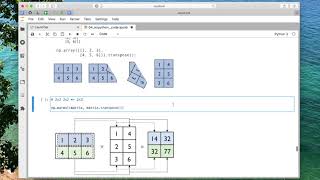 37
37
 38
38
 39
39
 40
40
 41
41
 42
42
 43
43
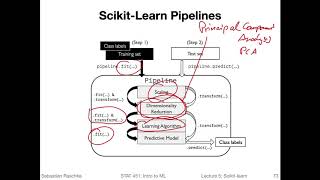 44
44
 45
45
 46
46
 47
47
 48
48
 49
49
 50
50
 51
51
 52
52
 53
53
 54
54
 55
55
 56
56
 57
57
 58
58
 59
59
 60
60

Intro to Deep Learning -- L06.5 Cloud Computing [Stat453, SS20]
Sebastian Raschka
Intro to Deep Learning -- L09 Regularization [Stat453, SS20]
Sebastian Raschka
Intro to Deep Learning -- L10 Input and Weight Normalization Part 1/2 [Stat453, SS20]
Sebastian Raschka
Intro to Deep Learning -- L10 Input and Weight Normalization Part 2/2 [Stat453, SS20]
Sebastian Raschka
Intro to Deep Learning -- L11 Common Optimization Algorithms [Stat453, SS20]
Sebastian Raschka
Intro to Deep Learning -- L12 Intro to Convolutional Neural Networks (Part 1) [Stat453, SS20]
Sebastian Raschka
Intro to Deep Learning -- L13 Intro to Convolutional Neural Networks (Part 2) 1/2 [Stat453, SS20]
Sebastian Raschka
Intro to Deep Learning -- L13 Intro to Convolutional Neural Networks (Part 2) 2/2 [Stat453, SS20]
Sebastian Raschka
Intro to Deep Learning -- L14 Intro to Recurrent Neural Networks [Stat453, SS20]
Sebastian Raschka
Intro to Deep Learning -- L15 Autoencoders [Stat453, SS20]
Sebastian Raschka
Intro to Deep Learning -- L16 Generative Adversarial Networks [Stat453, SS20]
Sebastian Raschka
Intro to Deep Learning -- Student Presentations, Day 1 [Stat453, SS20]
Sebastian Raschka
1.2 What is Machine Learning (L01: What is Machine Learning)
Sebastian Raschka
1.3 Categories of Machine Learning (L01: What is Machine Learning)
Sebastian Raschka
1.4 Notation (L01: What is Machine Learning)
Sebastian Raschka
1.1 Course overview (L01: What is Machine Learning)
Sebastian Raschka
1.5 ML application (L01: What is Machine Learning)
Sebastian Raschka
1.6 ML motivation (L01: What is Machine Learning)
Sebastian Raschka
2.1 Introduction to NN (L02: Nearest Neighbor Methods)
Sebastian Raschka
2.2 Nearest neighbor decision boundary (L02: Nearest Neighbor Methods)
Sebastian Raschka
2.3 K-nearest neighbors (L02: Nearest Neighbor Methods)
Sebastian Raschka
2.4 Big O of K-nearest neighbors (L02: Nearest Neighbor Methods)
Sebastian Raschka
2.5 Improving k-nearest neighbors (L02: Nearest Neighbor Methods)
Sebastian Raschka
2.6 K-nearest neighbors in Python (L02: Nearest Neighbor Methods)
Sebastian Raschka
3.1 (Optional) Python overview
Sebastian Raschka
3.2 (Optional) Python setup
Sebastian Raschka
3.3 (Optional) Running Python code
Sebastian Raschka
4.1 Intro to NumPy (L04: Scientific Computing in Python)
Sebastian Raschka
4.2 NumPy Array Construction and Indexing (L04: Scientific Computing in Python)
Sebastian Raschka
4.4 NumPy Broadcasting (L04: Scientific Computing in Python)
Sebastian Raschka
4.5 NumPy Advanced Indexing -- Memory Views and Copies (L04: Scientific Computing in Python)
Sebastian Raschka
4.3 NumPy Array Math and Universal Functions (L04: Scientific Computing in Python)
Sebastian Raschka
4.7 Reshaping NumPy Arrays (L04: Scientific Computing in Python)
Sebastian Raschka
4.6 NumPy Random Number Generators (L04: Scientific Computing in Python)
Sebastian Raschka
4.8 NumPy Comparison Operators and Masks (L04: Scientific Computing in Python)
Sebastian Raschka
4.9 NumPy Linear Algebra Basics (L04: Scientific Computing in Python)
Sebastian Raschka
4.10 Matplotlib (L04: Scientific Computing in Python)
Sebastian Raschka
5.1 Reading a Dataset from a Tabular Text File (L05: Machine Learning with Scikit-Learn)
Sebastian Raschka
5.2 Basic data handling (L05: Machine Learning with Scikit-Learn)
Sebastian Raschka
5.3 Object Oriented Programming & Python Classes (L05: Machine Learning with Scikit-Learn)
Sebastian Raschka
5.4 Intro to Scikit-learn (L05: Machine Learning with Scikit-Learn)
Sebastian Raschka
5.5 Scikit-learn Transformer API (L05: Machine Learning with Scikit-Learn)
Sebastian Raschka
5.6 Scikit-learn Pipelines (L05: Machine Learning with Scikit-Learn)
Sebastian Raschka
6.1 Intro to Decision Trees (L06: Decision Trees)
Sebastian Raschka
6.2 Recursive algorithms & Big-O (L06: Decision Trees)
Sebastian Raschka
6.3 Types of decision trees (L06: Decision Trees)
Sebastian Raschka
6.5 Gini & Entropy versus misclassification error (L06: Decision Trees)
Sebastian Raschka
6.6 Improvements & dealing with overfitting (L06: Decision Trees)
Sebastian Raschka
6.7 Code Example Implementing Decision Trees in Scikit-Learn (L06: Decision Trees)
Sebastian Raschka
7.1 Intro to ensemble methods (L07: Ensemble Methods)
Sebastian Raschka
7.2 Majority Voting (L07: Ensemble Methods)
Sebastian Raschka
7.3 Bagging (L07: Ensemble Methods)
Sebastian Raschka
7.4 Boosting and AdaBoost (L07: Ensemble Methods)
Sebastian Raschka
7.5 Gradient Boosting (L07: Ensemble Methods)
Sebastian Raschka
7.6 Random Forests (L07: Ensemble Methods)
Sebastian Raschka
7.7 Stacking (L07: Ensemble Methods)
Sebastian Raschka
8.1 Intro to overfitting and underfitting (L08: Model Evaluation Part 1)
Sebastian Raschka
8.2 Intuition behind bias and variance (L08: Model Evaluation Part 1)
Sebastian Raschka
8.3 Bias-Variance Decomposition of the Squared Error (L08: Model Evaluation Part 1)
Sebastian Raschka
8.4 Bias and Variance vs Overfitting and Underfitting (L08: Model Evaluation Part 1)
Sebastian Raschka
Related AI Lessons
⚡
⚡
⚡
⚡
9 Python Concepts That Finally Made Sense Later
Medium · AI
The production failure opening is the best thing in the article — it immediately separates this…
Medium · Python
1 — Machine Learning for Beginners, Introduction.
Medium · Machine Learning
A Learnability Gap, Not a Capacity Gap: 353 Parameters vs a 3-Parameter Heuristic
Dev.to · Kit Good
🎓
Tutor Explanation
 DeepCamp AI