This Skill Turns Your Agents Into Neckbeards...
Skills:
Agent Foundations70%
Key Takeaways
Utilizes Python for AI agent development with a focus on project consulting and services
Full Transcript
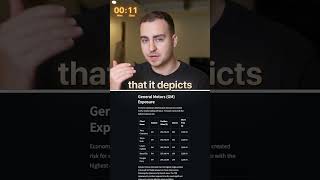
What is going on, guys? Welcome back. In this quick little video today, I want to show you a Claude code skill called ponytail, which can really save you a lot of nerves by forcing your agent or instructing your agent to be more concise and to go with a minimal effort or minimal solution that is out there. So, we're going to talk about this after the intro. If you like this video, let me know by hitting a like button and subscribing. And now, let us get right into it. >> [music] >> All right. So, this video today is going to be quick and simple. Not every video has to be a crash course. We're going to just take a look at a Claude code skill today called ponytail. And the reason this skill is called ponytail is because you will always find a guy that looks like this that will give you a one-liner or a very short solution to a complex problem. And we want our coding agents to do the same. So, we want them to be like this guy, not ramble for hours, not give us walls of text and explanations and tests and best practices and design patterns. We just want to have a basic simple, minimal solution. Because in my case, what I oftentimes like to do is I like to learn stuff using these coding agents. So, if I'm working with LangGraph for the first time, I might ask a coding agent to give me a simple example of how to use LangGraph just so I can take a look at it. And what it usually does is it creates extremely long docstrings, extremely complicated best practice examples as if I was trying to build an application to just deploy immediately. What I usually want is just a very quick and dirty minimal uh code sample that I can take a look at. Because at the end of the day, I want to do stuff myself. I want to implement the features myself. I want to do everything myself. But, I want the coding agent to show me examples and to guide me through them a little bit. And in this case, I don't want the best practice polished version. I want to have a quick and dirty implementation I can take a look at. And this is basically what ponytail helps us to achieve. This is a skill that instructs our agent to be concise and minimal. Uh you can also take a look at the skills.md file to see how it does that. But, basically, you can see compared to the baseline, which means no skill, and compared to another skill called caveman, this radically reduces the amount of um code written, the amount of tokens written, and that is what we're going to try out today to see if it actually works and how much more concise the examples are. So, all we have to do to install the skill is we have to download it. You can either clone the repository or download the zip file right here in the browser. I'm going to download it into my tutorial directory. I'm going to go in there and I'm going to unpack it, so just extract here. And from this directory here, I only need the skills directory, so I'm going to cut this. I'm going to paste it out here. I'm going to delete the rest. I don't need the repository. And then we're going to go and create two folders. One is going to be called no skill, the other one is going to be called with skill. And then I'm going to go into my terminal, navigate to tutorial directory, go into with skill. Here I'm going to create a dot cloth directory, and into this dot cloth directory, I'm going to drag and drop the skill. That is basically it. And now I want to play around with a couple of prompts. I want to instruct the model to do something or the agent to do something, and I want to do that with and without a skill. So, I'm going to go into no skill and I'm going to go into with skill, or I already am in with skill, and the only thing I'm going to do here is I'm going to initialize a UV project, so UV init, and then let's do UV add langraph, because that's going to be my first example, the thing I just talked about, asking it to explain langraph using an example. So, UV init, UV add langraph. The only reason I'm doing this already is because otherwise it's going to try to mess with my system installation, system Python installation. This way I can just tell it use the UV project that we already have here. But besides that, I'm just going to provide a simple prompt and see which one performs better. So, I'm going to start Claude Code in both directories, and I'm going to copy-paste the same prompt that I've prepared here. I want to familiarize myself with LangGraph. Give me a simple but useful example that shows some of the most important features, just to see how it works and play around with it. I'm going to do the same thing here on the right side. Now, one thing that I need to mention when I played around with this, I noticed that oftentimes this skill is not actually invoked or actually loaded. So, maybe you have to uh stop it and tell it, "Hey, please use the skill." Or you have to use the slash command. This is sometimes not as smooth as I would like it to be, but if the skill is loaded, that is very, very different in terms of what kind of output we get. So, I'm going to run this here on the left. I'm going to run this here on the right. Let's see if it loads the skill. Otherwise, I'm going to interrupt it and tell it to load the skill. In this case, it doesn't do that. Please load the ponytail skill. There you go. Successfully loaded the skill. So, that's not the fanciest way to do this, but now basically uh it will do what I asked for. Here it asked me, "Do you want to use the Claude API uh skill?" I'm going to say no. Continue without. Uh and then it uses some pip command here. But you can already see on this side, I got a code example. I got a state guess narrow route. I got some state graph with some nodes and edges and conditional edge. And basically, I can tell it to override main.py. And maybe it's going to drop one two sentences, and we're done. It's going to run this now. And on the left side here, it still deals with UV, but even if it writes the code, then it will be quite bloated. So, here it says, "UV add LangChain Anthropic." On the right side, we're basically done. We can also take a look at the code here already. We have a very minimal code example. I know now that there's a state, which is a type dict. I can see that we have some fields here. I have a bunch of functions that are stated that are taking in a state and producing either a state or a string. Then I have the state graph that is being initialized. I add nodes, I add an edge, conditional edges. So, even if I never use If I've never used LangGraph before it, this is a simple, concise example to get started with. On the other hand, you can see what I get here on the left side, which is the typical stuff that I hate about every coding agent ever. It gives me this sort of BS. This is crazy. And sometimes it will even do more than that. But, uh essentially now it's going to try to run this too. It will probably succeed. Usually it's very polished and uh best practice and whatnot. But, this is what I'm asking for. If I want a quick start example, this is what I want to see. A very basic, low comment uh code that just works. And here it's still testing and it's running so many things just to to tell me that it's done. And then it gives me this huge breakdown of the feature and where in the code it is and what I'm not going to read all this. I'm not going to read all this 99% of the time. Uh took so much time, spent so many tokens. It's just annoying. If I take a look at it now, I don't even want to start exploring this because if I have never used LangChain before LangGraph before, I just have to filter out, okay, what what exactly is happening here? What is specific to LangGraph? What is just some other stuff that I I'm not interested in? It's so verbose and so bloated. This looks much better. So, yeah, that's one example. Let's do another one. I'm going to go back here and I'm going to say actually I'm going to remove both of these directories. So, we don't have them anymore. And I'm going to start from scratch. So, I'm going to say here again, make directory no skill, make directory with skill. And this time I'm not going to even use an environment because I think this is only going to use NumPy and Matplotlib. But, what I want to do is I want to do a very simple Mandelbrot visualization. So, I'm just going to go here into no skill. I'm going to go into with skill plot. And I'm going to say here on both sides implement a simple Mandelbrot set visualization in Python. Should look beautiful and also run efficiently. Now, one thing that's important of course is we need to add the skill back into the width skill directory because I deleted this before. And for this I think we also need to restart Claude, otherwise it's not going to recognize the skill being there. So, I'm going to copy paste this again. Implement a simple Mandelbrot set visualization. Run this here. Run this here. And probably here I need to remind it again to use the skill. So, I'm going to actually interrupt it here. Did you use the ponytail skill? Question mark. Just to make sure it loads that. Uh, you didn't ask for it. Use the skill. So, by instructing it now it uses the skill. This is, yeah, a bit tedious. There's probably a better way to do it. You can go with the slash command, but I'm not sure that the quality is the same then because it loads it into context. It doesn't load the skill. But this is what we get here immediately. No waiting. No yapping. Just a very minimal working solution. Hopefully working solution. Here on the left side it actually tries first a couple of import statements. Um, then it sees the libraries are available. Cool. This one already launches the resulting script. This one still thinks. Now, on the right side it tells me done. Now, let's take a look at this. I'm going to use Nomacs to show the Mandelbrot PNG image and we have an image as an output. This is the most minimal version it could produce. There you go. I have my script. Simple, short, concise. This one here already starts with a fat docstring with some function with some C map color map with some main function with if name equals main. So, all this stuff that I don't need in a basic proof of concept prototype. I just want to have a simple Mandelbrot set visualization. I'm not asking for best practices. I'm not asking for any deployment or anything any any design patterns or any functions and comments and docstrings. I just want to have a simple example like this here. And I got it with the skill. And here it's still running some stuff. It's still going to be yapping, I guess. Now it adjusts the code because it doesn't like the color, asked me to run everything again, and then it's done, and it again starts yapping about the efficiency, the beauty, and everything. And I'm sure that this one will have more features. Maybe it's going to be interactive. So if I run this now, python3 mail.py, maybe it's interactive, maybe it has some stuff that the other one doesn't have. But it also I I didn't ask for it. So here now, yeah, there you go. We can probably zoom in, that's fine. Um but this is simple and concise. This is just verbose. And even if you implement more features, there's no need to put docstrings everywhere when I didn't ask for it. So yeah, I don't like this, but in general you notice a pattern. If you want to learn something, so if for example, I also want to go here in the skill directory here, if I say "clot", I want uh it to explain something to me. What I can do is I can say {slash} ponytail and I can say "explain the concept of dynamic programming to me using a simple example in Python." What I want when I type something like this is a very concise uh implementation of something. So this actually tries to run something now. There you go. Gives me the code example, gives me two flavors of dynamic programming. That's it. That's all I have to read to understand what dynamic programming is about. I can do that in 30 seconds. Now if I ask the vanilla clot code without a skill, it's going to start yapping and it's not going to stop yapping. It's going to give me so much information I never asked for that I'm not going to be interested in reading. And and then I have to say, "Hey, please be more concise. I'm not going to read all of this." Um but yeah, you can see it starts with some graph, approach one memorization, approach two tabulation, bottom up, then it gives me some runtime complexity, and all this stuff that it could have said if I asked more, or it could have said, "Hey, do you want to know more about runtime complexity?" No, it starts yapping. And this is actually not that bad. This is quite concise, probably because there's not too much to talk about here. But, you get the idea. This is the skill you want to use if you want something concise, and you can still deactivate it if you want to have the yapping version of Cloud Code. But, I like this skill a lot. So, that's it for this video today. I hope you enjoyed it and hope you learned something. If so, let me know by hitting a like button and leave a comment in the comment section down below. Also, in case you're interested, on my website you'll find a services tab and a tutoring tab that you can contact me if you need help with a project from a freelancer, from a consultant. You can contact me at the bottom of these pages by using LinkedIn or email. Besides that, don't forget to subscribe to this channel and hit the notification bell to not miss a single future video free. Other than that, thank you so much for watching. See you in the next video and bye.
Original Description
💻️ Need some help with a project or some consulting? Contact me here: https://www.neuralnine.com/services
🐍 The Python Bible Book: https://www.neuralnine.com/books/
💻 The Algorithm Bible Book: https://www.neuralnine.com/books/
Watch on YouTube ↗
(saves to browser)
Sign in to unlock AI tutor explanation · ⚡30
More on: Agent Foundations
View skill →






Related Reads
📰
📰
📰
📰
Gemini Spark at $100/Month: Who Should Actually Pay for It (and Who Should Wait)
Dev.to AI
How Our AI Agents Built a Visual Cron Expression & Task Scheduler in Record Time
Dev.to AI
Exploring Grok 4.5: A New Era in AI-Powered Automation
Dev.to AI
The Kubernetes Approach to AI-Assisted Maintainership Prioritises Human Accountability
InfoQ AI/ML
🎓
Tutor Explanation

 DeepCamp AI