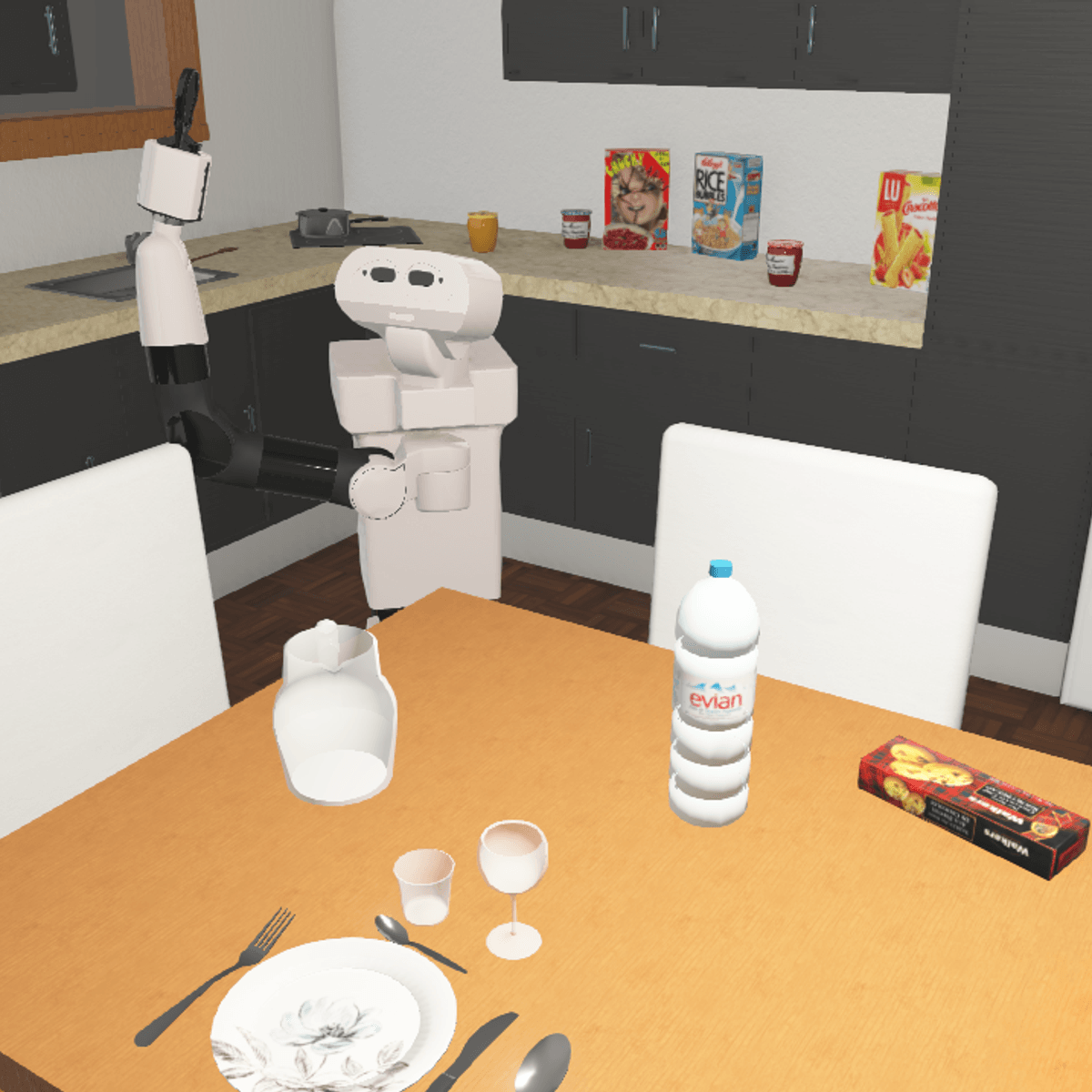
Robotic Path Planning and Task Execution
Key Takeaways
Covers robotic path planning and task execution using algorithms like Breadth-First Search and A*
Original Description
This course, which is the last and final course in the Introduction to Robotics with Webots specialization, will teach you basic approaches for planning robot trajectories and sequence their task execution. In "Robotic Path Planning and Task Execution", you will develop standard algorithms such as Breadth-First Search, Dijkstra's, A* and Rapidly Exploring Random Trees through guided exercises. You will implement Behavior Trees for task sequencing and experiment with a mobile manipulation robot "Tiago Steel".
It is recommended that you complete the first and second courses of this specialization, “Introduction to Robotics: Basic Behaviors” and "Robotic Mapping and Trajectory Generation" , before beginning this one.
This course can be taken for academic credit as part of CU Boulder’s MS in Computer Science degrees offered on the Coursera platform. These fully accredited graduate degrees offer targeted courses, short 8-week sessions, and pay-as-you-go tuition. Admission is based on performance in three preliminary courses, not academic history. CU degrees on Coursera are ideal for recent graduates or working professionals. Learn more:
MS in Computer Science: https://coursera.org/degrees/ms-computer-science-boulder
AI explanation not available for this lesson yet
This lesson is still being prepared for the AI tutor. In the meantime, explore lessons that are ready.
Browse explainer-ready lessons →
More on: Algorithm Basics
View skill →





Related Reads
📰
📰
📰
📰
Trapping Rain Water: Understanding Data Structure Choices from a Beginner’s Perspective
Medium · Programming
The Grid Problem That Looks Easy Until You Need the Lexicographically Smallest Path
Medium · Programming
The Algorithm That’s Practically O(1) — But Provably Isn’t
Medium · Programming
Knight Attack Made BFS Feel Like a Recipe, Not a Template
Medium · Python
🎓
Tutor Explanation
 DeepCamp AI