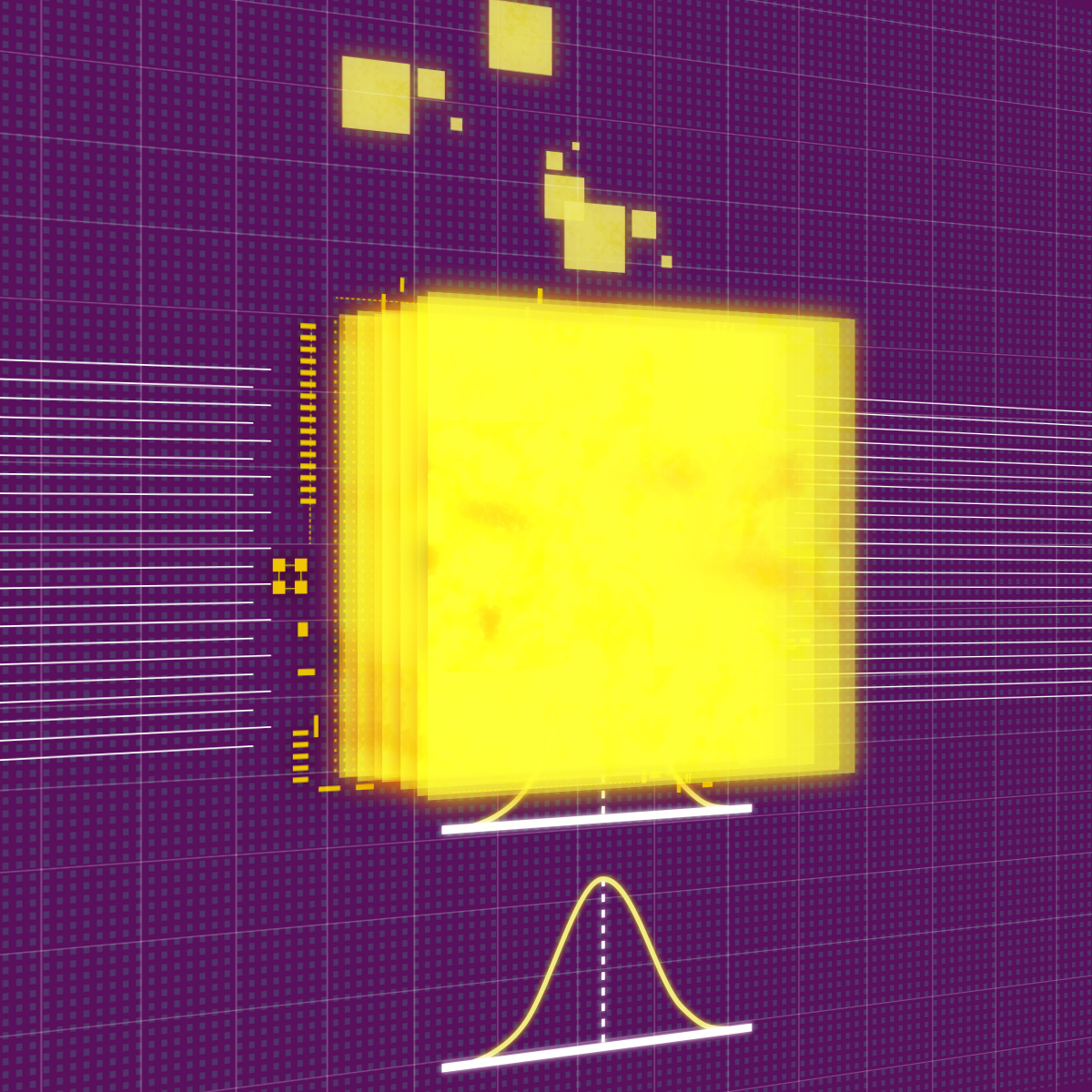
Probabilistic Deep Learning with TensorFlow 2
Key Takeaways
Applies probabilistic deep learning concepts using TensorFlow 2, including quantifying noise and uncertainty in real-world data
Original Description
Welcome to this course on Probabilistic Deep Learning with TensorFlow!
This course builds on the foundational concepts and skills for TensorFlow taught in the first two courses in this specialisation, and focuses on the probabilistic approach to deep learning. This is an increasingly important area of deep learning that aims to quantify the noise and uncertainty that is often present in real world datasets. This is a crucial aspect when using deep learning models in applications such as autonomous vehicles or medical diagnoses; we need the model to know what it doesn't know.
You will learn how to develop probabilistic models with TensorFlow, making particular use of the TensorFlow Probability library, which is designed to make it easy to combine probabilistic models with deep learning. As such, this course can also be viewed as an introduction to the TensorFlow Probability library.
You will learn how probability distributions can be represented and incorporated into deep learning models in TensorFlow, including Bayesian neural networks, normalising flows and variational autoencoders. You will learn how to develop models for uncertainty quantification, as well as generative models that can create new samples similar to those in the dataset, such as images of celebrity faces.
You will put concepts that you learn about into practice straight away in practical, hands-on coding tutorials, which you will be guided through by a graduate teaching assistant. In addition there is a series of automatically graded programming assignments for you to consolidate your skills.
At the end of the course, you will bring many of the concepts together in a Capstone Project, where you will develop a variational autoencoder algorithm to produce a generative model of a synthetic image dataset that you will create yourself.
This course follows on from the previous two courses in the specialisation, Getting Started with TensorFlow 2 and Customising Your Models with TensorFlow 2. The a
Watch on External: Coursera ↗
(saves to browser)
Sign in to unlock AI tutor explanation · ⚡30
More on: ML Maths Basics
View skill →



Related Reads
📰
📰
📰
📰
Understanding Deep Learning Through Four Interactive Experiments
Medium · Data Science
Understanding Deep Learning Through Four Interactive Experiments
Medium · Deep Learning
Optimizers in Deep Learning: From Gradient Descent to Adam
Medium · Deep Learning
The Meta-Architecture of Interface Fracture: High-Dimensional Logical Stress and Systemic Collapse…
Medium · Deep Learning
🎓
Tutor Explanation

 DeepCamp AI