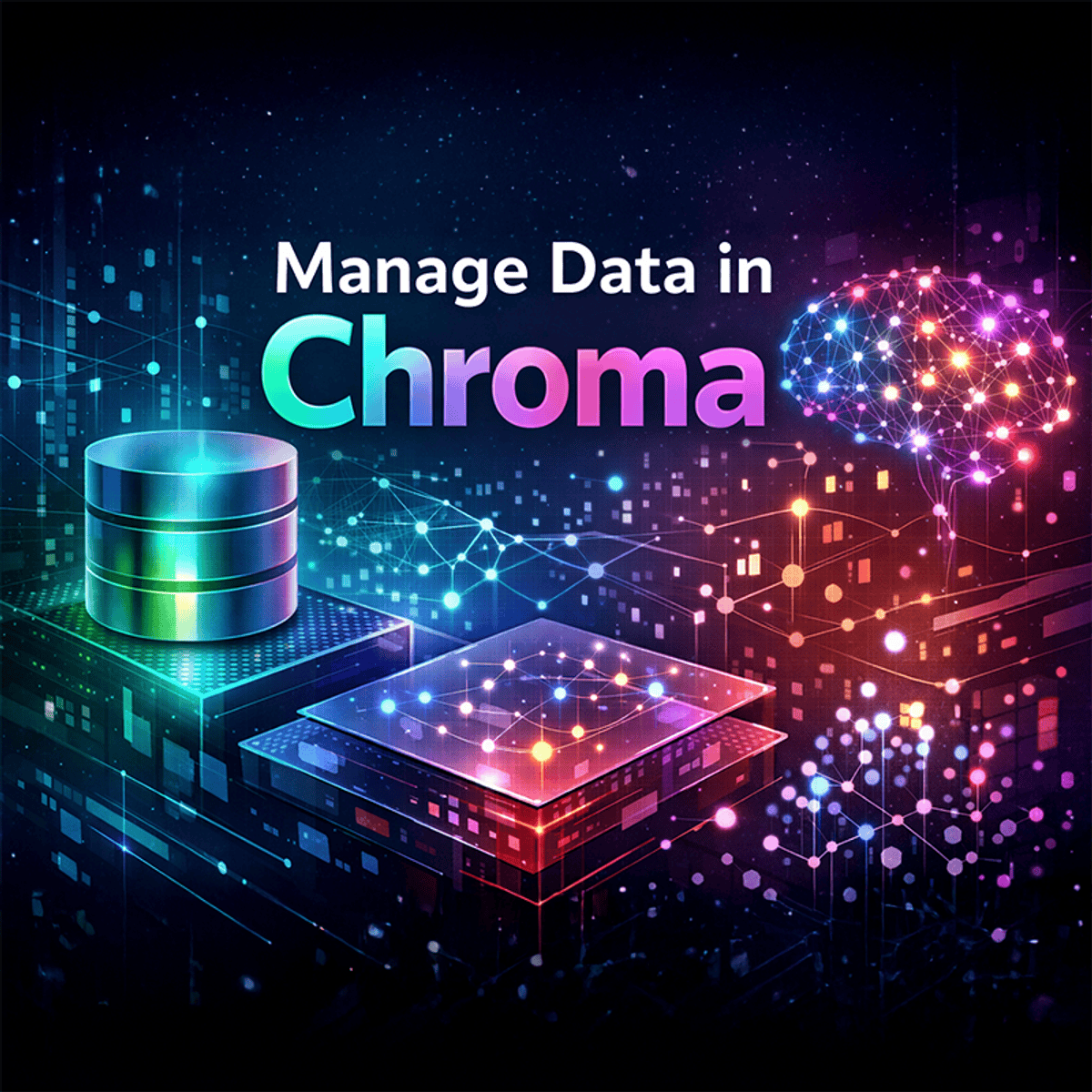
Manage Data in Chroma
Skills:
Vector Stores80%
Key Takeaways
Manages data in Chroma using vector databases for efficient and precise item retrieval
Original Description
Ready to move beyond basic vector search? This intermediate course is for AI practitioners and developers who want to unlock the full potential of their AI applications by mastering data management in Chroma. You'll learn that the power of a vector database isn't just in finding similar items—it's in finding the right items, precisely and efficiently. This course shows you how to build robust, organized, and scalable Chroma databases from the ground up.
You will need to have basic Python programming skills, including familiarity with libraries and data structures like dictionaries. No prior AI/ML experience is required.
You will learn to master metadata to create powerful filtering rules that retrieve exactly what you need, and you'll design multi-collection architectures to neatly organize data across different domains, just like real-world systems at companies like IKEA and JPMorgan. Through hands-on labs, you'll move from theory to practice by scripting a complete Python ETL pipeline to ingest, tag, and organize customer support tickets into a clean, queryable, multi-collection Chroma database. By the end of this course, you won't just be using a vector database; you'll be architecting a sophisticated data management engine ready for real-world AI applications.
Watch on External: Coursera ↗
(saves to browser)
Sign in to unlock AI tutor explanation · ⚡30
More on: Vector Stores
View skill →![FULLY LOCAL Mistral AI PDF Processing [Hands-on Tutorial]](https://i.ytimg.com/vi/wZDVgy_14PE/mqdefault.jpg)







Related Reads
📰
📰
📰
📰
Why Your Chatbot Feels Dumb — And How RAG Fixes It
Medium · RAG
5 RAG Optimization Techniques Every AI Engineer Should Know In 2026
Medium · AI
5 RAG Optimization Techniques Every AI Engineer Should Know In 2026
Medium · Machine Learning
Let’s talk about RAG: Why it exists, how it works and lot more about it.
Medium · RAG
🎓
Tutor Explanation
 DeepCamp AI