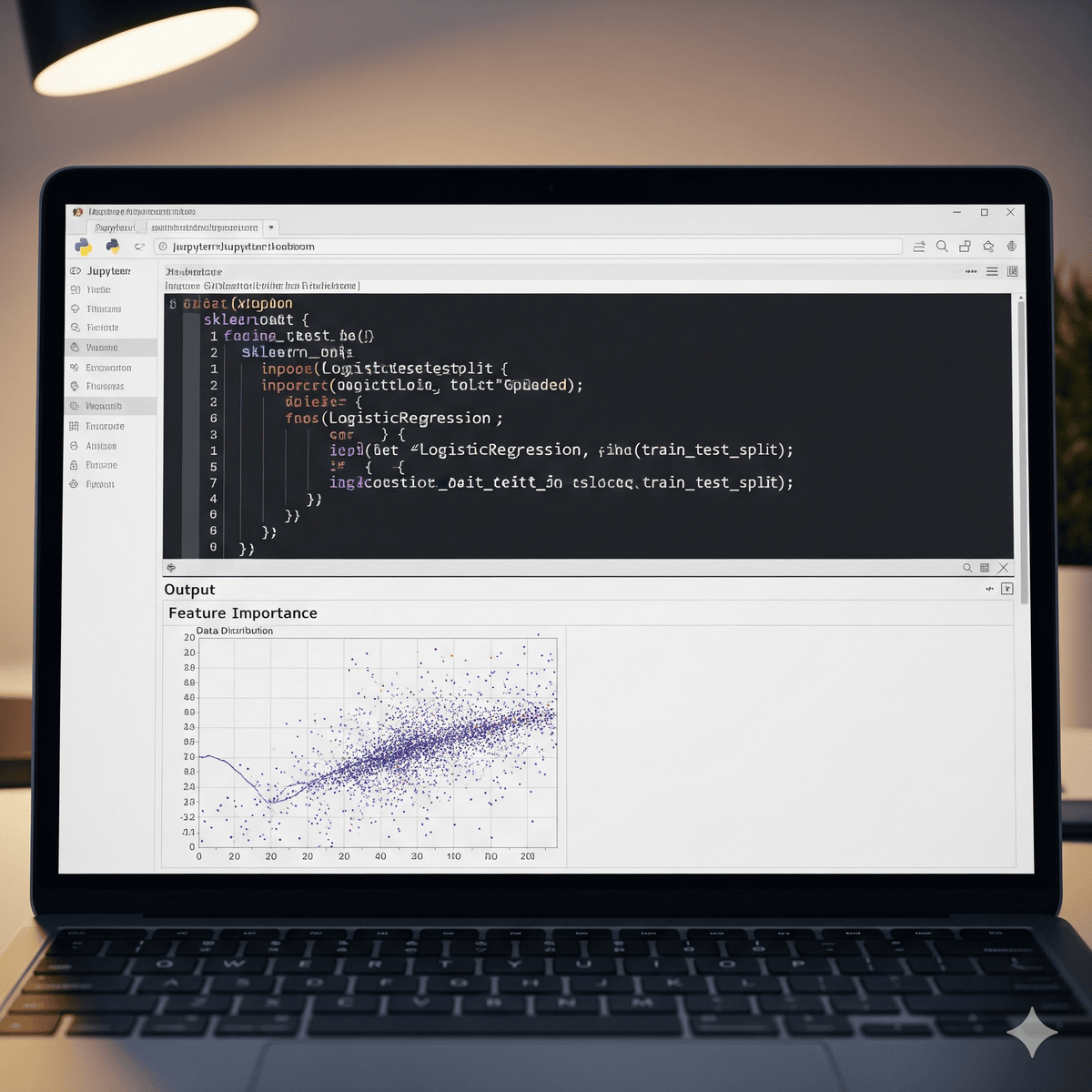
Machine Learning in Python: Analyze & Apply
Key Takeaways
Applies machine learning fundamentals using Python with NumPy, Matplotlib, Pandas, and scikit-learn
Original Description
By the end of this course, learners will be able to analyze machine learning fundamentals, apply NumPy for numerical computing, visualize data with Matplotlib, and manage structured datasets using Pandas. They will also be able to evaluate supervised and unsupervised models in scikit-learn, optimize performance through validation techniques, and implement advanced applications such as face recognition, text classification, and sentiment analysis.
This course provides a complete, hands-on pathway to mastering Python’s data science ecosystem. Each module balances conceptual clarity with practical coding examples, ensuring that learners not only understand theory but also build real-world skills. The inclusion of advanced topics like feature extraction, parameter tuning, and natural language processing sets this course apart from typical machine learning introductions.
Whether you are a beginner in data science or a professional seeking to strengthen applied machine learning expertise, this course offers a structured, project-ready learning journey. Learners will leave with the confidence to build, validate, and deploy machine learning solutions across multiple domains.
Watch on External: Coursera ↗
(saves to browser)
AI explanation not available for this lesson yet
This lesson is still being prepared for the AI tutor. In the meantime, explore lessons that are ready.
Browse explainer-ready lessons →
More on: Supervised Learning
View skill →




Related Reads
📰
📰
📰
📰
Hair Raising Headaches: The Unsolvable Riddle of Realistic Hair Physics in 3D Filmmaking
Dev.to · kirolos nadi
Your Face Just Became 512 Numbers — And the Store Doesn't Need Your Name
Dev.to AI
You may not know it… but a camera can identify you in seconds.
Medium · Machine Learning
Dice Object Detection Using an RCNN-Inspired Deep Learning Model with TensorFlow
Medium · Machine Learning
🎓
Tutor Explanation
 DeepCamp AI