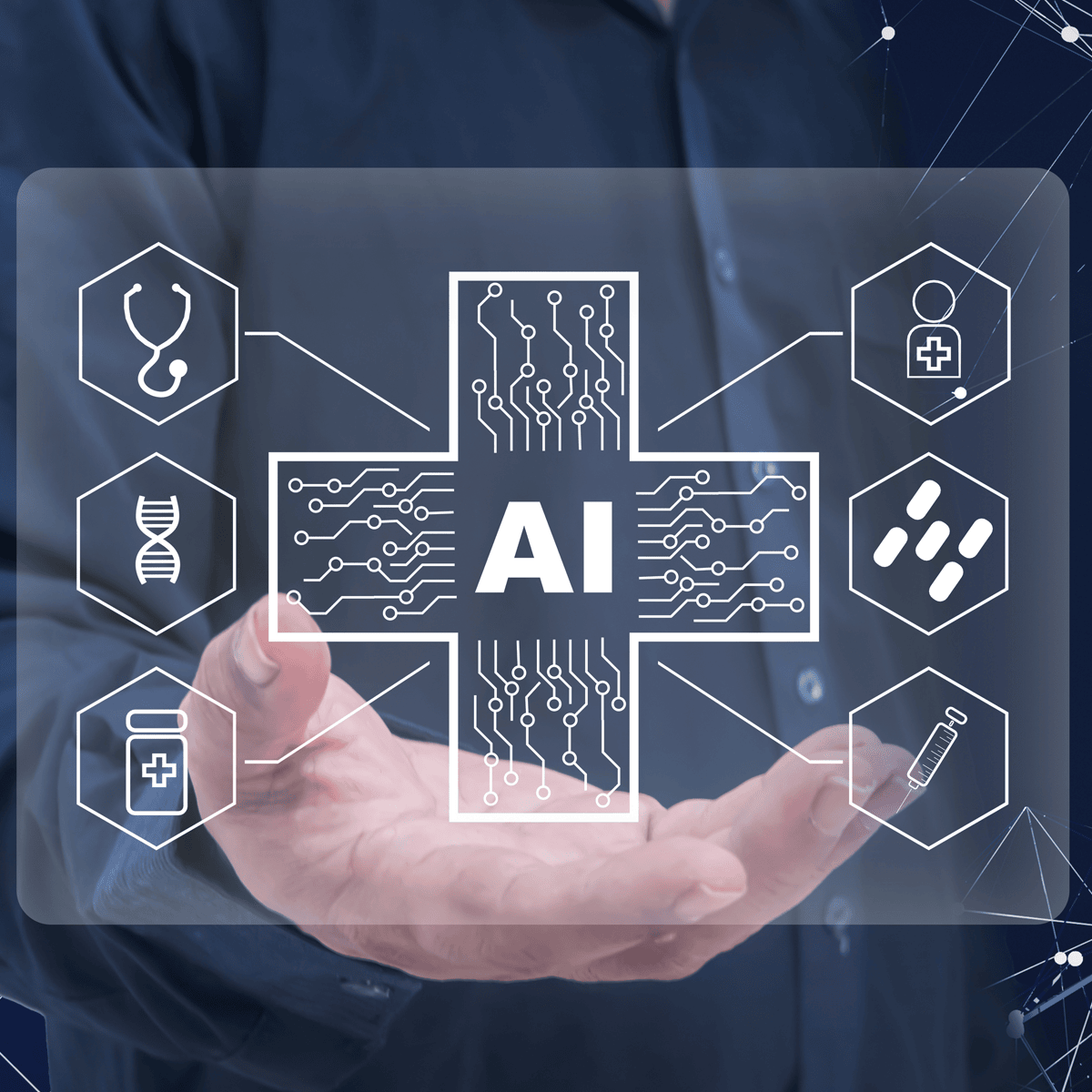
Machine Learning for Medical Data
Key Takeaways
Applies machine learning and deep learning techniques to medical data for patient risk assessment and predictive modeling
Original Description
This course builds on foundational AI concepts to teach machine learning (ML) techniques tailored for healthcare.
You will apply ML and deep learning techniques to develop predictive models for patient risk assessment. You will also translate healthcare data into actionable insights by experimenting with model design, training, and evaluation, strengthening both technical and clinical reasoning skills through practical, outcome-driven projects. Case studies and real-world examples will demonstrate how ML supports disease prediction, treatment optimization, and clinical decision support.
The curriculum emphasizes data preprocessing, feature engineering, model selection, and evaluation using clinical metrics and validation strategies. Through hands-on exercises, you will apply supervised and unsupervised methods, design and train neural networks, and address practical challenges such as class imbalance, privacy, and interpretability. You will use Jupyter Notebook files in a Google Colab environment to complete labs.
By the end of this course, you will be prepared to implement ML workflows that are clinically relevant, statistically sound, and ethically responsible.
Watch on External: Coursera ↗
(saves to browser)
Sign in to unlock AI tutor explanation · ⚡30
More on: ML Pipelines
View skill →






Related Reads
📰
📰
📰
📰
Python Tricks With zip(), enumerate(), and map()
Medium · Machine Learning
Python Tricks With zip(), enumerate(), and map()
Medium · Python
Understanding Transformers (Part 2): Why Backpropagation Broke Recurrent Neural Networks
Medium · Data Science
CS-NRRM™: A Practical Implementation of AI-Readable Longitudinal Data Infrastructure
Medium · Data Science
🎓
Tutor Explanation

 DeepCamp AI