LoRA explained (and a bit about precision and quantization)
▬▬ Papers / Resources ▬▬▬
LoRA Paper: https://arxiv.org/abs/2106.09685
QLoRA Paper: https://arxiv.org/abs/2305.14314
Huggingface 8bit intro: https://huggingface.co/blog/hf-bitsandbytes-integration
PEFT / LoRA Tutorial: https://www.philschmid.de/fine-tune-flan-t5-peft
Adapter Layers: https://arxiv.org/pdf/1902.00751.pdf
Prefix Tuning: https://arxiv.org/abs/2101.00190
▬▬ Support me if you like 🌟
►Link to this channel: https://bit.ly/3zEqL1W
►Support me on Patreon: https://bit.ly/2Wed242
►Buy me a coffee on Ko-Fi: https://bit.ly/3kJYEdl
►E-Mail: deepfindr@gmail.com
▬▬ Used Music ▬▬▬▬▬▬▬▬▬▬▬
Music from #Uppbeat (free for Creators!):
https://uppbeat.io/t/danger-lion-x/flute-loops
License code: M4FRIPCTVNOO4S8F
▬▬ Used Icons ▬▬▬▬▬▬▬▬▬▬
All Icons are from flaticon: https://www.flaticon.com/authors/freepik
▬▬ Timestamps ▬▬▬▬▬▬▬▬▬▬▬
00:00 Introduction
00:20 Model scaling vs. fine-tuning
00:58 Precision & Quantization
01:30 Representation of floating point numbers
02:15 Model size
02:57 16 bit networks
03:15 Quantization
04:20 FLOPS
05:23 Parameter-efficient fine tuning
07:18 LoRA
08:10 Intrinsic Dimension
09:20 Rank decomposition
11:24 LoRA forward pass
11:49 Scaling factor alpha
13:40 Optimal rank
14:16 Benefits of LoRA
15:20 Implementation
16:25 QLoRA
▬▬ My equipment 💻
- Microphone: https://amzn.to/3DVqB8H
- Microphone mount: https://amzn.to/3BWUcOJ
- Monitors: https://amzn.to/3G2Jjgr
- Monitor mount: https://amzn.to/3AWGIAY
- Height-adjustable table: https://amzn.to/3aUysXC
- Ergonomic chair: https://amzn.to/3phQg7r
- PC case: https://amzn.to/3jdlI2Y
- GPU: https://amzn.to/3AWyzwy
- Keyboard: https://amzn.to/2XskWHP
- Bluelight filter glasses: https://amzn.to/3pj0fK2
Watch on YouTube ↗
(saves to browser)
Sign in to unlock AI tutor explanation · ⚡30
Playlist
Uploads from DeepFindr · DeepFindr · 51 of 56
1
 2
2
 3
3
 4
4
 5
5
 6
6
 7
7
 8
8
 9
9
 10
10
 11
11
 12
12
 13
13
 14
14
 15
15
 16
16
 17
17
 18
18
 19
19
 20
20
 21
21
 22
22
 23
23
 24
24
 25
25
 26
26
 27
27
 28
28
 29
29
 30
30
 31
31
 32
32
 33
33
 34
34
 35
35
 36
36
 37
37
 38
38
 39
39
 40
40
 41
41
 42
42
 43
43
 44
44
 45
45
 46
46
 47
47
 48
48
 49
49
 50
50
 ▶
▶
 52
52
 53
53
 54
54
 55
55
 56
56
Understanding Graph Neural Networks | Part 1/3 - Introduction
DeepFindr
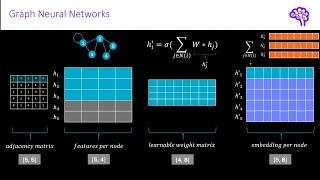
Understanding Graph Neural Networks | Part 2/3 - GNNs and it's Variants
DeepFindr
Understanding Graph Neural Networks | Part 3/3 - Pytorch Geometric and Molecule Data using RDKit
DeepFindr
Node Classification on Knowledge Graphs using PyTorch Geometric
DeepFindr
Understanding Convolutional Neural Networks | Part 1 / 3 - The Basics
DeepFindr
Understanding Convolutional Neural Networks | Part 2 / 3 - Wonders of the world CNN with PyTorch
DeepFindr
Understanding Convolutional Neural Networks | Part 3 / 3 - Transfer Learning and Explainable AI
DeepFindr
How to use edge features in Graph Neural Networks (and PyTorch Geometric)
DeepFindr
Explainable AI explained! | #1 Introduction
DeepFindr
Explainable AI explained! | #2 By-design interpretable models with Microsofts InterpretML
DeepFindr
Explainable AI explained! | #3 LIME
DeepFindr
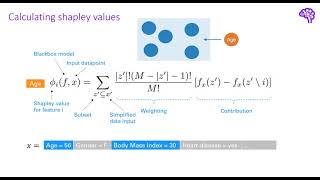
Explainable AI explained! | #4 SHAP
DeepFindr
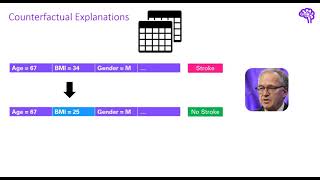
Explainable AI explained! | #5 Counterfactual explanations and adversarial attacks
DeepFindr
Explainable AI explained! | #6 Layerwise Relevance Propagation with MRI data
DeepFindr
Understanding Graph Attention Networks
DeepFindr
GNN Project #1 - Introduction to HIV dataset
DeepFindr
GNN Project #2 - Creating a Custom Dataset in Pytorch Geometric
DeepFindr
GNN Project #3.2 - Graph Transformer
DeepFindr
GNN Project #4.1 - Graph Variational Autoencoders
DeepFindr
GNN Project #4.2 - GVAE Training and Adjacency reconstruction
DeepFindr
GNN Project #4.3 - One-shot molecule generation - Part 1
DeepFindr
GNN Project #4.3 - Code explanation
DeepFindr
Machine Learning Model Deployment with Python (Streamlit + MLflow) | Part 1/2
DeepFindr
Machine Learning Model Deployment with Python (Streamlit + MLflow) | Part 2/2
DeepFindr
How to explain Graph Neural Networks (with XAI)
DeepFindr
Explaining Twitch Predictions with GNNExplainer
DeepFindr
Python Graph Neural Network Libraries (an Overview)
DeepFindr
Friendly Introduction to Temporal Graph Neural Networks (and some Traffic Forecasting)
DeepFindr
Traffic Forecasting with Pytorch Geometric Temporal
DeepFindr
Fraud Detection with Graph Neural Networks
DeepFindr
Fake News Detection using Graphs with Pytorch Geometric
DeepFindr
Recommender Systems using Graph Neural Networks
DeepFindr
How to handle Uncertainty in Deep Learning #1.1
DeepFindr
How to handle Uncertainty in Deep Learning #1.2
DeepFindr
How to handle Uncertainty in Deep Learning #2.1
DeepFindr
How to handle Uncertainty in Deep Learning #2.2
DeepFindr
Converting a Tabular Dataset to a Graph Dataset for GNNs
DeepFindr
Converting a Tabular Dataset to a Temporal Graph Dataset for GNNs
DeepFindr
How to get started with Data Science (Career tracks and advice)
DeepFindr
Causality and (Graph) Neural Networks
DeepFindr
Diffusion models from scratch in PyTorch
DeepFindr
Self-/Unsupervised GNN Training
DeepFindr
Contrastive Learning in PyTorch - Part 1: Introduction
DeepFindr
Contrastive Learning in PyTorch - Part 2: CL on Point Clouds
DeepFindr
State of AI 2022 - My Highlights
DeepFindr
Equivariant Neural Networks | Part 1/3 - Introduction
DeepFindr
Equivariant Neural Networks | Part 2/3 - Generalized CNNs
DeepFindr
Equivariant Neural Networks | Part 3/3 - Transformers and GNNs
DeepFindr
Personalized Image Generation (using Dreambooth) explained!
DeepFindr
Vision Transformer Quick Guide - Theory and Code in (almost) 15 min
DeepFindr
LoRA explained (and a bit about precision and quantization)
DeepFindr
Dimensionality Reduction Techniques | Introduction and Manifold Learning (1/5)
DeepFindr
Principal Component Analysis (PCA) | Dimensionality Reduction Techniques (2/5)
DeepFindr
Multidimensional Scaling (MDS) | Dimensionality Reduction Techniques (3/5)
DeepFindr
t-distributed Stochastic Neighbor Embedding (t-SNE) | Dimensionality Reduction Techniques (4/5)
DeepFindr
Uniform Manifold Approximation and Projection (UMAP) | Dimensionality Reduction Techniques (5/5)
DeepFindr
More on: LLM Foundations
View skill →





![Run Any AI LOCALLY for FREE Forever! [100% Beginner Tutorial]](https://i.ytimg.com/vi/8GFPZRgtEn8/mqdefault.jpg)


Related AI Lessons
⚡
⚡
⚡
⚡
I Tested 50 AI Prompts — Here’s the Formula That Always Works (2026)
Medium · ChatGPT
How to Use ChatGPT in Business: A Practical Guide for 2026
Medium · ChatGPT
The Complete Guide to Prompt Engineering: Unlock the Full Potential of AI
Medium · Machine Learning
How to Add AI Features to Your SaaS App Without Breaking Everything
Dev.to AI
Chapters (18)
Introduction
0:20
Model scaling vs. fine-tuning
0:58
Precision & Quantization
1:30
Representation of floating point numbers
2:15
Model size
2:57
16 bit networks
3:15
Quantization
4:20
FLOPS
5:23
Parameter-efficient fine tuning
7:18
LoRA
8:10
Intrinsic Dimension
9:20
Rank decomposition
11:24
LoRA forward pass
11:49
Scaling factor alpha
13:40
Optimal rank
14:16
Benefits of LoRA
15:20
Implementation
16:25
QLoRA
🎓
Tutor Explanation

 DeepCamp AI