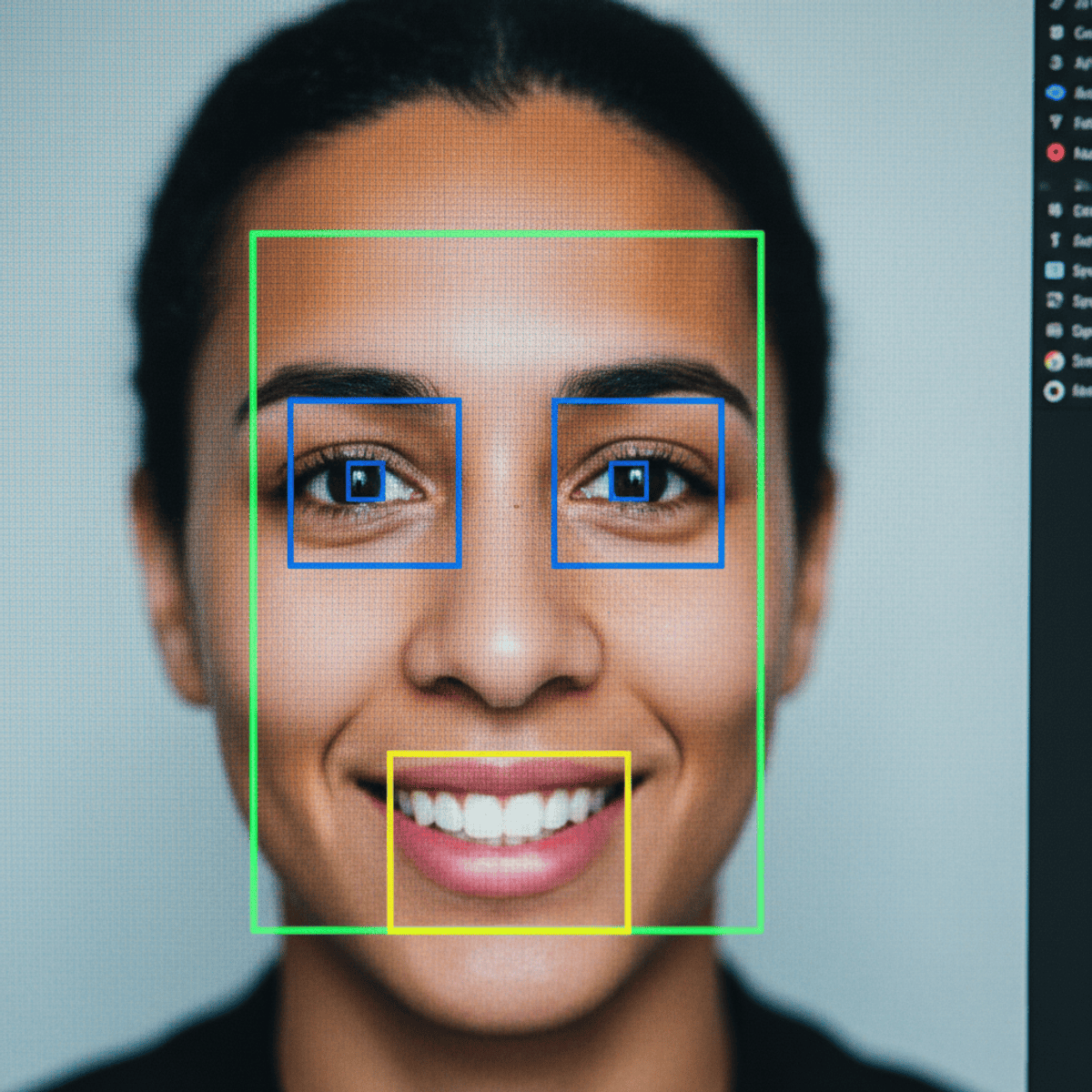
Implement Real-Time Face Detection with OpenCV & Python
By completing this course, learners will implement face detection systems, apply real-time computer vision techniques, and integrate facial feature detection using OpenCV and Python. Learners will gain hands-on experience detecting faces, eyes, and smiles across images, videos, URLs, and live webcam streams while understanding how classical computer vision algorithms work in practice.
This course benefits learners by transforming theoretical computer vision concepts into practical, job-ready skills. Participants will learn how to set up a complete OpenCV environment, work with Haar Cascade classifiers, process visual data efficiently, and build interactive real-time applications. These skills are highly applicable in domains such as surveillance systems, human–computer interaction, security applications, and AI-powered user interfaces.
What makes this course unique is its step-by-step project-driven approach, which progresses from simple image-based detection to advanced real-time feature recognition without relying on complex deep learning frameworks. By focusing on classical yet powerful OpenCV techniques, learners build a strong foundational understanding that is fast, lightweight, and industry-relevant. This course is ideal for beginners and intermediate Python developers seeking practical computer vision expertise with immediate real-world applications.
Watch on External: Coursera ↗
(saves to browser)
Sign in to unlock AI tutor explanation · ⚡30
More on: CV Basics
View skill →




Related AI Lessons
⚡
⚡
⚡
⚡
Algo(31/40)Real-World Perception & Action: Pixels, Boxes & Trust (2015)
Medium · Deep Learning
Teaching a Logo Detector to Say “I Don’t Know”
Medium · Python
Gaussian Splatting Meets 3D Scanning: A New Approach to Capture
Dev.to AI
ARGUS: Stacked Multi-View Identity Mosaic Injection for Subject-Preserving Video Generation
ArXiv cs.AI
🎓
Tutor Explanation

 DeepCamp AI