How To Run a Design Thinking Workshop (2-hour Live Training)
Skills:
UX Research80%
Key Takeaways
Runs a growth hacking workshop using a full step-by-step guide and Miro template
Full Transcript
In this video, you're going to learn exactly how to run a design thinking workshop from start to finish. AJ and Smart Style. This is an almost 2hour live training video where we invited nine participants to our office here in Berlin. These nine participants didn't know what the design thinking process was when they arrived here. So, we walked them through the whole process step by step. This video is going to give you a unique glimpse into how participants interact with each other and how they engage with workshop exercises in real life. You're also going to get free access to the slide deck that we use to run this workshop and also to the exercise guide that is going to help you run this exact workshop yourself. You'll find the link to the resources in the comment section below. So, be sure to check those out. Before we dive into the very first exercise, which is our icebreaker, it's important to note that we like to kick off every workshop on a very strong note with a nice introduction. This is very simple and it just includes introducing yourself and your team, going through the agenda for the day and also expectation setting with your participants. You can find out more on this in the resources below. Okay, I think we're ready. Let's dive straight in. So, we kicked off this workshop running our favorite icebreaker ever, and it's called My First Job. This is the perfect icebreaker for teams that know each other because they're going to discover something new about the person in their team, and it's perfect for teams that don't know each other because it's going to be a great way to break down barriers and form a connection right from the beginning. Here are the materials you're going to need to run it, and here's the amount of time you'll need. It's very important for you as the facilitator to demonstrate exactly how to run this exercise before you let your participants off to actually do it themselves. So, all you need to do is you need to show your participants that they need to write their name, their first job, and what they learned from it on a sticky note. And then they're just going to share it with their team. Now, let's take a look at how we actually ran it in the workshop. Come on, this way. You say your name, your first job, and what you learned from it. So, I'm Rebecca. My first job was that I was Mrs. Claus, like Santa Claus's wife. I actually was like, that's not even a lie. And um yeah, I use like help Santa with the presents and stuff for the kids. And uh basically what I learned from that is that I like kids. I like working with children. Okay. So just take um a minute to do that in your groups. Your name, your first job, what you learned from it. Cool. Okay. Okay. Okay. I'll start. So name is Dom. My first job was selling tickets for sightseeing buses in Budapest downtown. And what I learned from it was that it's a very hard job standing for eight hours trying to pull in people to buy tickets. And I also learned that I never want to do that again. Yeah. [Music] But Okay. All right. I used to sell dairy products. Are we ready? I love that. At the end, I used to send dairy products. Sell dairy products. Is that it? Okay. I love judged by Mrs. Claus here. Did you? Yeah, you actually are. Honestly, no. The suit I will be changing after the break coming out as Mrs. Claus. H Did you learn something new about each other? Did Did you learn a new thing? Yeah. Any any funny stories that anyone would like to share? Any funny first jobs? Go on. What was your first job? Well, my first job I was selling plates. Selling plates. Plates. Oh, nice. And uh what I learned is how to identify the type of ceramics by leaking the plate. Oh my god. A skill that you should you need to have. I can still do that. Is that what you were doing over there? Oh, yeah. It all makes sense. It's before you ate your food. Okay, nice. Thanks for sharing. We love doing that as an icebreaker. We feel like no matter what team you go into, it works because it's really light-hearted. It kind of pulls people out of this very serious mood or like serious form. Um, and even if people know each other, they're going to learn something funny or new. And even if they don't know each other, it's just it's a nice one to break the ice. Um, so thank you for doing that. Yeah, that's definitely bone china. Oh, hey. Hey, we're back. We're back. So, now that we had everyone warmed up, people were laughing. As you could see, we were having lots of fun. We wanted to give people more context around the design thinking process. And also, more importantly, we wanted to demystify the whole concept of creativity. And we did this by teaching them about creative confidence. So let's take a look. So creativity, I would like a show of hands. Um I want to ask the question of how many people in this room think that they are creative? If you want to put up your hand. Okay. Okay. That's not too bad. Normally like research shows that when you ask this question in a room full of adults, only half of them put up their hand. And that's actually what just happened. Um because a lot of people actually tend to equate creative ability with artistic ability. And this is all stemmed from maybe when we were children in school and somebody's told us we're bad at drawing or you've just kind of made that link in your head that because I can't draw that means I'm not creative. And that's just not the case. We believe that everyone can be creative and that's actually just fact. It's just depends on who is there facilitator to be able to kind of unlock that creativity within you. So all you really need to foster uh creativity is creative confidence and that's just building up the confidence to take risks and try something new. So creative confidence is the ability to take on problems that don't have a clear answer. It's the ability to show unfinished works. It's the ability to participate in something you might not be good at. And it's the willingness to try something and fail. And that's the kind of mindset that we want to get into right now today. It's this kind of like, okay, we don't have all the answers. We're trying to solve a problem. We have no idea how we're going to do it, but let's just fcken and try not to curse. Give it a go. Can we do that? You're going to have to bleep me out because my language is going to be atrocious. Okay. I try that one again. Um, no. But anyway, we're going to try uh just be as creative as possible. And I even don't like that word. We are going to try take as many risks as possible and push ourselves out of our comfort zone. Um, and I suppose why does creativity require being comfortable with uncertainty? Because innovative ideas are by their very nature not yet or not fully defined. Um, and I just think much more important than your ability to draw is your willingness to try new things. So, it's time to try something new. I'm not going to say the thing I said earlier earlier when we were this is okay to do actually right so earlier when I was practicing I like came to this slide and I was like okay so it's time to try something new and then I just turned and I was like take off all your clothes I was like is that too weird that's not what we're going to do we're going to imagine that was why you had to sign the consent form um so I'm going to set a timer on my Um, I I should have a time timer. Uh, you're going to take 45 seconds and draw a picture or a portrait of your neighbor. Go for it. You're just going to be drawing circles, lines, dots. Oh, sorry. Also on these, you have uh pieces of paper here in front of you. There's A4 pages in front of you and you can draw it on those. All right. on your side. [Music] 20 seconds left. [Music] 10 seconds left. Time. Okay, drop the pins and have a look. [Laughter] [Applause] [Music] Oh my god. I love them though. [Music] I didn't get the lips. That's very good though. [Music] [Laughter] Okay. So, um So, how did that feel? How did that make you feel? Did you like that activity? Stressed. Stressed. Yeah. What words would you use to describe how you felt during that? Anyone else have any words? Excited. Excited. Freedom. Nice. I like that. Excited. Stressed. Freedom. Yeah. Out of comfort. Out of your comfort zone. Yes. Yeah. Under time pressure. Mhm. Under time pressure as well. But also, I feel like you you can all draw of something. You're able to visualize something. So, that's the whole point of it. We want to just show you that no matter what, under what time pressure, you can do it. You can get pen to paper and you can visualize something. That's beautiful, Tom. I really feel like your one needs to be I feel like your one needs to be shown. Chris's is actually Jesus. Oh my god. I look 10 years old at the Look at this. That's art. That is seriously good. Sorry. Sad though. sad. I don't He's conte contemplative. Very contemplative. Okay. Um, thank you for taking part in that. So, now we're going to kind of get into the meat of it and talk about what is design thinking. Does anybody know already what design thinking is? No, it's all right. So, design thinking is a human- centered collaborative approach to problem solving that is creative, iterative, and practical. That just sounds complicated. Again, I think what you just need to remember here is that it's human- centered. Design thinking is you're designing and creating and pro and solving problems for a particular type of person. You're constantly thinking about the person and what their needs are. And it starts with thinking about people as I say, what they need and what they want. So any product, service, anything that you're designing, you're thinking about the the needs of the consumer or the customer. The design thinking attitude looks really complicated, but all I really want to show you is at the very beginning of this process, this is how you're going to feel. Your brain is going to feel scattered. You're going to be like researching and understanding your user. It's going to feel a bit like, what the hell is this? How am I going to design a product to meet this person's needs? And then towards the very end, you're going to feel a bit more clear and focused on what to actually build and design for this person. Um, there's a whole process. There's five stages to it. Um, and it kind of looks complicated, but it really isn't. You're really going to understand these by the end of today. The the first stage is empathize, and that's you're just empathizing with your users, kind of getting into their frame of mind, figuring out what they need. You're going to define your users's needs, their problem, and your insights. You're going to go into an ideation phase where we're going to come up with multiple ideas. Then you're going to come to the prototype phase where you're going to actually build something for your user. And then you're going to get to the very end which is the test. You're going to test this prototype. So that's the five phases of the design thinking process. And it's not linear. It's not like well today in a workshop we are going to go through this in a linear process. But when you're really getting immersed into this is like you'll go to the emp empathize phase. You'll define ideate. But once you test you're going to figure out that oh this product actually needs a few changes. I need to actually change this part and change that part. through the test and go all the way back again to ideulate again. So it's like a a loop. You're constantly iterating and changing things and going around in a loop. Um that will make more sense when we get to the the end. Okay. So the design thinking process contains both divergent and convergent thinking. Really really put simply divergent thinking is where you kind of uh gen or open up your thinking and generate multiple ideas to a a certain challenge. So you're just in generation zone there. You're just like, "Okay, how can we actually solve this problem with loads of different ideas?" And then you're going to converge. Convergent thinking then is more like refining your ideas and kind of narrowing them down and saying, "Okay, maybe this idea will work. Let's really focus on that." So throughout the five phases of the design thinking process, you're going to be constantly going through like, "Okay, we're flaring up here. We're thinking loads of ideas. Let's refine that down right now. Okay, we've picked one thing. let's just come up with loads of ideas again around how we can better that and then the for prototyping and testing you're really really refining your thinking here and you're trying to uh focus in on the proper solution. Does that make sense? Yes. Right now yeah does anyone have any questions around that uh look complicated looking diagram or Yeah. Are you okay? So we're going to get started. this is where I need um your participation, your engagement. It's going to be very active, but there will also be things that you're learning as well while while we're doing this. So, step one, the empathize phase. So, empathy, as you know, when you feel what the other person is feeling and you can mirror their expressions, opinions, and their hopes. And why is this important in the design thinking process? It's because we need to discover people's explicit and implicit needs so that you can meet them. though your design solutions through your design solutions. Um, so now that we've introduced the very first phase of the design thinking process, which is the empathize phase, we now need to create user personas. A user persona in the design thinking process is like creating a character for a story. Essentially, it's a madeup person who represents the real people who are going to use or buy a product or service. We give this madeup person a name, an age, a job, and even hobbies. And we also think about what sort of problems they might have and what they really actually want. This helps us understand what real people need so that we can design things that are super helpful and can solve their actual problems. One way of creating user personas in the design thinking process is through conducting interviews, surveys, and observations with your target audience with your potential customers. You can also create predefined user personas to use as a starting point for your design projects. And these predefined personas are often based on common characteristics, needs, and behaviors of a specific group of users. They can serve as templates that can be customized to fit the context of your project. Using predefined personas can really save time and can help you begin your design process with a better understanding of your potential users. So, for the purpose of this particular training, we gave our participants a predefined user persona. Her name was Kathy. Here it is. This is Kathy. She's 67. Her pains like her the problems that she experiences is that she has arthritis in her hands. Her hobbies are knitting and cooking. So you can imagine if she has arthritis in her hands, that's going to be very difficult to do. Um and then her needs, she needs to find ways to get through her day without pain. So that's our kind of persona. That is the person we are going to be designing a product for today. Okay. So, now that we know who our user is and we understand their needs and wants a bit better, we're going to dive into our very, very first exercise, which is called the empathy map. So, the empathy map is going to help teams gain a deeper understanding of their target users and their customers. It encourages participants to put themselves in their user shoes and explore their thoughts, feelings, needs, and motivations. It's going to give them a really clear understanding of the challenge that the user is going to be facing. So, how do you run the empathy map exercise? Let me show you exactly how to do it. So, step one, you need to prepare your materials. Here's what you're going to need. In addition, you're going to need to create a empathy map template, which is super easy. There's loads of different variations of empathy map templates out there, but normally you would see an empathy map template, which consists of at least four different quadrants. One that says do, think, say, and feel. Our empathy map template included an additional three fields, which were jobs, pains, and games. And we included these because we really wanted our participants to understand our user and to really get into their frame of mind. Step two, you're going to select your target user. So you're going to choose a specific user or customer segment you want to empathize with. So this could be an existing customer group or a hypothetical user. So in our case, we used a hypothetical user which was Kathy. So step three, you're going to write the goal of your user in the middle of the template. For example, in our case, we wrote, "Kathy needs an easytouse tool to help with some delicate tasks. For example, pinning documents to a board." This was very, very specific, but we did this with the intention of getting through the whole design thinking process from start to finish in one day. Step four, you're going to explain to your participants exactly how to fill out each quadrant or each field of your template. So for example, you want to get your participants thinking about what the user is saying, thinking, feeling, and doing regarding their challenge. In the jobs field, we asked our participants to think of the sort of jobs Kathy might be doing. So for example, Kathy might be working with a detective, and she might want to pin up documents on a board or pin up pictures on a board to help the detective do their job. So, in the pains field, you're going to encourage participants to think about the different types of pains and challenges that your user is experiencing regarding their challenge. In the gains field, you're going to ask your participants to think about what your user stands to gain if a tool is created that is going to help them pin those documents to a board. Next, you're going to give the participants three minutes to work together alone to write their assumptions and insights around each field of the template. Next, you're going to give participants seven minutes to work in their teams to further discuss their insights and look for patterns and connections among the notes that they've taken. This is going to help create a more holistic understanding of the user. All right, let's see how they do it. Okay, so we are now going to in our groups work on filling out this empathy map which you're going to see right now. You're going to spend uh two minutes thinking about what how to fill this in on your own. You're going to be thinking about this individually, coming up with uh writing ideas on your post-its, and then after the three minutes are up, you're going to discuss it together, and then you'll fill you'll start putting the the postit up on the empathy map together. Does that make sense? Yes. Perfect. So, together alone, working like this is weird. It's going to be silent. Um, but that's just for the next two minutes and then after that, you'll be able to discuss in your groups. Okay, good. [Music] [Music] Okay. Sorry. Now you can in your groups discuss this um talk about what you actually came up with and then you can start placing the sticky notes that you've come up with onto the empathy map. Okay? And as you talk there will probably be more thoughts that come out of you and just try fill it up as much as you can. So I will give you seven minutes for that. Okay. each category and whatever we write I can put it on the sticky notes on each she does is like kind of stuff she's doing in her life like what what what kind of activities like we know she likes knitting and cooking so that's obviously what she's also doing I also brought because of that that she pins recipes or it can be But I realized my own mom is 67. She's definitely not I kept thinking of an old grandma, but my own mom is not doing anything like an old grandma. So 67 is not that old, I think. So it's probably not like Yeah, you know, postcards on the wall or something. probably not not that old but it could still she could that's the problem though that we need something what she where she can pick up a skin exactly it is still hard yes so she does what recipes on wall yeah totally recipes on wall side [Music] I wrote this. I don't know if you believe it's right. I wish I could. I wish I could cook into Yeah. So, lots of independence. How are you doing? You all good? Yeah. Was really get into her head space and like what could it be that you do you have an idea of what you could create? I've had enough. Oh, wow. I also wrote I don't want to do this anymore. I know. Yeah, that's that's similar to to yours. I also wrote uh can someone help hopefully reaching out to our you see I have a few I mean a few things for the does just to kind of complete the personality is she's either freshly retired cuz that's around the age or she's still working if she's a maybe a business owner so she putting up things on the wall is actually connected to her job somehow. and she has an office at home and she's I kept thinking of a lonely grandma but she could have her whole family in the house as well. So, what if she's self-employed, not a retired grandma, but she's working and work involves actually putting stuff on the wall? Like, well, maybe not like a detective like you said, but I mean, what about I think pain could be a good one. Like, what's her pains in life as a just category to fill out specifically around the arthritis? I guess one is just general movement cuz that's hurt. Movement. Movement is painful. They're like using the hands, right? Yeah. Maybe gripping to grip. Like maybe her job involves Well, maybe knitting is part of the job as well. She doesn't really like it. She actually creates the clothes herself. So that's also like these fine movements are difficult and just they're taking more time. They are more painful. She gets annoyed. also picking up those pins which is super annoying. Maybe holding can be also painful. Well, maybe her big pain is that how am I going to keep doing the job that I'm a designer? Maybe that could be like it's getting harder. What if Oh, but we don't have a feeling. Oh, there is. Okay. So, like to feel for example that she feels disabled that she needs external help. He's disabled. He's respected. I would just like to ask that could help me. I think it's a lot. You want to? So, just help me. These are the um I got some fields. This is Yeah. Um I give you the the feel as well so you don't forget. giving you the feels. Okay, so everyone use this time to just stick up your stickies into the empathy map. Not socialize. Some of these are we thought might be overlapping and thinking. I know it's hard to be similar. Oh, the jobs actually I'll put this to the jobs. Yeah. says is just more things that she might be saying like this is so frustrating. I can't whatever. What what what's her job? She says so she says maybe there's something but she really thinks there's no Yes, it's all coming together now. Perfect. How are you doing over here? Really good. Yeah, I mean there's some good stuff on here. This is great. I just made a suggestion to maybe move some things from the things box to the paints box. for example, not being able to clean the house. Um, yeah. I mean, maybe for this one. Okay, everyone. Um, how how was that? Did you feel like you got into her head space? Do you feel like you understood her understood her challenges and Yeah. Okay. So, I just want to get a bit of an overview of each one of your empathy maps. Um, it's not really a part of the stage. Normally, uh, when you're running this exercise, you just kind of do it in your teams like this. You get your ideas up and you talk and discuss your empathy map just with your team, like your group. Um, but I really kind of want to know the the stories here because I've heard some really nice conversations. So, if somebody wants to nominate a person within your team, just to quickly kind of just tell us about um tell us a little bit more about the backstory to Kathy, your Kathy. Do you want to start this table? Yeah. No, Tom is going straight up. Just even like a like really short. Okay. So, our Kathy, we think our Kathy is some sort of a designer, maybe designing clothes. That's why she likes knitting. She says that maybe so she has this pain right gripping movement pinning up her vision board elements is very difficult. So what she says is maybe there's something that could help me take this pressure off. But what she really thinks is that there's no hope and because of that she feels frustrated. She feels that she's going to be useless. She's she feels disabled. Um she needs something that could allow her to still can make money. We think she's a self employed uh high-end clothes designer, maybe wedding clothes, and she interact with others. I don't remember how. Anyway, she definitely wants to interact with others. That would be a game somehow this thing. Um what else does she do? Uh she might want to put recipes on the wall, pictures of grandkids as like in addition to the vision board. Absolutely. And then shopping lists and Wi-Fi and stuff. Yeah, I know. This is great. Wi-Fi password. Still uh she's still writing the Wi-Fi password down. This is really great. That's what we think of Kathy. So nice. I really love how you've come up with the story. This is really great. I wouldn't have thought of that. Saying one thing and thinking that. Really like that. Hope no hope like absolutely no hope. Thank you, Dom. Thanks for introducing your Kathy. Kathy number one. Anybody like to go through their their Kathy? Yes. So, our Kathy, her hobby is sewing and knitting and we told that she was an assistant. H she says that no medication is a remedy. She's basically wanting to quit and then just saying that she's had enough. H but she's also opening up a little that can someone help. So, we like that about it. Uh she also thinks similar to your kum that this is [ __ ] that I want to quit and then no stress uh yeah she doesn't she doesn't want to stress over little things anymore that uh is the pain that we didn't write down but no perfect her hand is just really hurts she definitely feels frustrated about it she also feels why me why does it happen to me And another big thing for our kitty was that it's pushing her down. She's a very cheerful, very wicked lady. But since her pain is around, her mood just has been going down and it's also not having a social life and everything else. Uh what she does, we were thinking more about what this pain does to her. So it slows our wicket down and she always has to stop for a while. Uh she's afraid of losing her job as well. and then stopping her hobbies and she just simply come back perform 100% which is not how our cat just live her life nice and she would like to gain that she wants to uh wants to save time and wants to save time she wants to save time and yeah get back that's great thank you I like your Kathy maybe we should have named them different names but I actually like Kathy one Kathy 2 does anybody from this table want to introduce your Kathy So in terms of job, we thought that P is 67, so she's probably retired by now hopefully. And we focus a bit more on her personal life. So we felt like she now says that she needs assistance doing the small stuff and she wishes she could be independent again. So there's definitely a feeling of loss of independence. She feels a bit ashamed of that, frustrated. She's even envious of other people that can still do all these things. And she obviously has some physical pain. She really thinks that she cannot relax as much because she's a bit limited in her hobbies now. She cannot really host people anymore, which was something that she really got pleasure from. And she's very limited in social life because of that. And is also also capable at jobs of course. And she now avoids doing things that she loves like knitting and because she does stuff that actually require nimble and precise movement. So like also her chores are limited as well. So this brings a lot of pain in her in her hands and of course and she has a house that is not as nice as before. So her personal life, she doesn't really relax as much. She doesn't feel as comfortable in her own space. So it's not just affecting when she's trying to do stuff, but also like when she's having a normal time watching TV, she doesn't feel as good at home and has experiences some pain and difficulty with the small everyday tasks. Yeah. So, it's kind of a bit of repetitive here, but the line is just it's affecting her when she's doing things, but also in her social life and when she's trying to relax as well. She doesn't feel as good. Okay, thank you. Thank you for that. Um, but that that was really great. Wow, you actually got so much out of what a seven minute activity. So, well done. Um, I think the the point of that whole exercise is to really get into uh her like just really understand her um and try to mirror how she's feeling about things so you can really then think about the solution. Okay, like this is really impacting this woman. How can we help? And obviously you're thinking it's not only just this woman, there are other people out there who are in this kind of uh age demographic who are experiencing this exact same problem. So, with you creating this product to help Kathy, you're going to help probably millions and millions of other people as well with the same tool. So, now that you kind of know uh Kathy, you know, you're kind of after getting real good insights into what her pains are, what her problem is, we are going to move into the next stage of the design thinking process. And this is the define stage. So there the whole time, the last um whatever amount of time that was, we were in that kind of flare uh zone, we were generating multiple ideas. We're really gathering loads of information. So now we're going to be converging our thinking and um we're going to be focusing our thoughts and trying to figure out one well- definfined solution to help Kathy. Okay. So defining the problem using a unique concise reframing of the problem that is grounded in the user's needs and insight. So all of the stuff that you've already already gathered, you're going to use this um in the next phase. So why are we doing this? Because we want to expose new opportunities by looking at things differently. We want to guide innovation efforts and we want to make sure we've identified something worth working on. And I think from listening to your stories, this problem is worth solving. We need to come up with something. Um, so the so the next two exercises I'm not going to really get you too involved in it just because we've already kind of defined what we want to make for for Kathy. We want to make a little tool that she can pick up um little pins and we know what we're making for her. But normally if you're running this workshop this step you're coming up with a point of view statement. Okay. Okay. So the point of point of view statements is just you drawing insights from the empathy map um about what the user needs and as I say for the purpose of this workshop I want to give you the point of view statement. So I've come up with this the user needs an easy to use tool to help with some delicate tasks. We know this in particular the user is looking for something that will help her pick up pins which she can then use to pin documents onto a board. That's our point of view statement. But let's say if you were doing it in a different workshop, the point of view statement would be completely different depending on your user. But it's easy to come up with this after you go through the interview stage and after you go through the empathy map, you'll come up with a well- definfined uh point of view statement. So then after that, we go into um another exercise that is really popular in most workshops. We always use this. It's called the how might we exercise. And this is really just transforming a problem or in this case the point of view statement into a solvable question. So if you look at the point of view thing, it's like user needs an easy to use it. It's not really like um framed in a way that you can uh solve it. So instead of it just being like user needs this, we're going to say how might we create a tool that will help Kathy complete delicate tasks like this in a painfree way. So, you're just kind of refraraming the sentence so that it's easier to come up with solutions to it. Don't worry too much about this right now for this particular um workshop. But that's just a really nice exercise to reframe questions or reframe problems into a solvable question. So if you're in this real or a workshop doing it yourselves and everything and you have loads of different users and you're using this how might we uh exercise after that you're going to have have generated loads of how might we and then you kind of do a round of voting on these how might we and then you would come out with one well- definfined one. So it might not make sense now, but is there anything else that you could say for that to make it more clear? Cuz I Yeah. Um, so just for the purpose of this uh this kind of like training, we just uh prescribe the the challenge that you that we're working on. Usually in in this kind of like process, of course, everything would be way more open. So you wouldn't start with uh you know understanding that this person has this specific problem. you would actually derive the challenge that you want to solve from actually like figuring out what that person is is like first. And another thing to also add that if you're doing this in in real life, you wouldn't necessarily just kind of like try to come up with these things randomly or based on what you assume this person is. I mean, you might be doing interviews, you might be actually meeting people. So, this is something that you can do quite light weight in the same way that we have done it by just basically assuming a lot of stuff. But you can also go way way way deeper. And it's really important just to to repeat that you're starting this process not already knowing what the challenge or the problem is that you want to solve. The only reason why we're doing it differently today is um because we want to help you get through all stages of the process. uh and the easiest way for us to do that is by basically assuming that okay we have identified this thing here as the thing that we want to solve for and uh in in a real process uh like I said it would be it could be a lot broader so you might be finding out things that you didn't assume and this is actually like the the the real advantage of using something like design thinking at work or in in real life uh scenarios Because very often businesses start a project just assuming that okay we want to build a better um a better dishwasher or something like that and that's kind of like like these kind of like things define what people actually spend a lot of time on but you don't necessarily get innovative ideas out of that. So this is kind of like the opposite where you're just really exploring and discovering challenges worth solving and uh so it is really really broad and just for today uh to help you get through the entirety of the process which could be like a week-l long maybe even longer process and we have to condense it down to just a few hours. we are taking that shortcut by just uh you know highlighting this challenge to to work on and usually there would be a lot a lot more kind of like openness to what challenge uh you would you would normally solve. So that's the only um thing I wanted to call out uh in case you're wondering like why why would we even do something like how might we it seems like the challenge is quite clear. Of course in real life you wouldn't know what the challenge is and the purpose also of reframing that challenge into a question that's phrased how might we is to get everyone in the frame of mind that this is actually a question that has potential answers. So it's not just a challenge like this person is dealing with arthritis in her hands like there's nothing we can do. It's really to to to get you into a positive frame of mind like okay it is a challenge. Uh we don't know how to solve it yet but there is probably like an like an endless amount of solutions to this. Um so this is what the how might we uh really is about. um turning turning the challenge into a question and that's how you would then start to think about solutions and um I think that will also be would also be the next part of today right yeah literally and no that was a perfect explanation thank you so much Tim so all that made sense and now I'm going to bring you into the really really fun stage uh we are going to be generating multiple possible solutions to our problem. And why are we going to do this is to generate maximum innovation potential in a short amount of time. And that's the a really main the main point about it. It's a really short amount of time and you're going to be really shocked at the amount of ideas you're going to come up with with this. You're going to incorporate different perspectives because you're going to be working together and you're going to be building excitement around the possibility of creating something that's going to actually help somebody. Um, so I want to do something really quick with you. If you have actually just your post-its, your post-it notes, the square ones. Um, I'm just going to ask you to draw a few things. First thing is a door. A door. A door that you uh go walk through. Okay. The next thing you can just pull that uh sticky off and put it next to you. Next thing is a baby. [Applause] [Music] Okay, time's up. Next thing is a house. A house. [Music] [Applause] [Music] Okay, time's up. Right. The reason I'm just doing this like quick sketching thing again is to once again get it into your head that you can visualize your ideas. You can communicate your ideas. I think if everyone looks at their uh neighbors drawings, you're going to be able to see that there's a door, a baby, and a house on each postit. It it does have sketching and a sketching exercise has nothing got to do with your ability to draw. You are able to communicate your ideas. Actually, hands up who put a if when they drew the baby, the little piece of hair on the top. Hey, because everyone has these preconceived ideas about what these things look like. Um, which is very cool. It's a happy baby. What? Psychotic. Psychotic looking. Okay. All right. So, what we're going to do, uh, the reason I got you to do a sketching exercise is because we are now going into our ID8 phase. where you're going to be sketching some of your ideas. We're going to take part in an activity, an exercise called Crazy Eights. What time is it actually? Yeah, we we're actually fine with time. Crazy Eights is a really really nice um sketching ideation exercise. You can you can do it with writing ideas, but sketching ideas with this is really good. Uh you're going to sketch solutions to the challenge you've already decided on. We know our challenge. We need to make our little tool to pick up our pins. You're going to be generating a lot of ideas quickly. Eight crazy ideas in eight minutes. Sounds wild, sounds daunting, but it's really fun. I promise. So, sometimes to be truly creative, our brains actually need these this structure and rules. And by restricting space and time and by letting everyone know hat anything is that anything goes, this tactic forces ideas out and it forces them out in a really fast way and it's far less less painful than it sounds. It sounds kind of manic, but it isn't. So, first thing I want you to do, all right, is everyone has some an A4 page on their on their table. They should. We are going to if everyone has it, you can hold it. You already have it. I'm sorry. Today, you're just going to fold it in half first. Some people already know how to make the eight frames. After you fold it in half, fold it in half, you just fold it again. And then you fold it one more time. And once you open that back up, you should have eight even frames. Yeah. Isn't that mind-blowing? So that's it. It should come out like this. So you have eight frames. So what you're going to do is I'm going to set a timer for 1 minute at the very beginning. So you have one minute to draw. uh come up with an idea for the tool that you're going to design for Kathy. Okay? So, it has to be an easy to use tool. Remember all of the things that she's struggling with. Um just really try to get into the the mind frame frame of mind. Yeah, that's the one. Frame of mind of Kathy of like what kind of tool would be really good for her if her hands are like really really sore. Um and you're just going to come up with eight different sketches. It doesn't have to be a different product the whole time. It could be just like the same product but in different ways with little tweaks. Really don't try to think about this too much. This is all about uh quality, not quantity. Did I say that? Quantity, not quality. This is all about quantity, not quality. So really, really doesn't matter what it looks like. Completely backwards. Edit that out, will you? Um, so yeah, I'm going to start the timer. You're going to start away. Does everyone know what they need to do? Question. Yes. Is it to focus on the specific use case of pinning stuff to a board or all the problems of cases? No, this is specifically for the the act of picking up a p a pin to pin stuff to a board. I've seen different pins in my life. I love this. Can we draw a pin on that board? Will I show you a pin? Yeah. The pins are like the small like Yeah. Uh like this there. Woo! Designer! Designer! I wasn't alone. I went to art school to draw. There we go. This is a pin. Woohoo! I love that. So, just imagine that Kathy has these pins. Um, this big that big. Yeah, they're there. That's the physical pin. So, you're you're drawing something so that she can literally pick that up at the very bottom. So has like remember that a person with arthritis has a lot of difficulties like like actually grabbing stuff like having a a good grip on stuff. Yeah. On small things especially of course but like it's very hard for them to like close and have a tight grip on on things. Sorry. Just maybe one more thing before we get started. If you don't have any idea what to draw right now that's completely normal. I would still encourage you even if you have no clue what to draw just get the pen moving. Draw anything. like even if it's just a line, it will be way easier once you start drawing stuff to think about things. So rather than being kind of like paralyzed in front of your paper trying to think about like I know like I need to think about the tool, don't do that. Just try anything um draw anything. It's fine if uh you know out of your eight panels um uh some some don't actually show any any final final idea. Um if the timer like if so when when uh Rebecca tells you to move on to the next panel, don't dwell on it. Just move on and then kind of like start again. Um and either draw something completely different or build on the idea that you had earlier. Um but yeah, just uh even even if you have no clue what to draw right now, just draw anything. Yeah, draw like think about what already exists, you know, think about the type of things that might already exist that you can just kind of build upon and make better and tweak. Um, okay. So, one minute for your first one. Go. [Music] Remember all the things this tool needs to be. It needs to be able to pick the thing up, but also push it into a board. So it needs to have like a sturdiness to it. Just think about all those elements. Okay, we are now about to move on to the next frame. Go. Next drawing. [Music] Okay, your time is up. You can go on to the next frame and start your next drawing. Dom has gone ahead and he's drawn six already. Ideas are flowing. [Music] It's 10 seconds. Start wrapping up that one and we're going to go on to the next one. Don't worry if you can't think of one. just even even draw the one that you did before and just improve upon it and add things to it. Okay, we're going to go on to the next one. [Music] 5 seconds. Okay, on to the next one. [Music] Okay, on to the next one. This is the last one. Give it your all. [Music] Okay, 5 seconds. 4 3 2 one. Okay, well done. Well done, everyone. Um, how did that feel for you? Pressurized. Pressurized. Yeah. Fun. Fun. Okay. You liked it? Very liberating. Yeah. Nice. Did you feel like um after the first few you felt like did you get into a flow or did it feel the flow? Good. Nice. Um Okay. So, the next thing that you're going to do right now is that each person should pick one design that you've made, one sketch. the one that you think uh meets the the challenge the best. You think it's actually going to work. I think this is the product that we should go with. Pick one of your favorite um sketches and present it to the people that are in at your table. Okay, I'm going to set a 40 second timer and then after that I'll give you three minutes. Okay. Okay. All right. I'll give you I'll put three minutes on the clock and you can start taking turns presenting your idea to your group members. All right. Go ahead. Oh, there was a question. For everyone, not for each. Three minutes in total. Yes. Yeah. So, a minute each but but first just the one that I Okay. So this is the magnet glove. Okay, this is a magnetic glove. But for this you need slightly heavier magnetic pins as well. So it will come with new pins as well. Slightly heavier. So because you pick it up with a So the glove is capable of just identifying one of these new steel pins and then just you know well you can't see the design but imagine that it's a glove like this. You can think of a glove and then It just like magnetically attaches to a pin. And because it's steel, because it's heavier, the pin, it's just ready to push it in the wall. And then next pin, next push. Great. That is the magnet glove. The magnet. Oh my god. Fantastic. All right. You want to go ahead? I have an idea that could be good. So my I present you the pin magnet. So this is basically a magnet that has a soft sponge underneath. So the metallic part of the pin goes, it's attracted and then it gets on the sponge, right? Because if it's all pin, all metal, it will just get moved. Right. So the pin basically just gets upside down. Exactly. Let's go with the second favorite one. It's close to Exactly. It's close to hand. I call it the slapper. H basically instead of the hands going in and then connecting as in yours, it would be just something that it slides in. uh so almost like a a band behind it and then uh it would be magnetic the the pins as well and then she could just go over there and then do a slap to the to the table. Okay, what we're doing now is just picking the idea that you uh told your team members that you really liked and think you want to build that product and you're just getting a new page and redrawing it again, resketching it and just putting a bit more effort and thought into it. Um, if any feedback came up within the the chat or discussion a while ago, you can add those ideas to it. Or if like Nicola drew something on hers that you were like, "Oh my god, that would be really cool on mine." You can kind of steal and borrow ideas as well just to to refine your sketch. I'll give you actually three minutes for this. Three minutes and you can start there. Now, everyone have a fresh page. Do you want a fresh? Yeah, perfect. Um, if anyone's unclear on what we're meant to be doing, let me know. Use the full page, right? Yeah, full page. Yeah. And you don't even need to half it up or anything. You can just use the full page. Yeah. Okay. You need to leave the workshop. [Music] Also, if things don't make sense in your drawing, you can just add like little text bubbles to explain it. Um, I know if I was doing it, mine would need a lot of text explain explanations. [Music] Okay, 20 seconds left. Great. Okay. How are you doing? Do you feel like you need a bit more time? Like 10, 20 seconds? No. Yeah. I'll just leave it another few seconds just for some this table here. They're in their creativity mode. Let's say another 20 seconds. Okay. We'll stop there. Um, okay. So, now you all have in your group three really good ideas, potential um products that you're going to build. And now, normally what happens is that you're you place the three uh sketches up on the board here. Um, and you can go through a round of voting on which one you want to actually build. But because there's only three people in a group, that can just get a bit like normally it's better if there's more people in a group to do a vote a round of voting on so it's not that uneven. Um, so what we're going to do instead with you guys is just chat amongst yourselves and figure out which one you want to which one you want to build. There could be something that like, okay, I like this about yours and maybe we can add that to the prototype as well. Just having a a chat about what we could potentially build together. So, I'll give you maybe three minutes to just chat amongst yourselves about like what we could potentially build after the break. Um, yeah, just go for it. Don't think too much about it and go. The magnet glove, as I said, new steel pins, they have a hex shape to prevent rolling off the table. Um, the glove fits all sizes. It also moisturizes the hand. Um, that's just that's just a weird side benefit. Um, and it knows when to release. So, first of all, this the index finger part is magnetic. You just have to do this and then push it in. It can generate 200 Newton jewel, whatever that is, but it can generate it. I don't even know if that that's not even Oh my god, we are just inventing new physics. You can you can press it in and then you just extend the hand and it knows. That's a really nice That's a really nice uh like little inbuilt mechanism. That's quite cuz that's that's how you really do it. So, it's like magnetic functions and then you kind of place it on the board and then you release. That's it. I like that. So, I've still I've still just went with, you know, [ __ ] the pins. Let's just get That's the name of the board. Yeah. Yeah. [ __ ] the pins. And then just, you know, rather than pick up pens, the pins are already in the you just have to put your piece of paper on the board wherever you want. So how would it just goes through the paper like it would normally with But you still wouldn't you need to put take a pin out and put it? No. No. The pen is already on the board. So you just put the you just put you just go to the paper sticking out. Yeah. It's like a It's like It's literally a pin board. Okay. But it's not it couldn't hurt you if it falls on you or something cuz cuz now the pin is looking out. Yeah. Yeah. Yeah. Those those outward looking things and then you just go up even I mean of course it can fall on you. But just like to grab a piece of paper just in the same movement as picking something. Yeah. Maybe. got like if you have like you could you know you got your bowl and then you back up your paper like this and then you just like Yeah, right. That's the kind of thing that the postit solves. I guess that's true. That's true. That's so true. Post fancy Postit with This was the best idea. This This was my best idea. Imagine. Yeah. Yeah. Yeah. What I done was just take something and call it my own. That's what I done. You have the perfect prototype. No, but um Okay, we need to choose one. Let's choose my own. Are we thinking the I'm thinking the futuristic uh anesthesia ibuprofen glove hand might be a little out with the technology that we know of today. H I'm thinking mines is probably no no a little bit too on the other spectrum to to I'm thinking this I'm maybe going for a magnet glove. My problem with the glove is that I think why I like yours is that that actually really removes the problem which is the pin itself and the problem is not is not really picking up the pin but the existence of the pin itself that's why I like basically someone just wants to have their ideas on that's the aim right the aim is not really to pick the pin but to put the idea forward but yeah okay guys we have another 20 seconds uh to choose like to really choose and figure well you don't really need to just be like it's this one and abandon the rest but just come up with some idea that you're going to build um so that after the break you're ready to start building the thing the product [Music] okay um everyone we are taking a 15minute break right now obviously you can continue the discussions about what you're going to do after the break because after the break we are going to go into building mode. You're going to make your your whole tool which is going to be cool. So for the break we have coffee. I can make us coffee and everything. Tea, water, biscuits, everything and snacks. Um and just move around. You can go out to the balconies and stuff. Do whatever. We'll come back here at 15:45. Okay. Um and we'll get straight back into it. Okay. Huh? All right. Okay, you're free. You're free. Well done. Well done for the first half. Thanks, Ellie. Thanks. Okay, good. Right, so this is the fun part. As I said, we're going to be building. We're going to be uh kind of feeling like we're going back to school and rummaging that table of materials over there. Um I try to make it look as exciting as possible. So prototyping, we're just going to talk about it a small bit and I'd love your input on this in a in a minute as well, just to go through um a tiny bit of information. So you're just turning your concept into something concrete, tangible, and something you can actually test. So you don't need to be worrying about whether this is actually going to work or like you know is this the finished product. You're just trying to come up with something. You just want something tangible. You're doing this to gain empathy, to explore, to test, to inspire, and to test your hypothesis to get you closer to your final solution. So I think the two things that you need to learn about or take away from the whole prototyping phase is that fail early and fail often. So what usually happens uh or what very frequently happens is that a company or a business um spends a lot of time and money and effort on building a product and then brings it to market and when they get the feedback that this is actually not not what customers or the market wants it's way too late. So this is a problem of course um and this is why it's very useful to think about product development in terms of kind of like you know building a prototype first. The prototype is um really something that represents your ideas in a relatively cheap and easy way. So maybe it looks pretty pretty ugly. U maybe it's still not perfect. Uh, and maybe it's also not showing the the the entirety of the finished product, only the kind of like the main features, um, the main value to customers. Um, because when you fail here, it's actually not that bad because you can still easily change, you know, the prototype, the concepts, you can just create like a new iteration. when you fail here um you have already wasted a lot of resources and uh um yeah spend a lot of time on something that doesn't work and in the meantime other companies might have already launched like two more successful products. So this is um why prototyping is so important and it's also something that we do in every project we do. So would you be able to explain as well like to people just there's different types of prototypes you can make. can build an actual product, but there's other ways to do it too. You can Yeah. So, um I mean, a lot of the pro prototypes that we build on projects uh are actually digital prototypes. So, they're actually quite easy to do, uh easy to make, uh and they even though they are nonfunctional in in many ways, they look and feel like the real thing. But of course, when you're building something that's like a physical product, like for example, this push pin thing, um it's a bit more difficult to make it uh to kind of like show this to testers uh and make them really think like, okay, this is what I could I can imagine that this is a like a finished product. I can I can see how that would look like when I buy it in a store. But that doesn't mean that you cannot prototype that in a way that's more uh appealing. So for example, a prototype could also be an ad. Like you can lay you can make the layout for a newspaper ad or a sales deck or anything that just kind of like represents like the vision of the product even to just check like is this something that people would be interested in because you could you can you can quite easily like even if you can't actually build the physical thing, you can mock up something you would use to sell the physical thing, show it to people from the target group and then get feedback that way. And that's so so we are creating these prototypes for fairly complex products in only one to two days but um yeah you don't have to spend much more time uh on on a prototype. So you want to be as fast as possible spend as as little time on actually I don't know like coding something or manufacturing something. These things will be important later on when you are confident that it's actually worth putting like all that effort into into the product. But you should you should avoid doing that at that early stage because you still don't know if this is going to be a success or if people will actually rip it apart. I I have seen this so many times and it's still something that happens in almost every project we are we are doing with companies. You're showing the concept to people from the target group that are intended to be your your customers later on. And at the beginning you're really really confident that this is a great idea because you you have kind of like hyped yourself up. You have aligned on a direction. You have you know narrowed down from a lot of really cool ideas and then you show it to customers and they're like yeah actually I don't get it. I don't I don't like it. I don't know what's the what the point is. And that that can feel really kind of like deflating at first. And this is also why it's so important to have this creative confidence that it's actually not a big deal. we can still change things and we don't have to kind of like dwell on things and get stuck on, you know, like making it work when it clearly doesn't work. We we'll just iterate on it, fix what doesn't work, uh take out uh what people don't like and maybe um introduce other features that people like more or uh you know uh change the focus of the product as well. So don't don't do this here where you spend a lot of time to get here and then it's too late. You've already wasted your budget. uh start small, really really small and get feedback as early as possible. So that's uh also I think the point of what we will do next. Absolutely. Yeah, exactly. Thank you so much, Tim. Um that's a really good explanation because like there are some organizations, companies who do they they don't have this design thinking mindset. um they go all in on a product and even if they know that it's not going to work and they're putting all this money and time and effort into it, they don't have the the confidence or like the courage to kind of go look this actually is [ __ ] Let's like scrap it and do something new and they could spend nearly two years. I know a lot of companies that are spending like two to three years on an app and like constantly adding new things and trying to improve it, but it just doesn't work. So yeah, I think this is a really important phase for us right now and we are going to get started. We're going to start building or tool. So we're going to give you 20 minutes. Remember every single thing that you talked about like the the three um sketches that you have. Try to incorporate everything like the the good ideas from each person's uh prototype or sketch and build the tool around that. You can use all the materials down here. There's like uh paper, there's loads of different things. There's chopsticks. There's so much stuff down there that you can just go wild with your imagination. So, you can just get up, go down, bring some materials to your table, build the prototype on your table, and yeah, I'll give you 20 minutes for that, and then I'll start telling you the next step. You're going to be testing it within your group before you start testing it with other people, with the real users. Okay, 20 minutes. You can begin. I'm going to put on some music. If you have any questions, just let me know. [Music] Okay. [Music] I'm going to make the band so tight that you lose blood circulation again. I think that will stay. [Music] [Music] Terminator. The second part here. Yeah. Okay. So, just [Music] Oh, that is smooth. That's That's smooth. Yeah, we realized that as well that we don't actually need the pipe cleaners. All we need is a All we need is a finger with a bit of blue tack. version two version. It works though. I guess the idea is [Music] how are you all doing? Do you have your prototype ready or do you need a bit more time? How are you doing? I'm ready. Yours is ready. You're ready over here. How's this table? Yeah, it works. You're ready? All right. So, from now, I just want you to present to all of us what your product and your prototype is. Um, you don't need to show us how to use it yet cuz we're going to be testing them in a second. But I just want you to just tell us about them because they look really, really great. Uh maybe we can start with this table here and you can introduce your product your product and tell us um about it. Tell us a little bit about it. Okay. This is the uh show us as well how it fits on the hand and stuff. The new this uh this uh This is for Yeah, this for reference. Yeah, thank you. This and so uh welcome to the uh one sizefits all uh thumbnail. This is uh oversimplistic but ultimately very beautiful. Um and our plan was that we wanted to kind of have like a whole glove that was magnetic. Yeah. you could just pick up your pin and it would go straight here and then you would release it. Uh alleviating any sort of um you know kind of griage. So what you have here is what we need 200 million newtons. Yes. For this to work. Yeah. Uh this is our undetermined measurement of uh magnetizedness of uh the future. But ultimately how it works is you place it on uh on your on your fingertip as this and you have your pickup station here. Uh you pick up your pen and then Oops. Uh then we go towards our pin board and it goes voila. Voila. Easy to get your pin back out. Very easy. You just take it out like this. That works. And put it back into your station. Pin station. That's the one. Nice. One size fits all thumbnail glittery thing. That's amazing. Oh, so if you could tell, we'd love to ask a few questions. Um, also this is just like an open discussion about the product and maybe some of you might also have questions that you want to ask the the team. The pickup station. Yeah. Is that part of the product? Yes. Okay. So, you'll have like a pin pickup station thing like where it's like how how does that work? Yeah. Yeah. It comes with when you buy the product, it comes with uh 200 preloaded pins. into this into this like little pickup station. You pick up one and then a new one automatically appears. We agreed on that, but they are reusable. You can obviously you can reload from the bottom up. So every every time you pick one uh a new one appears, you can use it. What about her hands though? Yeah. Did you notice that you are using the other hand for the loading station? Uh what happens? Well, it's a it's a very elaborate loading uh system. Uh you kind of uh you take it out and then you kind of drop it into the loading system. Okay. And it does it itself. Gets reloaded into the pickup station. I like it. I like it. There's something there. It's just to just to avoid her picking up the thing again. Exactly. She doesn't actually ever have to come in contact with a pen. Remember, it's I love that it's magnetic. Magnetic. The glove is magnetic. Oh, so that's what we're That's why it's so sticky. That's how we want it. Okay. Nice. Yeah. Yeah. There's a little release button. As soon as you stretch your hand Yeah. the magnet uh releases into the station reloading station and then automatically everything. So she never has to touch the pin. Never touch. What's the price? The price for you too. except for one thing. Remember, it's a glove. This is just a prototype of because that's the one thing that counts. So, you even can use it. I think No, no, no, no. I mean to to be decided later, I think. Three, but really like the loading station is probably like 500 per Yeah, the loading station. We're going to take the Apple approach where you have to buy a loading station. Yeah. And with every upgrade of the finger puppet comes a new loading station. So nice. Okay. Well, that's really really cool. Well done, guys. That's so good. Thank you. Thank you. Okay. This table here, does somebody want to present? Yeah, present. Okay. Welcome. Welcome. Hey, kitties of the world. Uh I'm here today to introduce you to the pin gun. So basically it's a gun that you can use to pin not for other other purposes that's legal like like killing your neighbor. Um yeah it's very simple as you can see something that is basically very graspable shape size of your hands uh that has the the ammunition inside you can replace. Oops. Nice. Yeah. And basically there's a mechan inside that with minimal minimal effort you just like press a little little bit and it triggers the the gun to shoot. Oh nice. So and we're just prototyping here. So there's like one ready to shoot, right? So we just stick it here. normally does not see and if you want to take take it again you just place it here and the same way as you shoot as you're pressing it's uh like there's a little mechanism that's like locks locks it so put it back you lock and you take it out nice that's it so you can just uh stick and pull in case they drop on the floor there's this little shovel that with minimal effort But also you barely hold your cheers and then it vibrates. And as you vibrating they are like going inside these little holes here. So you can just pick it up again and so you can recharge your gun very easily. That's really good. That's how it works. That's great. Well done. Does anybody have any clarifying questions that they'd like to to ask this team about the product? Yes. How does it stays in your hand? Cuz like this you still need to grip it. Yeah. So there there's therap but you know it's like the size can be adjusted to the like the real hand size. This is perfect to my hand but maybe Katie has a different hand. What kind of material would the thing be at the bottom? What do you think it should be? It needs to be flexible. Some some kind of rubber or something like a little squeeze. It's triggers a mechanism. Okay, cool. Some type of lickable material. Lickable. Yeah, it has to be lickable. Does anybody have any other questions for this team? No. Well done. It's really cool. I like the two partnerships. Nice. Okay, we're over here. Who would like to go? Who would like to introduce their product? It's my product. I'm like, it's our product. Yeah. Your hi folks. Let me introduce you the bowl. Um, it works like there's a strap here. You just put your hands here. So, you don't need to do anything at all. We already have Yeah, it's already loaded in with the pins. You just put it like this. It goes in. And yeah, let me show you. Here's the wall. Just like push it in. And it stays in. We didn't real design it for actually remove the pin. Yeah, we don't want to remove the pin. But yeah, it's automatic. So once you put it in another pin is going to appear here. That's really great. Well done everyone. Does anybody have a question or is anything unclear there? What was the uh why from the extraction point? Why did you not want to further develop the idea to extract the pen? So you didn't say that you don't want to further develop. It's just the stage. It's just the stage. Okay. Okay. And how do you pick them up if they're on the floor without a shovel? How do you do that? Maybe we can collaborate. So you Yeah, we we can collaborate. You can you can you know design us for the Yeah, the shovel or what is it called? I don't know. But we're still in the discovery. But I really really like them. And it never ends on the floor. So it always sticks to the wall. You know, you don't need the shovel again. Okay. So, um that was really great. Thank you so much for doing that. I think some of the products like seriously, they could be the next thing, you know. Um the next So, you did the prototyping stage. This is the final stage of the design thinking process. And this is the test phase. What you were doing there, you were testing the product but in your own groups. So this is testing but to the actual user to Kathy, you know, potential Kathy. Um, so why are you going to be testing? You're testing it with users using the prototypes. You're just going to be making sure that they work and to understand how users understand and use the concept. It's a way of continuing to gain empathy for your users and evaluate your solution. And even as he presented them, there's pro probably things that you kind of went, "Oh, actually, I didn't think of that." Or, you know, things that you can improve upon. And that's why the design thinking process isn't linear as we say. It's like you prototype, you test, you figure out that there's actually things that we can improve upon and then you go back to the kind of prototyping phase again or even the idea phase and start thinking, okay, how can we improve upon this? But we're not going to go through the whole loop today. Um, we're just going to go through the five stages. So, we're going to be testing now what you built. So, other people are going to test it. It's fine that you've built it. You know how it works. you know how like you know to hold it so that the thing doesn't fall. Um so this is the real test where you're going to get another person to test your uh prototype. So one person from a different group must now test your product. And to make it harder look what we're introducing. What is this now? These are arthritic hands. Um so yeah we uh of course uh luckily we don't have arthritis yet but um we are going to simulate uh a person having arthritis being uh yeah kind of like impacted in their hand mobility. Um so there are studies that this is actually like a very good representation of what have arthritis really is um wearing all mittens. Um so it is it is a lowfi test but um I think if you can actually use your product with these oven mittens then uh I have no doubt that it would work with arthritic hands as well. So um I'll give you uh 3 minutes to make a few adjustments to see uh can you do it? So I'll set the timer for 3 minutes. See is there a way that you can make this fit on the oven glove. Yeah, that looks good. That looks solid. Okay, hang on. How are we doing? Have you made your adjustments? Station is going to be I think they could do it. Station, right? That's the main. Yeah. Yeah. Yeah. But the loading station, we're going to drop that. Okay, guys. Are we ready? All right. So, we're going to use this as our station. Um, you're going to nominate a person in your group to test another person's product. And the person should be able to figure it out. Like, as in, oh, here I am putting my hand, picking up the thing, pinning it in, and then it being able to remove without having to use your other hand. Okay. So, this table, who would like to test this product? You. Yeah. So, you're going to test it? I'll give it my hand and then I have to put this on, right? Yeah. Yes. No, no, no, no, no. You should uh Yeah. So, it's attached to my body basically. No, but the Okay. So, our product is a glove itself anyway. And this is just simulating what we only felt the need to to prototype one part cuz that's the thing we use. Okay. So, this is and obviously this glove has limitations. Yeah. station was so I need to explain my answer. Yep. It's off. So far so good. Hello. 200 kilog. Yeah. Wiggle it a little bit. Well done. Extraction mode. We're moving. And then you can just there's like a funnel thing that Yeah, that's okay. We're trying. After testing it, how did it feel? Do you think it's comfortable? How are your hands? How did it feel, Kathy? You're Kathy now. I think we need to work on that. It could be refined a little bit. Okay. How do you what refinements do you think also for this for this part when somebody's giving you or feedback on your product a good a good thing to be doing is taking notes on little post this year group when just so that you can use this feedback um for iteration later. Okay. So how would you refine it or it felt a little bit too big and a bit hard to find exactly where I wanted to. Mhm. And because of the size of the glow, I couldn't really see where the pin was exactly. And I wanted to pin, I don't know, the corner of the photo. If I miss it, then I have to remove it again and then try again. That's a good point. So maybe it could be a little bit smaller or like more um yeah, to the size of your actual skin. And I think that's what you intended it to look like as in a bit thinner and more just like as if it's your finger. But I think it's a good point. Maybe somebody might not be like able to. It It's supposed to be a glove, so testing it with a glove on is making it a little bit difficult. I love that you have an answer for everything. You're like, we're like, just get it. Like, no. I like your idea about the visibility. Uh, so it would be transparent as well. What's the material? Say again. What's a material? Oh, you know, transparent material. Of course. Uh, space fiber. Space fiber. Space. As my colleagues tell me, space fiber. Good. And also another thing that I um noticed as well with it, if you're it's magnetic. So, is there like a point on the end of it where the pin always goes to or is it like you put your thing down and it could like stick here sideways? Always at the end there's a Okay. Okay. And it just Yeah. Okay. So, it always stays on. So, visibility is actually it might not be a problem. It should slide into that slot. Yes. Yeah. But I I know the point um that you're making though because when you're trying to get something in like that, it's good to have two fingers to guide it. If you're like this, it might be. But anyway, the product is great. I really love it. Um well done. Well done, guys. It worked. It worked. Okay. So, somebody nominated or nominate somebody from this table to test this product over here. Shovel. Okay. Arthritis. [Music] Nice. You're supposed to put the full hand on the thumb as well. That's great. Um, let's try it again. Did it work? It worked. Okay. Make sure I get it out. This is ceramic glass. Lick it. [Laughter] Oh, nearly. Try to get it. It works. Nice. And now, how do I release it? So, there's a magnet. When you squeeze it, just Oh, yeah. So, now just show you squeeze. Just one question. Try to squeeze something. Oh, yeah. That's a good point. Cuz it'll be made of something soft and they're not squeezing that much. It's just like a little Mhm. Ah, okay. So, just like with a micro movement. Yeah, with a micro movement you trigger the pistol. Nice. How did it How did it feel? Do you do you think it's a a good product for Kathy? I think this is a little bit heavy. So, maybe materialiber. Here's the space fiber again. Um, wait. This part was That's a mechanism, right? There's a spring. Okay. In my case, but how how do I remove it? With the squeeze, there's like a grasp that is connected to the springs as well. Okay. So, with always it's micro squeezing. I remove it. I release it. Exactly. And the material is going to be lighter, but also better to grasp so it won't be slippery like And this one is adjustable to the size of my hand. Because that could be problematic maybe. Great. I like it. It worked. That was really, really great. I like that one. The only thing that I have is the the the worry that squeezing it would hurt more if they're really But if it's a micro movement, a micro Yeah, that could work. I really like it. Um, okay. So, somebody from this table uh to test this one. To test the bob. to test the bob. Goes like this and then this goes like that. Uhhuh. Okay. This is a good start so far. Okay. Pulling out methods in the You can try pulling. Okay. Started with the prototype. It might not work straight away. [Music] See, we can actually come up with something really good. [Laughter] What's the opposite of a shovel? She has to use it doesn't have that more inexpensing [Laughter] workshop, but it worked. Well done. I really like it. Okay, Nicola, after testing the the product, how do you feel? Um, I don't think it was very clear what way I was supposed to grip it. We had a bit of difficulty in it to bring in my other hand to assist putting it on. Okay. Um, it wasn't very stable to take out, therefore the shovel. Yeah. Pulling out paint. Yeah. Um, and yeah. And also, is the size an okay size? I don't know if it's like if a person has to grip onto it like this, is that movement? a problem for a you don't need to grip like it's adjustable strips so you just put your hands and it it's adjustable so you can actually yeah you don't even need to like close your hand I suppose is it supposed to shoot out though or no yeah okay so it's just no nice anyone have any more questions about it how would you put it on if you don't have a second person to assist you. Or if you have one arm, you know how to use the product. Oh, there you go. There you go. It's in. It's done. The shovel. for the rest. Where my thing is the Okay, everyone, that was really great. Do I want to watch the ultimate test? Oh, yeah. The ultimate test. Okay, we originally were meant to be these pins. Uh, but we gave you the other ones. However, we would love to see if you can actually complete the ultimate test of picking one of these up and sticking it in. Okay. Um, let's try it. We can do this obviously faster than the last one. Yeah. Well, originally there was no No, don't worry about the removal. Don't worry about the removal. We know. Okay. Here you go. What do you want? So, let's see. Someone can hold the station, right? Imagine that. There's no The station doesn't exist. The station is Okay, we're in. Nice. Well, nice. It works. Do you want to try it? Nice. With the glove. With the glove. Yeah. I actually have a question about that product. Why not just Bluttack instead of like doing it all magnetic and space fiber? Yeah. Well, we're open to uh refining. Yeah. Yeah. Do you want to try it? Yeah. Mhm. [Laughter] Failed again. [Laughter] [Music] [Applause] [Music] No. Wow. I love how certain people get so like but we didn't we weren't told about the removal and and you're so like there's no station thing. I love how protective you get over the product. It's so nice. Okay, so this works. It is the blob. Do you want to try? [Music] Wow. Okay, that was quick. That was quick. Now to remove Get the shovel ready. the micro micro movement. Oh yeah, the micro. Okay, that was that wasn't even a challenge for you guys. You really really completed that. Okay, so the last part well nearly the last part, the micro movements. Um, normally what you do after testing uh a product with your user is you just have a little feedback session with the team that you're working on the product with. Um, and in your group, all you need to do is discuss and answer these three questions. You can do it on post-its. Uh, it's really just an open discussion about what worked well with your product. Uh, what didn't work well? Like, was there any aspect of it that didn't? And what could be improved upon? And we're just going to take three minutes to do that. I think to be honest now, I think like the the pickup station is vital, right? Cuz let's just say I wanted to pick up like a pen. Okay. I go here. I've got like I would have to put like one pen on the table station loaded with all the pins you ever need. Yeah. So you only ever have to buy 100 pins and you really technically never really need to buy anymore. Okay. So pickup station is actually a thing. Yeah. It's one learning. It it actually exists. It actually will exist. Actually, I really think it should be it should be just like one thing because the only thing you you would use it is because with this you can well the whole idea right is that you don't need to do these fine movements. You do that you don't even have to p the whole thing because only this part has some effect. Maybe what didn't work well I just put it could be smaller but I think we've got that visibility laser laser pointing could be a thing you can't see really where you like where your but because it was so bulky so like you can't really see if I want to really go into this hole here it would be quite difficult but also we put put it on that finger because that's where we can apply it. But a normal person would have like you said it's for humans. Okay. All right. Are we ready? I would love to know. Um actually maybe you could make the point that we were just talking about there about getting attached to the ideas. I I really love all of the ideas that you have shown today. Uh I think they're really cool. Uh fun fun fun ideas as well. I I was just I I just thought it's interesting first of all how invested you become in this kind of like silly idea that we just made up with this completely contrived scenario with Cath Kathy. Um but it's actually a really good point because I think um maybe maybe you have noticed that you also get really attached to the ideas that you work on because you put some thought into it um and you think like yeah this I can make this work. I can make the station work. It makes total sense. Um we don't need to change the idea with the station. Um sorry about singling out the station. I mean this happens to teams all over the world. Uh it happens to our team. Um it's completely normal. Um, but this is exactly the point of design thinking that you are asking for feedback and you're actually kind of like challenging and testing your ideas and you're accepting that you know like even an idea that you really that that you feel really attached to might have to be changed or discarded or iterated on. And um I think that's that's a really important point because I I think it is very tempting to kind of like just stick with the original idea and somehow make it even more complicated to just be able to somehow push that on on the user by inventing like okay now maybe we have a second glove and or uh I don't know like like some other kind of like gimmick. Um yeah but um like I said that's normal. It's completely normal human behavior I think. Um but usually you don't think that you would fall into that trap. Um there's so many this is this is the story I was saying. There's people who have made apps. There's friends of mine I know that they're working on apps for like two years and they will not they're so invested and attached to the idea and the product that they will not just admit that it's not good. The customer doesn't like it. It's not going to be successful. they're still adding more things to it, you know, like, oh, maybe if we do this this sometimes it's just, you know, better to scrap it, iterate on it, or just figure out how to make the thing. And sorry, just maybe one more point because I don't want don't want to dwell on things that don't work. I mean, one thing that was also really cool is I mean, we started the workshop without any we without even knowing the challenge and then you like in in very in a very short amount of time, you all came up with some really interesting and actually innovative solutions. They all came with certain flaws or maybe things that could be improved. But I uh I think this is really cool because I mean the materials we gave you are also quite limited. I mean I was actually surprised to see what you came up with. I I I wouldn't have dreamt of of these ideas. So um yeah, good good work. That's also that's also a really important takeaway I think of today that you can you can uh generate these things. Yes, 100%. Yeah, everybody round. Sorry I just clapped at the wrong time. was like, so I just want to I just want to hear from one person from each table what you think could be improved upon with your product and then we're nearly done and then I'm going to leave you go. So maybe this table here, what what do you think if you were to iterate on this again and if you were to improve the product, what would you improve? Uh the pickup station we believe should be a thing and not just a hypothetical the pickup station like that. Yeah. everything else was absolutely flawless. Yeah. Yeah. Exactly. Yeah. He's like make sure and also also maybe it's a overkill to have a glove. It would be enough just to have something on a finger because this only the um index finger index finger is what we are using. Yeah. Exactly like that. Yeah. So I really like the product. Well done. Um okay this table. What would you improve upon? I would improve the material that we are using and the tip. Mhm. Because I'm not sure if it's holding it perfectly. Yeah. Especially when we want to remove. Yeah. Exactly. So yeah, that's my we were also thinking of making it more obvious for the user which uh side to go because what we learned from the user uh testing wasn't wasn't uh very very clear. So maybe something like a shape for the hand itself so you know where your fingers are going in. Something like that could be. Yeah. Yeah. No, I was just thinking yes. What if Kathy was like, you know, after a few glasses of wine, you know, she's wrecked and she's tired and she puts it in and she just like presses it down in her finger accidentally. Yeah. You know, so but anyway, it's really really great. Um, okay. Well done on that one. I really like it. So, what what do you think you could uh improve upon or what did you come up with from the So, the materials didn't suit our product here. So when we did this, we just wanted the shape and and like the idea, but we just um need more flexible material and lightweight for our product to actually be like more user friendly. Yeah. So we just think it's a matter of testing different materials to find a comfortable fit. That's really great. That's good to have come up with that at the end. I think it's a really good product. But yeah, the material and another thing I was thinking about that was the the size of it for storage. You know, like you don't want a big bulky massive bowl. I know it's not going to be a bowl, but like a softer material, but okay. Well done everyone. So, basically that is the design thinking workshop. And I think another point to just make at the very end is and we've already made it is that in real life when you're running these design thinking uh when you're going through the design thinking process it's not linear. It's constantly like say if we had more time now or if you wanted to like make this whole process over the span of a week. You could keep going back and iterating and improving the product um and changing things until you're happy with what you've created. I wanted to do a key highlights activity, but I'm I'm not going to really do it. Maybe we'll just do it as an open discussion instead of just like have a little think about what you learned from today. Was there something that you learned? Something that you really liked? Um or was there any kind of like highlight? Maybe just have a think about it for like a minute and then we can talk about it just as a as a group to as a way to wrap up. So, would anybody like to share uh something like a key highlight, a key learning, something, a takeaway that you're going to take from today? If you have something you want to share, you can just put up your hand like we're in school. Don't worry. I have two main uh uh takeaways. One is foster creative confidence. So it is not like okay I accept that I'm not creative or I'm I am a creative person but it's rather like uh it relies also on the atmosphere absolutely what was created um so I think it's a big takeaway for me and also don't get too attached to your ideas while you are in the prototyping phase uh because then it's going to be your your thinking will be too much uh limited and then you can't come up with a new idea and maybe then you feel like oh I'm not creative. And also um yeah just don't get too attached. Mhm. I really like that. That's great. Thanks so much. Um also what was the the first point that you made there was something that sparked your first point was the creative comp. There's a really really great book called creative confidence. If you haven't read it yet I would recommend reading it and that really does kind of like shift your whole mindset around like taking risks and being willing to fail. really really great book that has like had a huge impact on our whole company. Um so yeah, I would highly recommend that. So thanks Dory for mentioning those. Dam, do you have anything? Oh, sorry. Actually, I'm just maybe if you want to talk, put up your hand. I was just surprised by how many like really the crazy exercise really unlocked the creative flow. I was just surprised by my own flow. Nice. And I'm not saying these are great ideas, but just like the amount of stuff that came naturally by, oh, on to the next one. Onto the next one. That was having that time pressure is really good sometimes. Yeah. Yeah. Because you want to be so perfect sometimes. So, I need to make this one idea perfect. Yeah. Just go go wild with loads of imperfect ideas and then you can you can iterate later. Yeah. Exactly. Yeah, that's a really good takeaway. Thank you, Chris. Do you have any uh yeah I thought uh people now like from a from a technical aspect from like kind of learning and doing the workshops uh and and being like a kind of newbie and an amateur I really enjoyed like the introduction that you done and the the justification of why we're here and the validation of why we're here and what we're going to do and explaining a few things. I was surprised at how long that took, but that's a good thing because I think I completely underestimated how long it should normally take to just get people into the groove rather than 5 minutes icebreaker. Let's do the let's get get on with this. I think it really put me and everyone else at ease as to why we're here. Just a kind of 15 20 it was like a 15 minute intro I think or something. So it kind of just uh put everyone at easier. So like that was the technical aspect and the the fun aspect was just how we were doing prototypes for an idea that we never even thought of. I thought that was really impressive just as a kind of human connection from that that kind of aspect. Nice. But yeah, thanks for sharing Nicola. Um yeah, I don't know if this is just um me personally, but I found it interesting that at the start of the day that we started off as a team that we broke off into little teams and then I started to get competitive. Then I was watching everyone else and then uh you know I wanted to beat your team and then at the end of it we came back and like oh yeah we're a team and then we actually helped each other at the end. I thought that was kind of fun to be Yeah. to watch that. Yeah. Yeah. Cool. I like that. Thank you. Well, I found it interesting that it was so easy to get in the zone. So, we gradually started doing this exercise, me drawing the yoga in front of me and I was like, oh, I don't know how to draw. But then it was just okay, one minute, you just make it, it's easy. Then you have the next exercise also easy. And then you go deeper and deeper and when you realize you're making a prototype and it just feels easy. You don't not making any effort. You just like get naturally focused. I think that's the cool thing about the whole process. I like that. That's a really good takeaway. Yeah, and that's the whole point of it. It's just like kind of slowly warming your brain up to thinking, okay, I actually can do this, you know, I can step out of my comfort zone. Thank you for that. Do you want to share something? Yeah, I want to echo what Peter said. I think this exercise, especially the one about drawing a door and a house, which everybody knows how to do, like makes you feel a bit more confident like small wins that attack on your confidence about your creativity. Because I think when it's creativity, everybody's a bit self-conscious because at the end of the day, it's your idea. So, you seeing that your idea is not that good or it's you're a bit more defensive and maybe afraid to fail and giving you very easily targets that you can definitely pass makes you more confident to to go into bigger bigger things knowing that you can fail. The safety net is there. It's like there's no need to be afraid. Yeah, that's a really great point. Thank you for sharing that. Would you like to share something? Yeah. So, um, in my work, I'm also running some workshops sometimes and it was very nice to now be on the other side. Yeah. To experience what it feels like being the participation participant of the workshop and not only running it. So, it was also nice to catch some um ideas from you um how to entertain making the others work. Cool. That's great. I'm glad. I actually that's really cool. I was only saying it to Tim that I wanted to be a participant as well in the workshop just to just to really feel it because it's I think like being up here it's really hard to even imagine like I think you said it too imagine how to come up with something like this. I'm I'm just shocked and blown away by what you've created but it's when you're in it when you're in that flow you you have the ability to come up with so many cool things. Thank you for sharing that. Would you like to share something? For me, it was nice to discover that actually I'm creative. I just needed the team for it and the atmosphere. So, it was nice discovery because I thought I'm not this creative. So, thank you. No problem. No problem. Yeah, it's it's like the atmosphere, the environment and where you are is or that can have the ability to unlock whatever that creativity inside you. So, I'm glad that came out of you today. And also, yeah, it really did. I love this. The bob. I love it. Do you want to share something? Sure. Going last. I love the icebreaker at the beginning. That was really cool. I have not heard that icebreaker before. The what's your job and what did you learn? That was really cool. I wrote that on that actually. And then I really like the that we got a lot of new ideas with the crazy eight and then we found that some of the ideas were a bit similar and then we could let go of that. It was just our idea and as long as we were in the group, we're just developing the Bob together. and then adding a little bit from all of them. That's so cool. That's a really cool discovery that you're all aligned. You kind of already had the same thing. That's cool. Thank you so much everyone. We did it. We have finished our design thinking workshop. Maybe it's something that you'll uh take with you if you're running workshops. Maybe you can do this sometime or even you Chris or whatever. Um just thank you so much for participating in it, for being here. We had so much fun. Also, thank you, Tim, for being here, too. It was really great to have your your input and your help and everything. Um, but for now, we're done. We're literally finished. I have my last slide, I think, where it says, "That's it for today, my lovely human." A, that's so nice to watch back on. No, really, that was so much fun. And as you could see, there were so many nice concepts and prototypes and laughter. This is the end of the workshop, but we have a special treat because we always like to end our workshops on a very very strong note and we want to make them impactful and memorable. So, we asked our participants to close their eyes and we brought them something very special. Have a look. Okay. So, you can open your eyes. What we're all going to get one of our workshopper goodie bags for your participation. You can open all your eyes now. Um, this is just a little thank you. Uh I this is manic. I I can't Mrs. Claus. Holy my rule is coming. Thank you. Mrs. Claus is actually coming to life. Here we go. You Thank you so much for being here. This is chaos. This amazing. Thank you. No problem. Thank you. Thank you. But yeah, that's really it. Everyone give yourselves a big round of applause. We did it. Well done. And that's it. If you've made it till here, then thank you. Thank you so much for watching. We put so much effort into it and we really, really wanted this to be valuable for you. Make sure you check out the resources that are available in the comment section below. download them, use them, and use this training going forward as a introduction to design thinking or use it as a training for clients or for other people just wanting to learn about the design thinking process. If you have any questions about this video, make sure to leave them in the comment section below and we will answer them for you. And if you like videos like this and you want to learn more about workshopping and facilitation, then be sure to subscribe to our channel. Thank you so much for watching. I'll see you next time. Bye-bye. No, leave me be.
Original Description
Grab our FREE RESOURCES (Design Thinking Presentation + Exercise Guide) and get started facilitating this training immediately ➡️ https://go.ajsmart.com/designthinking
And if you want to learn more facilitation techniques and tactics then check out our FREE 1-HOUR FACILITATION TRAINING ➡️ https://go.ajsmart.com/start?utm_source=youtube&utm_medium=channel-video&utm_campaign=290224
This Design Thinking workshop was designed to give people (beginners) an introduction to the Design Thinking process. It's based on and inspired by the amazing work of David & Tom Kelly (IDEO, D.School) but has an AJ&Smart "twist".
This is an almost 2-hour live training video where we invited 9 participants to our office in Berlin and walked them through every stage of the Design Thinking process. This video will also give you a unique insight into how participants interact with each other and with the workshop exercises.
In simple words, Design Thinking is a mindset that helps you solve problems creatively.
More specifically, Design Thinking is an iterative, human-centered approach to innovation. It helps teams find the balance between what makes sense to the end-users, what is technologically doable, and what is viable for a business to undertake.
This particular style of Design Thinking training was heavily inspired by the work of David and Tom Kelly's book "Creative Confidence" and an extremely inspiring visit to IDEO's office. Thanks for showing us how you do it guys!!
✅ If you want to learn more about facilitation and workshops, join our FREE FACILITATION COMMUNITY 👉 https://facilitatorclub.com/ where thousands of facilitators share their tricks, techniques, and resources.
🔔 And if you haven't yet subscribed to our Youtube channel for more Workshop / Facilitation Skills/ Career / and Design Sprint videos: ❤️ https://www.youtube.com/AJ&Smart?sub_confirmation=1😉
⏰ Video Timestamps
00:00 What you’re going to learn
1:11 Icebreaker - My first job
1:54 Icebreaker - Live
4:31
Watch on YouTube ↗
(saves to browser)
Sign in to unlock AI tutor explanation · ⚡30
Playlist
Uploads from AJ&Smart · AJ&Smart · 0 of 60
← Previous
Next →
1
 2
2
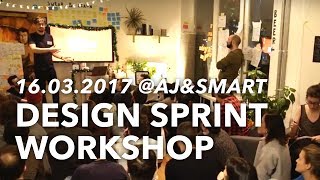 3
3
 4
4
 5
5
 6
6
 7
7
 8
8
 9
9
 10
10
 11
11
 12
12
 13
13
 14
14
 15
15
 16
16
 17
17
 18
18
 19
19
 20
20
 21
21
 22
22
 23
23
 24
24
 25
25
 26
26
 27
27
 28
28
 29
29
 30
30
 31
31
 32
32
 33
33
 34
34
 35
35
 36
36
 37
37
 38
38
 39
39
 40
40
 41
41
 42
42
 43
43
 44
44
 45
45
 46
46
 47
47
 48
48
 49
49
 50
50
 51
51
 52
52
 53
53
 54
54
 55
55
 56
56
 57
57
 58
58
 59
59
 60
60

Design Sprint Workshop Amsterdam
AJ&Smart
Design Sprint Workshop Berlin
AJ&Smart
Product Design Process: SOLVE PROBLEMS AND MAKE DECISIONS FAST (Lightning Decision Jam) | AJ&Smart
AJ&Smart
3 Best Product Design Books
AJ&Smart
Design Thinking vs. Design Sprint - What's the difference?
AJ&Smart
Interview with Jake Knapp, inventor of the DESIGN SPRINT (Lot's of Design Sprint Hacks)
AJ&Smart
How to Get a Job in Product Design | Product Design Advice | AJ&Smart
AJ&Smart
WHAT HAPPENS AFTER A DESIGN SPRINT?
AJ&Smart
The Prototyping Tools We Use in our Design Sprint
AJ&Smart
How to Prepare for a Design Sprint - Aj&Smart
AJ&Smart
Product Design Retrospective - A Management Tool to Improve any Product Team or Startup
AJ&Smart
ALL THE SUPPLIES YOU NEED TO RUN A DESIGN SPRINT
AJ&Smart
AJ&Smart Event Series: How We Design at _________
AJ&Smart
AJ&SMART DESIGN SPRINT TRAINING: LEARN THE DESIGN SPRINT
AJ&Smart
How to find User Testers for a product Design Sprint: The method we use in our process
AJ&Smart
STAYING AHEAD OF THE GAME AS A UX DESIGNER | Aj&Smart
AJ&Smart
What is a Design Sprint? A simple SUMMARY for beginners
AJ&Smart
Amazon's Building a Warehouse in the SKY?! Product Powwow 01 | Aj&Smart
AJ&Smart
Design Sprint Crazy 8s - Generate design ideas FAST
AJ&Smart
NEW Apple Pencil & AR Kit helps you sculpt evil GOONS
AJ&Smart
Apple AirPods - Product Design review
AJ&Smart
Space X’s Secret Spy Craft ALIEN Mission? | Aj&Smart
AJ&Smart
Welcome to AJ&Smart's Youtube Channel
AJ&Smart
iPad Pro & the Apple Pencil - Product Design Review
AJ&Smart
Apple iPhoneX, Lilium get's 90M., Self-driving Cars
AJ&Smart
Product Design Review | Nintendo Switch (6 months later) | Aj&smart
AJ&Smart
What Books to Read if You're New to Product/UX Design
AJ&Smart
UI Design & UX Design: What's the difference?
AJ&Smart
3 Tips for Freelance Designers | Aj&Smart
AJ&Smart
Design Sprint Principles: What to tell your team
AJ&Smart
How to Convince Your Boss to Run a Design Sprint | Aj&Smart
AJ&Smart
DESIGN SPRINT FACILITATION | Aj&Smart
AJ&Smart
Google Pixel 2 Phone & NEW Top Secret Product Launch!
AJ&Smart
WHEN SHOULD YOU RUN A DESIGN SPRINT? | Aj&Smart
AJ&Smart
How to Set up a Killer Design Sprint Space Room | Aj&Smart
AJ&Smart
DESIGN SPRINT 2.0 | STORYBOARDING HACK | Aj&Smart
AJ&Smart
TOP VOTED UX DESIGNER QUESTIONS FROM QUORA ANSWERED | Aj&Smart
AJ&Smart
The Google Pixel 2 | What it means for the tech industry | Aj&Smart
AJ&Smart
WHY INNOVATION LABS DON'T WORK | Aj&Smart
AJ&Smart
THIS POST-IT HACK WILL CHANGE YOUR LIFE - Design Sprint Workshop Tips | Aj&Smart
AJ&Smart
IS FACEBOOK LISTENING TO US? + COOL NEW PRODUCTS! Normals Talk Tech E1 | Aj&Smart
AJ&Smart
DESIGN SPRINT - HOW MIGHT WE | Aj&Smart
AJ&Smart
WHAT'S THE DIFFERENCE BETWEEN AGILE SPRINTS & DESIGN SPRINTS? - Aj&Smart
AJ&Smart
BEST BOOKS TO BOOST CREATIVITY | Aj&Smart
AJ&Smart
PRODUCT BREAKFAST CLUB PODCAST #1 | THE INNOVATION FETISH | Aj&Smart
AJ&Smart
THE WAY WE DEFINE INNOVATION NEEDS TO CHANGE - Aj&Smart
AJ&Smart
PRODUCT BREAKFAST CLUB PODCAST #2: WHAT MAKES A GOOD DESIGN LEADER? - Aj&smart
AJ&Smart
INNOVATION IS OVERRATED | The perfect explanation of Innovation | AJ&Smart
AJ&Smart
WHAT MAKES A GOOD DESIGN TEAM? (PBC Podcast Clip) | Aj&Smart
AJ&Smart
PRODUCT BREAKFAST CLUB PODCAST #3: USER RESEARCH & THE DESIGN SPRINT - Aj&Smart
AJ&Smart
PRODUCT BREAKFAST CLUB PODCAST #4: HOW TO STRUCTURE YOUR CREATIVE PROCESS TO MAXIMISE OUTPUT
AJ&Smart
PRODUCT BREAKFAST CLUB PODCAST #5: WHEN IS A PRODUCT REALLY "READY"? JASON FRIED TWEET STORM SPECIAL
AJ&Smart
PRODUCT BREAKFAST CLUB PODCAST #6: Best of Everything 2017 - 2018 Edition - Aj&Smart
AJ&Smart
HAPPY HOLIDAYS FROM AJ&SMART
AJ&Smart
LAUNCHING MY DIGITAL PRODUCT: WHAT NOT TO DO - Aj&smart
AJ&Smart
UDACITY DESIGN SPRINT NANODEGREE BLOOPER REEL - Aj&smart
AJ&Smart
PERFECT DESIGN SPRINT TEAM | WHO should join a Design Sprint and HOW MANY? | Aj&Smart
AJ&Smart
PRODUCT BREAKFAST CLUB PODCAST #8: MAKE BETTER BUSINESS DECISIONS & GROW YOUR BUSINESS - Aj&Smart
AJ&Smart
HOW PRODUCT DESIGN CHANGED IN 2017 - 2018 | Aj&Smart
AJ&Smart
DESIGN SPRINT 2.0 MAP - MONDAY - AJ&Smart
AJ&Smart
More on: UX Research
View skill →
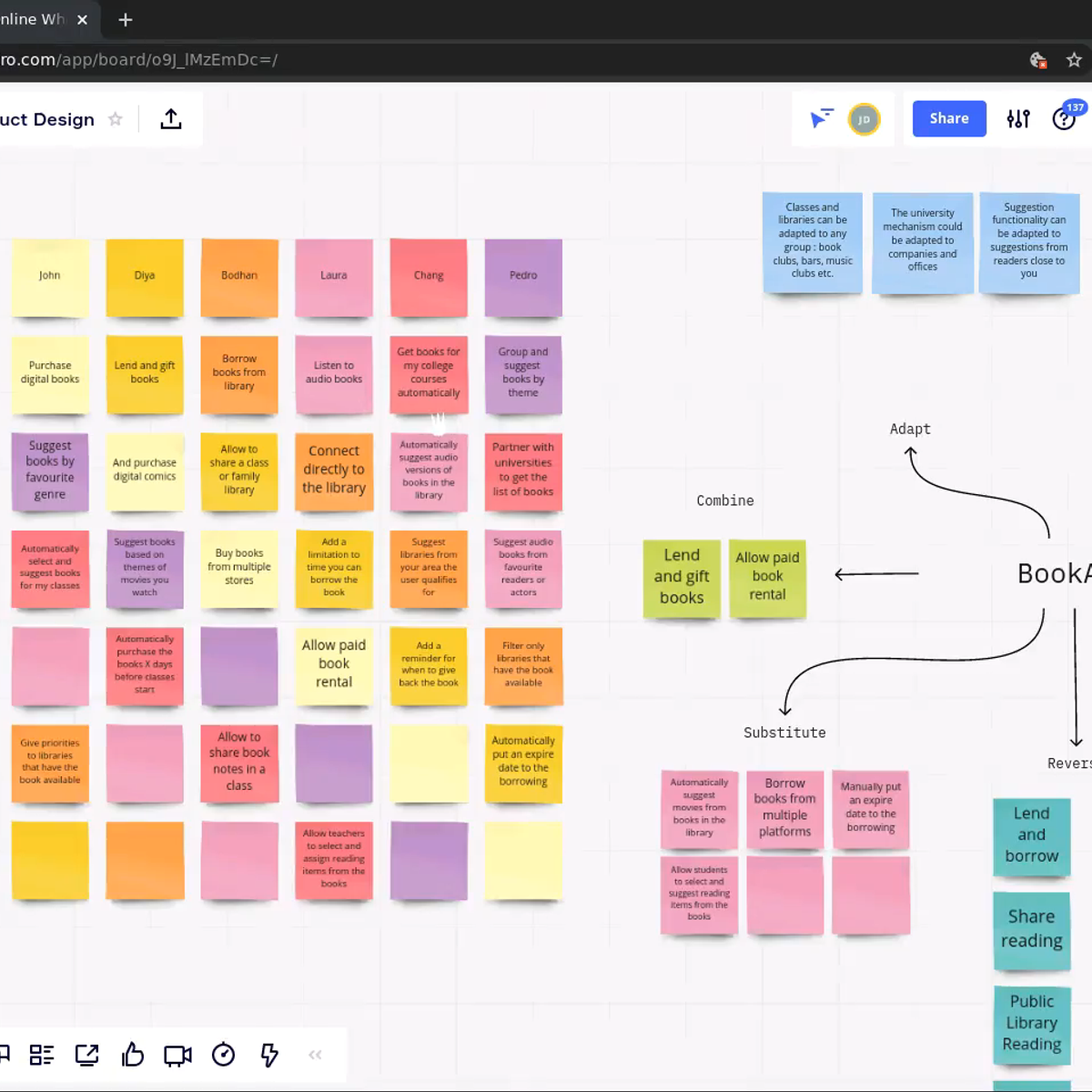


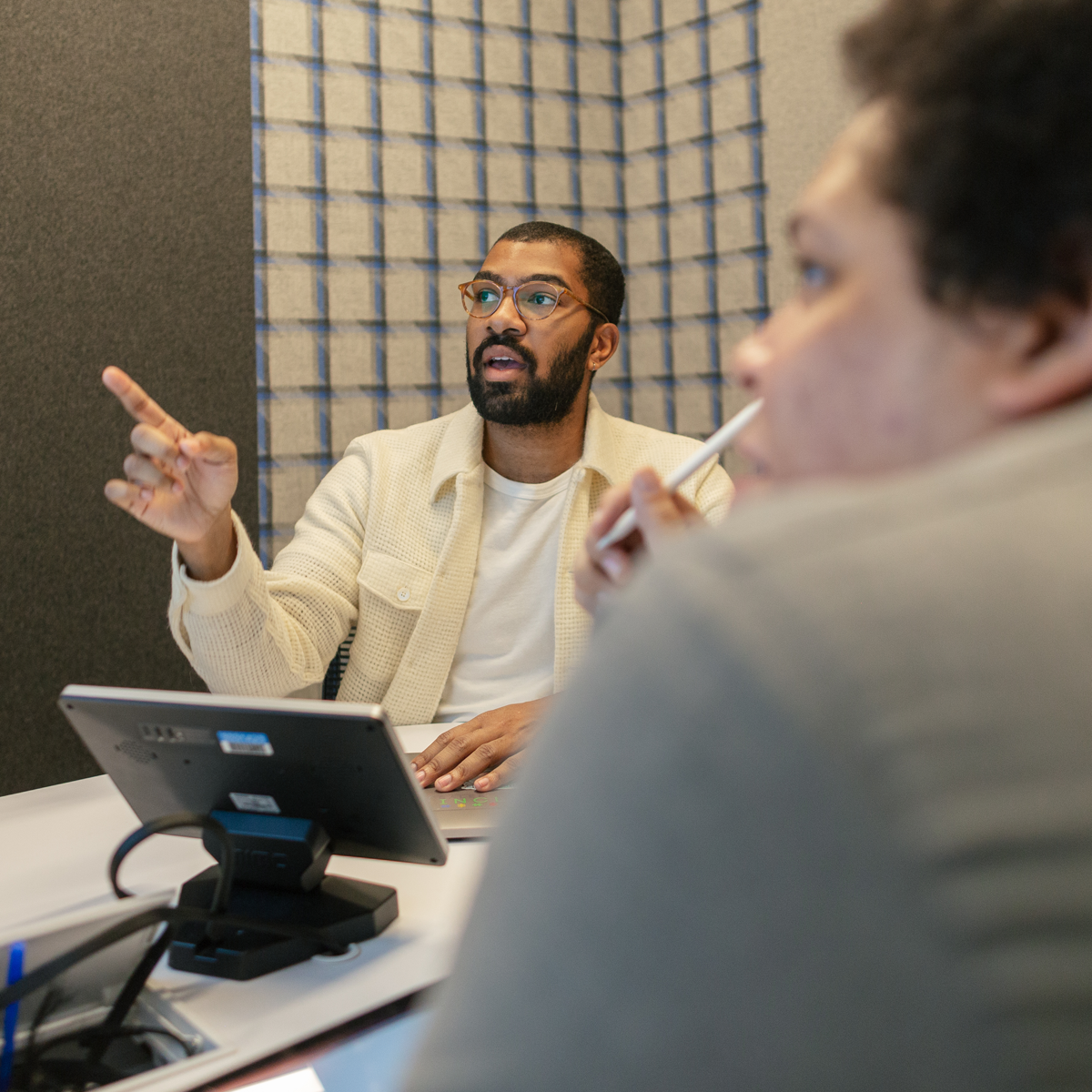
![Brutally Honest UI/UX Reviews [LIVE]](https://i.ytimg.com/vi/-Rr2J16orfA/mqdefault.jpg)

![Refactoring YOUR Designs [LIVE]](https://i.ytimg.com/vi/NG_NgSDCOi8/mqdefault.jpg)

Related Reads
📰
📰
📰
📰
Can we talk about the portfolio double standard for a minute?
Medium · UX Design
Designing for Intelligence: 8 UX Patterns That Separate Good AI Products From Forgettable Ones
Medium · AI
Designing for Intelligence: 8 UX Patterns That Separate Good AI Products From Forgettable Ones
Medium · UX Design
UX Case Study: Perancangan Landing Page Informasi Bimbingan Teknis Koding & Kecerdasan…
Medium · AI
Chapters (3)
What you’re going to learn
1:11
Icebreaker - My first job
1:54
Icebreaker - Live
🎓
Tutor Explanation

 DeepCamp AI