Generative Deep Learning with TensorFlow
Key Takeaways
Building generative deep learning models with TensorFlow for neural style transfer and AutoEncoders
Original Description
In this course, you will:
a) Learn neural style transfer using transfer learning: extract the content of an image (eg. swan), and the style of a painting (eg. cubist or impressionist), and combine the content and style into a new image.
b) Build simple AutoEncoders on the familiar MNIST dataset, and more complex deep and convolutional architectures on the Fashion MNIST dataset, understand the difference in results of the DNN and CNN AutoEncoder models, identify ways to de-noise noisy images, and build a CNN AutoEncoder using TensorFlow to output a clean image from a noisy one.
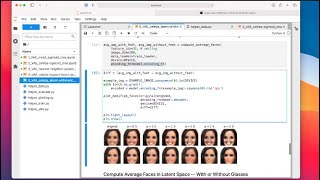
c) Explore Variational AutoEncoders (VAEs) to generate entirely new data, and generate anime faces to compare them against reference images.
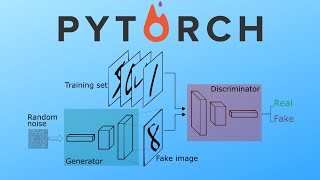
d) Learn about GANs; their invention, properties, architecture, and how they vary from VAEs, understand the function of the generator and the discriminator within the model, the concept of 2 training phases and the role of introduced noise, and build your own GAN that can generate faces.
The DeepLearning.AI TensorFlow: Advanced Techniques Specialization introduces the features of TensorFlow that provide learners with more control over their model architecture, and gives them the tools to create and train advanced ML models.
This Specialization is for early and mid-career software and machine learning engineers with a foundational understanding of TensorFlow who are looking to expand their knowledge and skill set by learning advanced TensorFlow features to build powerful models.
AI explanation not available for this lesson yet
This lesson is still being prepared for the AI tutor. In the meantime, explore lessons that are ready.
Browse explainer-ready lessons →
More on: Generative Models
View skill →



Related Reads
📰
📰
📰
📰
Trained a neural net to reconstruct Bad Apple in real-time.
Reddit r/deeplearning
AI/ML Under the Hood — Part 29: CNN Breaking News: Proximity Matters
Medium · Deep Learning
Deep Learning Scientists — Claude Cowork: The Deep Learning Scientist’s New Lab Partner
Medium · Data Science
Why Qwen3.8 27B Looked Brilliant in Testing but Failed to Ship My AI Newspaper
Medium · Deep Learning
🎓
Tutor Explanation
 DeepCamp AI