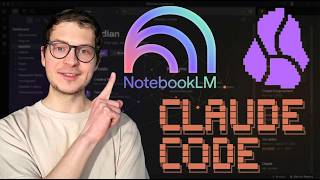
Claude 3.7 Sonnet API | Build a Research Assistant
In this video, we show you how to use the Claude 3.7 Sonnet API to build a multimodal research assistant that can process multiple PDFs, synthesize research, and provide insights for future studies. We walk through API setup, document processing, and implementing advanced reasoning capabilities with Claude 3.7 Sonnet.
You’ll learn:
- How to access the Anthropic API and configure it in Google Colab
- How to extract and process PDFs using PyPDF2
- How to utilize Claude 3.7’s thinking mode for in-depth analysis
- How to build an interactive research assistant using Gradio
By the end of this tutorial, you’ll have a functional AI-powered research assistant that can streamline document review and analysis.
🔗 Resources & Tutorials
Colab Notebook: https://colab.research.google.com/drive/19PEH7Q3XaKNvHBdSZNpYVQaWVBXGYl-X#scrollTo=QDoMWdq04umG
Our video on Claude 3.7 & Claude Code: https://youtu.be/U_QHbKvSxxM
Programming with Claude 3.7 API: https://www.datacamp.com/tutorial/claude-3-7-sonnet-api
Learn more about Claude 3.7: https://www.datacamp.com/blog/claude-3-7-sonnet
Claude Code Research Preview: https://docs.anthropic.com/en/docs/agents-and-tools/claude-code/overview
Learn AI & Data Science with DataCamp: https://bit.ly/4hFUdvk
📕 Chapters
00:00 Introduction
00:20 What is Claude 3.7 Sonnet?
00:57 Overview of the Research Assistant Project
01:35 Required Libraries & Setup
03:02 Installing and Importing Dependencies
03:42 Getting Access to the Anthropic API
05:25 Understanding Claude Model Versions
06:05 Connecting to Claude 3.5 for Initial Testing
07:19 Sending a Simple API Request
08:26 Understanding Multimodal Capabilities
09:00 Processing PDFs with Claude API
11:31 Extracting Text from PDFs for AI Analysis
13:41 Structuring API Requests for Documents
16:36 Handling API Responses
17:00 Introducing Claude 3.7’s Streaming Mode
18:16 Streaming Responses for Enhanced Reasoning
21:12 Parsing & Cleaning the API Output
23:54 Improving Response Readabili
Watch on YouTube ↗
(saves to browser)
Sign in to unlock AI tutor explanation · ⚡30
Playlist
Uploads from DataCamp · DataCamp · 0 of 60
← Previous
Next →
1
 2
2
 3
3
 4
4
 5
5
 6
6
 7
7
 8
8
 9
9
 10
10
 11
11
 12
12
 13
13
 14
14
 15
15
 16
16
 17
17
 18
18
 19
19
 20
20
 21
21
 22
22
 23
23
 24
24
 25
25
 26
26
 27
27
 28
28
 29
29
 30
30
 31
31
 32
32
 33
33
 34
34
 35
35
 36
36
 37
37
 38
38
 39
39
 40
40
 41
41
 42
42
 43
43
 44
44
 45
45
 46
46
 47
47
 48
48
 49
49
 50
50
 51
51
 52
52
 53
53
 54
54
 55
55
 56
56
 57
57
 58
58
 59
59
 60
60

SQL Server Tutorial: Date manipulation
DataCamp
R Tutorial: Intermediate Interactive Data Visualization with plotly in R
DataCamp
R Tutorial: Adding aesthetics to represent a variable
DataCamp
R Tutorial: Moving Beyond Simple Interactivity
DataCamp
Python Tutorial: Why use ML for marketing? Strategies and use cases
DataCamp
Python Tutorial: Preparation for modeling
DataCamp
Python Tutorial: Machine Learning modeling steps
DataCamp
R Tutorial: The prior model
DataCamp
R Tutorial: Data & the likelihood
DataCamp
R Tutorial: The posterior model
DataCamp
R Tutorial: An Introduction to plotly
DataCamp
R Tutorial: Plotting a single variable
DataCamp
R Tutorial: Bivariate graphics
DataCamp
Python Tutorial: Customer Segmentation in Python
DataCamp
Python Tutorial: Time cohorts
DataCamp
Python Tutorial: Calculate cohort metrics
DataCamp
Python Tutorial: Cohort analysis visualization
DataCamp
R Tutorial: Building Dashboards with flexdashboard
DataCamp
R Tutorial: Anatomy of a flexdashboard
DataCamp
R Tutorial: Layout basics
DataCamp
R Tutorial: Advanced layouts
DataCamp
Python Tutorial: Time Series Analysis in Python
DataCamp
Python Tutorial: Correlation of Two Time Series
DataCamp
Python Tutorial: Simple Linear Regressions
DataCamp
Python Tutorial: Autocorrelation
DataCamp
R Tutorial: The gapminder dataset
DataCamp
R Tutorial: The filter verb
DataCamp
R Tutorial: The arrange verb
DataCamp
R Tutorial: The mutate verb
DataCamp
R Tutorial: What is cluster analysis?
DataCamp
R Tutorial: Distance between two observations
DataCamp
R Tutorial: The importance of scale
DataCamp
R Tutorial: Measuring distance for categorical data
DataCamp
Python Tutorial: Plotting multiple graphs
DataCamp
Python Tutorial: Customizing axes
DataCamp
Python Tutorial: Legends, annotations, & styles
DataCamp
Python Tutorial: Introduction to iterators
DataCamp
Python Tutorial: Playing with iterators
DataCamp
Python Tutorial: Using iterators to load large files into memory
DataCamp
SQL Tutorial: Introduction to Relational Databases in SQL
DataCamp
SQL Tutorial: Tables: At the core of every database
DataCamp
SQL Tutorial: Update your database as the structure changes
DataCamp
Python Tutorial: Classification-Tree Learning
DataCamp
Python Tutorial: Decision-Tree for Classification
DataCamp
Python Tutorial: Decision-Tree for Regression
DataCamp
Python Tutorial: Census Subject Tables
DataCamp
Python Tutorial: Census Geography
DataCamp
Python Tutorial: Using the Census API
DataCamp
R Tutorial: A/B Testing in R
DataCamp
R Tutorial: Baseline Conversion Rates
DataCamp
R Tutorial: Designing an Experiment - Power Analysis
DataCamp
R Tutorial: Introduction to qualitative data
DataCamp
R Tutorial: Understanding your qualitative variables
DataCamp
R Tutorial: Making Better Plots
DataCamp
SQL Tutorial: OLTP and OLAP
DataCamp
SQL Tutorial: Storing data
DataCamp
SQL Tutorial: Database design
DataCamp
Python Tutorial: Introduction to spaCy
DataCamp
Python Tutorial: Statistical Models
DataCamp
Python Tutorial: Rule-based Matching
DataCamp
More on: Reading ML Papers
View skill →





Related AI Lessons
⚡
⚡
⚡
⚡
The ABCs of reading medical research and review papers these days
Medium · LLM
#1 DevLog Meta-research: I Got Tired of Tab Chaos While Reading Research Papers.
Dev.to AI
How to Set Up a Karpathy-Style Wiki for Your Research Field
Medium · AI
The Non-Optimality of Scientific Knowledge: Path Dependence, Lock-In, and The Local Minimum Trap
ArXiv cs.AI
Chapters (18)
Introduction
0:20
What is Claude 3.7 Sonnet?
0:57
Overview of the Research Assistant Project
1:35
Required Libraries & Setup
3:02
Installing and Importing Dependencies
3:42
Getting Access to the Anthropic API
5:25
Understanding Claude Model Versions
6:05
Connecting to Claude 3.5 for Initial Testing
7:19
Sending a Simple API Request
8:26
Understanding Multimodal Capabilities
9:00
Processing PDFs with Claude API
11:31
Extracting Text from PDFs for AI Analysis
13:41
Structuring API Requests for Documents
16:36
Handling API Responses
17:00
Introducing Claude 3.7’s Streaming Mode
18:16
Streaming Responses for Enhanced Reasoning
21:12
Parsing & Cleaning the API Output
23:54
Improving Response Readabili
🎓
Tutor Explanation
 DeepCamp AI