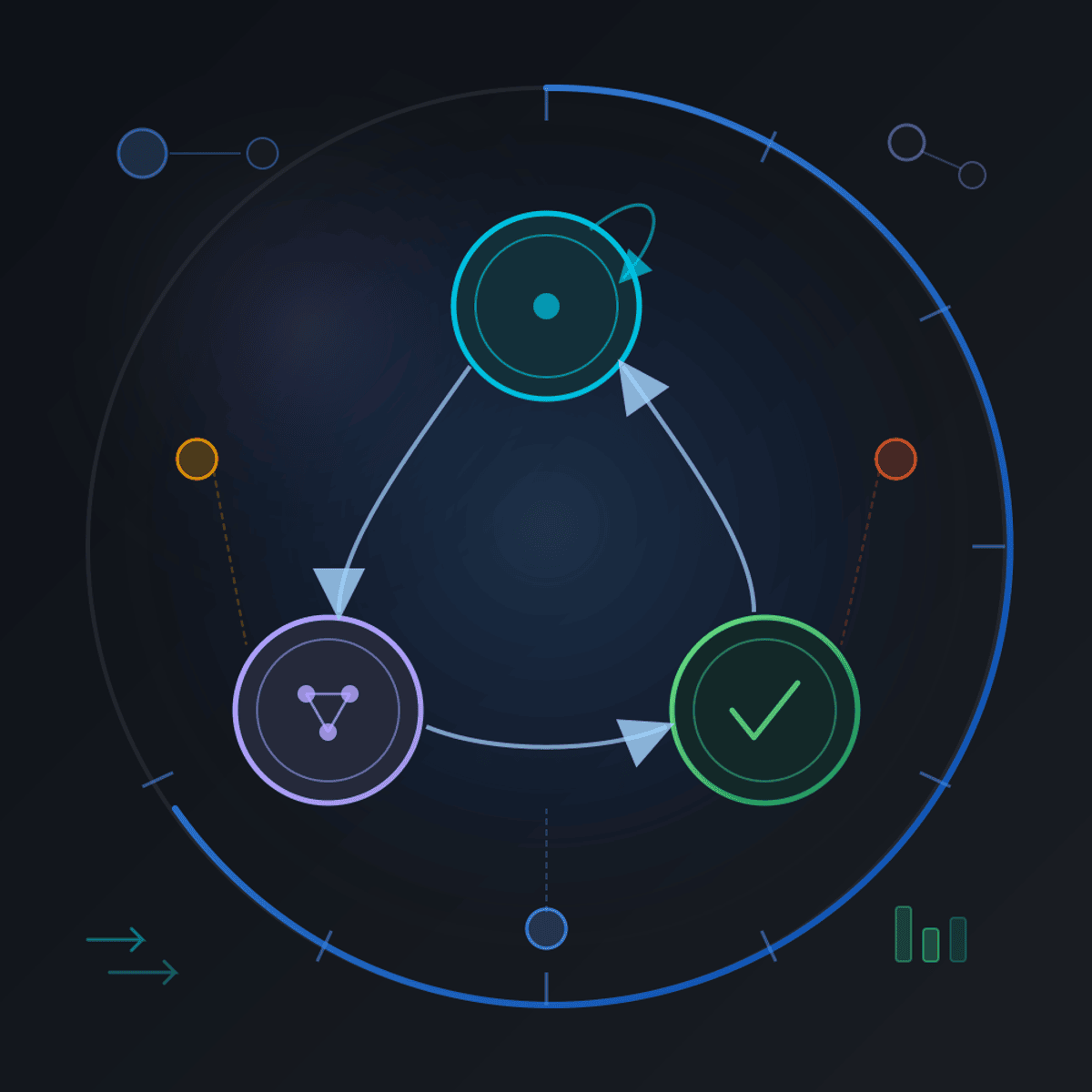
Building deterministic MCP Agents
Skills:
Agent Foundations80%
Key Takeaways
Teaches building deterministic MCP agents using the Model Context Protocol and quality metrics
Original Description
Learn to build deterministic AI agents using the Model Context Protocol (MCP) and structured quality metrics for repeatable, verifiable outputs. You will explore PMAT as a quality assessment tool for software projects, applying lean manufacturing principles from the Toyota Way including continuous improvement and waste elimination to software quality engineering. The course covers the certainty-scope tradeoff for balancing test coverage and confidence, finite state machine models for deterministic agent behavior, and MCP protocol architecture for structured agent-tool communication. You will analyze survivorship bias in programming language popularity rankings and apply six essential quality metrics for comprehensive project assessment and automated scoring. The testing module covers six essential test types for agent validation, property-based testing for verifying behavioral invariants, and fuzz testing for discovering edge cases using agentic AI. You will use Claude Code as an MCP client integrated with PMAT for automated quality analysis and walk through real-world project examples demonstrating quality scoring across multiple codebases. By completing this course, you will be able to design deterministic agent systems using MCP, apply comprehensive quality metrics with PMAT, and implement property and fuzz testing strategies for robust agent validation.
Watch on External: Coursera ↗
(saves to browser)
Sign in to unlock AI tutor explanation · ⚡30
More on: Agent Foundations
View skill →






Related Reads
📰
📰
📰
📰
Web Dev 2027: The End of the AI Honeymoon and the Return of the Expert Engineer
Medium · AI
need ai hiring assistant experiences.
Reddit r/artificial
Zero Human Auth for AI Agents: How to Replace OAuth with Cryptographic Passport
Dev.to AI
The Rise of Agentic AI: Understanding, Building, and Leveraging Intelligent AI Agents
Dev.to AI
🎓
Tutor Explanation

 DeepCamp AI