Art of doing disruptive research
Skills:
LLM Foundations60%
In this talk, Sumit will get you excited about the area of AI-assisted Programming (details below), but by weaving together personal stories of inspiration from every day life that you can relate to. He will also share three key lessons that he identified in his two decades of scientific journey working on this topic related to problem selection, working with people, and the innovation process.
AI can enhance programming experiences for a diverse set of programmers: from professional developers and data scientists (proficient programmers) who need help in software engineering and data wrangling, all the way to spreadsheet users (low-code programmers) who need help in authoring formulas, and students (novice programmers) who seek hints when stuck with their programming homework. To communicate their need to AI, users can express their intent explicitly—as input-output examples or natural-language specification—or implicitly—where they encounter a bug (and expect AI to suggest a fix), or simply allow AI to observe their last few lines of code or edits (to have it suggest the next steps). The task of synthesizing an intended program snippet from the user’s intent is both a search and a ranking problem. Search is required to discover candidate programs that correspond to the (often ambiguous) intent, and ranking is required to pick the best program from multiple plausible alternatives. This creates a fertile playground for combining symbolic-reasoning techniques, which model the semantics of programming operators, and machine-learning techniques, which can model human preferences in programming. Recent advances in large language models like Codex offer further promise to advance such neuro-symbolic techniques.
Watch on YouTube ↗
(saves to browser)
Sign in to unlock AI tutor explanation · ⚡30
Playlist
Uploads from Microsoft Research · Microsoft Research · 0 of 60
← Previous
Next →
1
 2
2
 3
3
 4
4
 5
5
 6
6
 7
7
 8
8
 9
9
 10
10
 11
11
 12
12
 13
13
 14
14
![Microsoft Urban Futures Summer Workshop | Data Driven Urban Transformation [Day 1]](https://i.ytimg.com/vi/-5Cx8cUQRfY/mqdefault.jpg) 15
15
![Microsoft Urban Futures Summer Workshop | Sensors and Data [Day 2]](https://i.ytimg.com/vi/Q5HBThuj4bY/mqdefault.jpg) 16
16
![Microsoft Urban Futures Summer Workshop | Policy and Social Impact [Day 3]](https://i.ytimg.com/vi/zMmsXTcuYlQ/mqdefault.jpg) 17
17
 18
18
 19
19
 20
20
 21
21
 22
22
 23
23
 24
24
 25
25
 26
26
 27
27
 28
28
 29
29
 30
30
 31
31
 32
32
 33
33
 34
34
 35
35
 36
36
 37
37
 38
38
 39
39
 40
40
 41
41
 42
42
 43
43
 44
44
 45
45
 46
46
 47
47
 48
48
 49
49
 50
50
 51
51
 52
52
 53
53
 54
54
 55
55
 56
56
 57
57
 58
58
 59
59
 60
60

Frontiers in ML: Learning from Limited Labeled Data: Challenges and Opportunities for NLP
Microsoft Research
Frontiers in Machine Learning: Climate Impact of Machine Learning
Microsoft Research
Frontiers in Machine Learning: Security and Machine Learning
Microsoft Research
Hope Speech and Help Speech: Surfacing Positivity Amidst Hate
Microsoft Research
Early Indicators of the Effect of the Global Shift to Remote Work on People with Disabilities
Microsoft Research
Remote Work and Well-Being
Microsoft Research
Challenges and Gratitude of Software Developers During COVID-19 Working From Home
Microsoft Research
Towards a Practical Virtual Office for Mobile Knowledge Workers
Microsoft Research
Impact of COVID-19 crisis on the future of work in India
Microsoft Research
Empowering and Supporting Remote Software Development Team Members through a Culture of Allyship
Microsoft Research
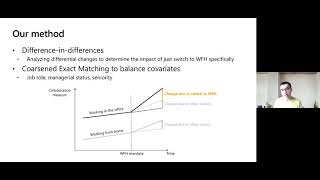
How Work From Home Affects Collaboration: Information Workers in a Natural Experiment During COVID19
Microsoft Research
Phong Surface: Efficient 3D Model Fitting using Lifted Optimization
Microsoft Research
Managing Tasks Across the Work-Life Boundary: Opportunities, Challenges, and Directions
Microsoft Research
Microsoft Urban Futures Summer Workshop | Data Driven Urban Transformation [Day 1]
Microsoft Research
Microsoft Urban Futures Summer Workshop | Sensors and Data [Day 2]
Microsoft Research
Microsoft Urban Futures Summer Workshop | Policy and Social Impact [Day 3]
Microsoft Research
Directions in ML: Algorithmic foundations of neural architecture search
Microsoft Research
MineRL Competition 2020
Microsoft Research
Can we make better software by using ML and AI techniques? With Chandra Maddila and Chetan Bansal
Microsoft Research
From Paper to Product
Microsoft Research
SkinnerDB: Regret Bounded Query Evaluation using RL
Microsoft Research
From SqueezeNet to SqueezeBERT: Developing Efficient Deep Neural Networks
Microsoft Research
Programming with Proofs for High-assurance Software
Microsoft Research
Platform for Situated Intelligence Overview
Microsoft Research
Directional Sources & Listeners in Interactive Sound Propagation using Reciprocal Wave Field Coding
Microsoft Research
Galactic Bell Star Music Demo
Microsoft Research
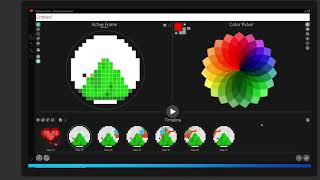
Importing Animations in Microsoft Expressive Pixels (9 of 9)
Microsoft Research
Welcome to Microsoft Expressive Pixels (1 of 9)
Microsoft Research
Getting Started with Microsoft Expressive Pixels (2 of 9)
Microsoft Research
Creating an Image in Microsoft Expressive Pixels (3 of 9)
Microsoft Research
Creating Animations in Microsoft Expressive Pixels (4 of 9)
Microsoft Research
Managing Animation Galleries in Microsoft Expressive Pixels (5 of 9)
Microsoft Research
Creating Fragments in Microsoft Expressive Pixels (6 of 9)
Microsoft Research
Using Layers in Microsoft Expressive Pixels (7 of 9)
Microsoft Research
Exporting Animations with Microsoft Expressive Pixels (8 of 9)
Microsoft Research
What Kind of Computation is Human Cognition? A Brief History of Thought (Episode 2/2)
Microsoft Research
What Kind of Computation is Human Cognition? A Brief History of Thought (Episode 1/2)
Microsoft Research
Planeverb: Interactive sound propagation for dynamic scenes using 2D wave simulation
Microsoft Research
Making cryptography accessible, efficient, and scalable with Dr. Divya Gupta and Dr. Rahul Sharma
Microsoft Research
Beyond the mega-data center: networking multi-data center regions (SIGCOMM 2020 Talk)
Microsoft Research
Optics for the cloud – Light at the end of the tunnel? (SIGCOMM 2020 Workshop)
Microsoft Research
Beyond the mega-data center: networking multi-data center regions (SIGCOMM 2020 short talk)
Microsoft Research
Sirius: A Flat Datacenter Network with Nanosecond Optical Switching (SIGCOMM 2020 short talk)
Microsoft Research
Novel Image Captioning
Microsoft Research
Forest Sound Scene Simulation and Bird Localization with Distributed Microphone Arrays
Microsoft Research
Decoding Music Attention from “EEG headphones”: a User-friendly Auditory Brain-computer Interface
Microsoft Research
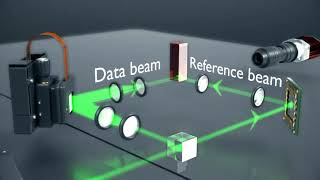
How does holographic storage work?
Microsoft Research
The physics of hologram formation in iron doped lithium niobate
Microsoft Research
Introduction to coax: A Modular RL Package
Microsoft Research
Directions in ML: "Neural architecture search: Coming of age"
Microsoft Research
Microsoft Research AI Breakthroughs 2020: 20 minute research talks + Q&A panel
Microsoft Research
Fireside Chat with Johannes Gehrke during Microsoft Research AI Breakthroughs 2020
Microsoft Research
Fireside Chat with Susan Dumais during Microsoft Research AI Breakthroughs 2020
Microsoft Research
Microsoft Research AI Breakthroughs 2020: 20 minute research talks, Q&A panel, and event wrap-up
Microsoft Research
Clinical Research with FHIR
Microsoft Research
Soundscape Street Preview
Microsoft Research
Tilt-Responsive Techniques for Digital Drawing Boards
Microsoft Research
SurfaceFleet: Exploring Distributed Interactions Unbounded from Device, Application, User, and Time
Microsoft Research
Haptic PIVOT: On-Demand Handhelds in VR
Microsoft Research
SurfaceFleet Supplemental Video Demonstration (UIST 2020)
Microsoft Research
More on: LLM Foundations
View skill →





![Run Any AI LOCALLY for FREE Forever! [100% Beginner Tutorial]](https://i.ytimg.com/vi/8GFPZRgtEn8/mqdefault.jpg)


Related AI Lessons
⚡
⚡
⚡
⚡
When Feelings Need a Graph How SurrealDB Became the Heart of Our Mental Wellness #SurrealDB #MongoDB #MentalHealthAI #MultiModal
Dev.to · BAPANAPALLI PRANEETA
I Tried Harder With AI , But It Only Worked When I Simplified My Thinking
Medium · AI
Why OpenAI Privacy Filter feels like real AI infrastructure
Medium · LLM
GPT-5.5 vs Claude Opus vs Gemini — real benchmark breakdown
Dev.to AI
🎓
Tutor Explanation

 DeepCamp AI